
AI Business Plan Generator vs AI Business Analysis Tool
In 2026, the App Store is filled with products promising to "generate your complete business plan in 60 seconds." The marketing is compelling, the UI is beautiful, and the output is a disaster. These products are optimized for one thing: generating a formatted, lengthy, professional-looking document that creates the psychological sensation of strategic preparation while producing zero meaningful insight about whether your business model is actually financially viable. Understanding the critical structural difference between a document generator and a genuine analysis tool is the most important tool-selection decision a first-time founder makes.

- Why AI Business Plan Generators produce false security, not strategic validation.
- The 5 structural differences between a generator and an analysis tool.
- When a formal business plan is actually necessary (and when it absolutely is not).
- Why generated business plans fail VC due diligence every time.
- What to use instead of a generator to build genuine execution confidence.
The Psychology of the Perfect-Looking Document
The reason AI Business Plan Generators remain commercially successful despite their strategic uselessness is a well-documented psychological phenomenon: we systematically assign higher credibility and validity to information presented in a formal, structured, professional format. A beautifully typeset 40-page PDF with charts, financial projections, and section headers feels like evidence of rigorous preparation. It creates an internal sense of security that is entirely disconnected from the actual quality of the underlying business logic.
This is the generator's core danger: it produces an artifact that feels like strategic work while bypassing all the genuinely difficult analytical questions that strategic work is supposed to answer. A founder who has completed a generated business plan has not answered: "Do real humans in my target market experience this as a painful, urgent problem?" or "Is my realistic LTV:CAC ratio above 3:1?" or "What specific mechanism prevents a well-funded competitor from copying this in 90 days?" These are the questions that determine survival. A 42-page PDF addressed none of them.
5 Structural Differences: Generator vs Analysis Tool
| Capability | AI Plan Generator | AI Analysis Tool |
|---|---|---|
| Primary output | Formatted document (PDF/Doc) | Prioritized risk report + hypothesis map |
| Optimization target | Looks authoritative | Identifies fatal flaws accurately |
| Market size data | Frequently hallucinated TAM figures | Framework-validated ranges per category |
| Unit economics | 5-year projections with no methodology | LTV:CAC ratio calculated for your inputs |
| Competitive analysis | Generic list of category leaders | Specific differentiation gaps and moat analysis |
| Investor utility | Immediately identified as generated | Informs founder before investor conversations |
When Is a Formal Business Plan Actually Necessary?
The traditional multi-page business plan has exactly one remaining legitimate use case in 2026: satisfying the documentation requirements of an SBA loan application or a traditional bank credit facility. Legacy lending institutions, primarily for regulatory compliance reasons, require a specific document format as part of their underwriting process. In this narrow context, a formatted business plan document serves its purpose.
For every other purpose a startup founder encounters — VC pitch preparation, accelerator applications, angel investor conversations, product development planning, or team alignment — a one-page Lean Canvas supplemented by actual customer traction evidence is dramatically more credible and architecturally more useful than any generated PDF document.
Why Generated Plans Fail VC Due Diligence
Experienced investors evaluate thousands of decks and business plans annually. They have calibrated pattern recognition for AI-generated content: it is characterized by suspiciously round market size figures ($50B TAM with no cited source), generic competitive analysis ("we differentiate through superior user experience and AI-powered features"), financial projections that reach profitability in Year 3 regardless of the business model, and a competitive moat section that lists "first-mover advantage" for a market with 47 existing competitors.
The only evidence that actually changes investor minds is traction: paying customers, active retention data, organic growth curves, and documented conversations with your ICP that validate the pain severity. None of this is producible by a document generator. All of it is producible by a founder who used an analysis tool to identify the right hypothesis to test, ran a cheap validation experiment, and collected real behavioral data from real humans.
What to Use Instead: The Execution-First Stack
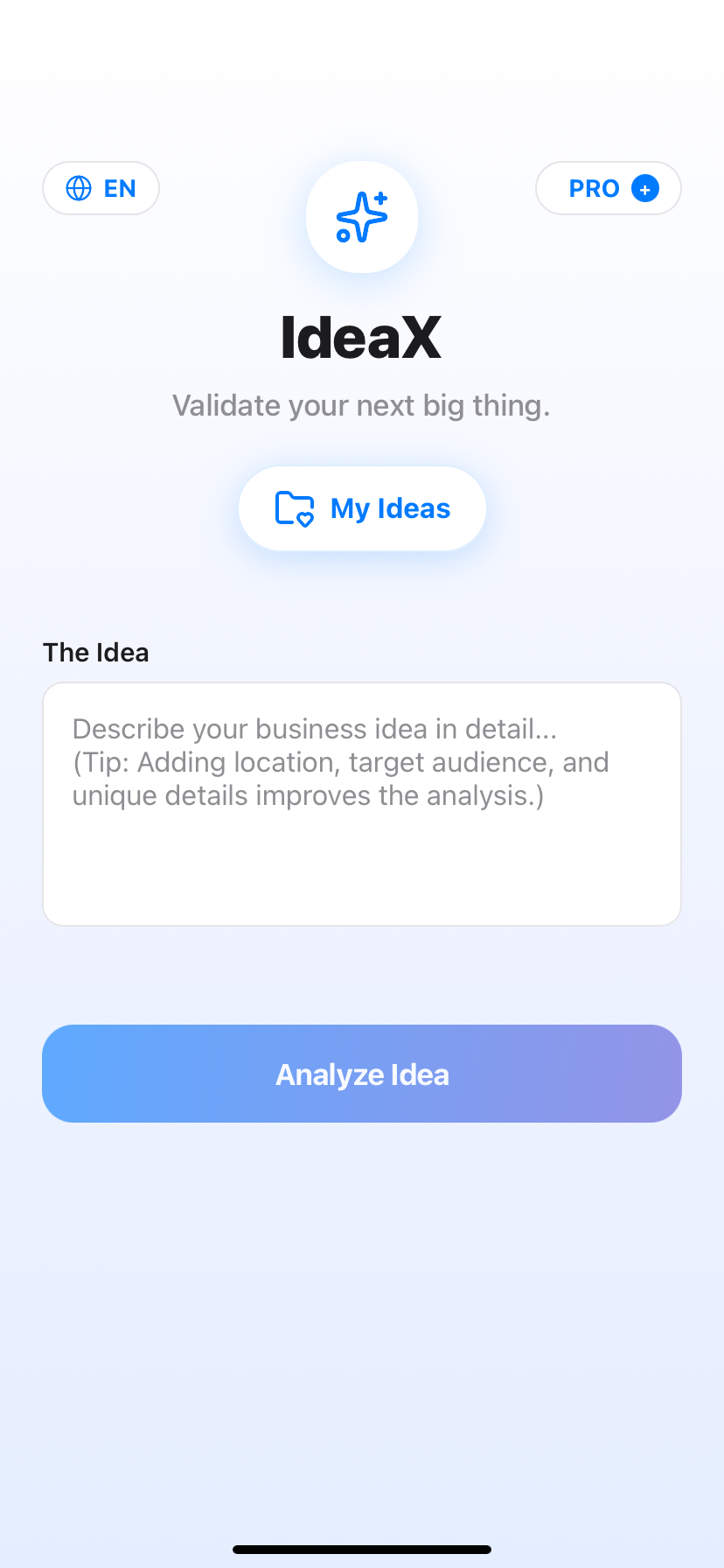
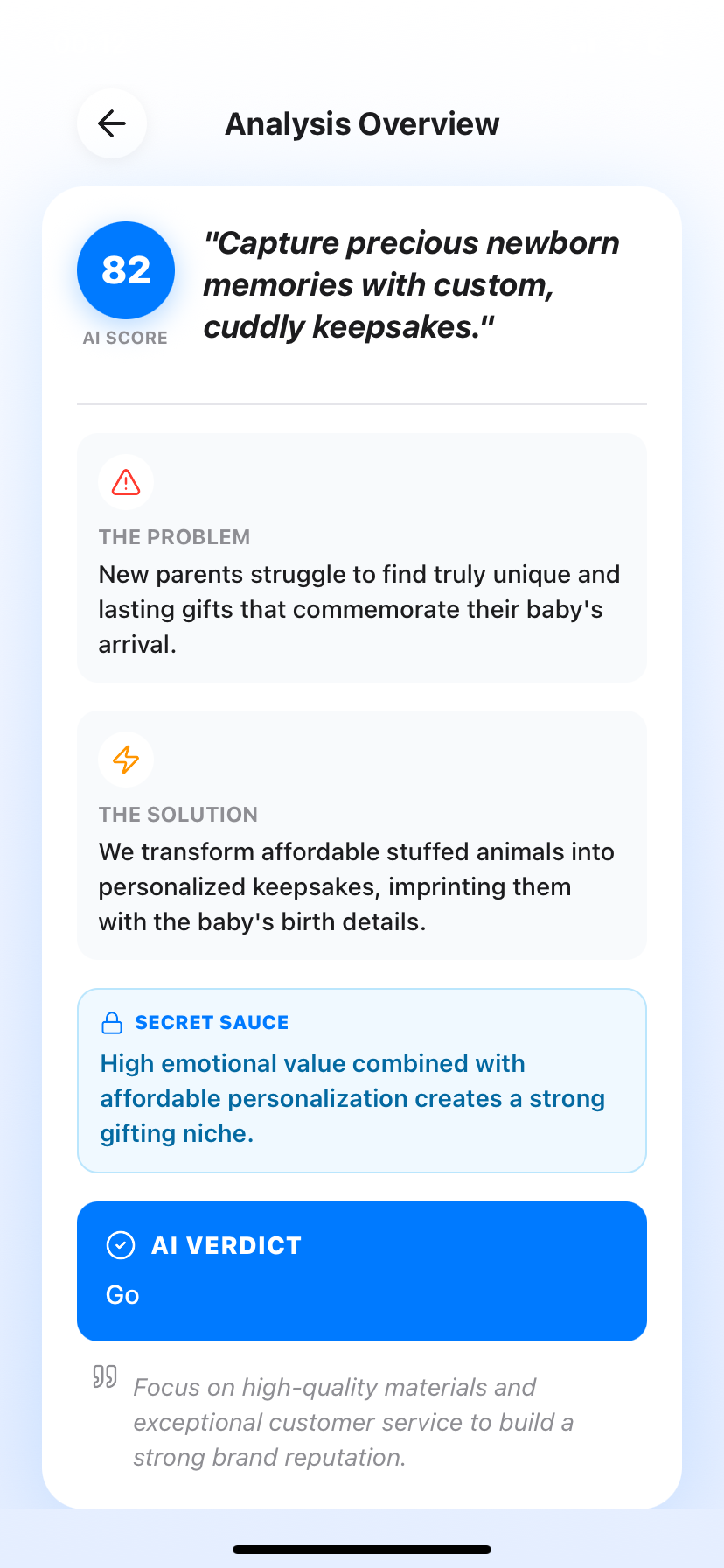
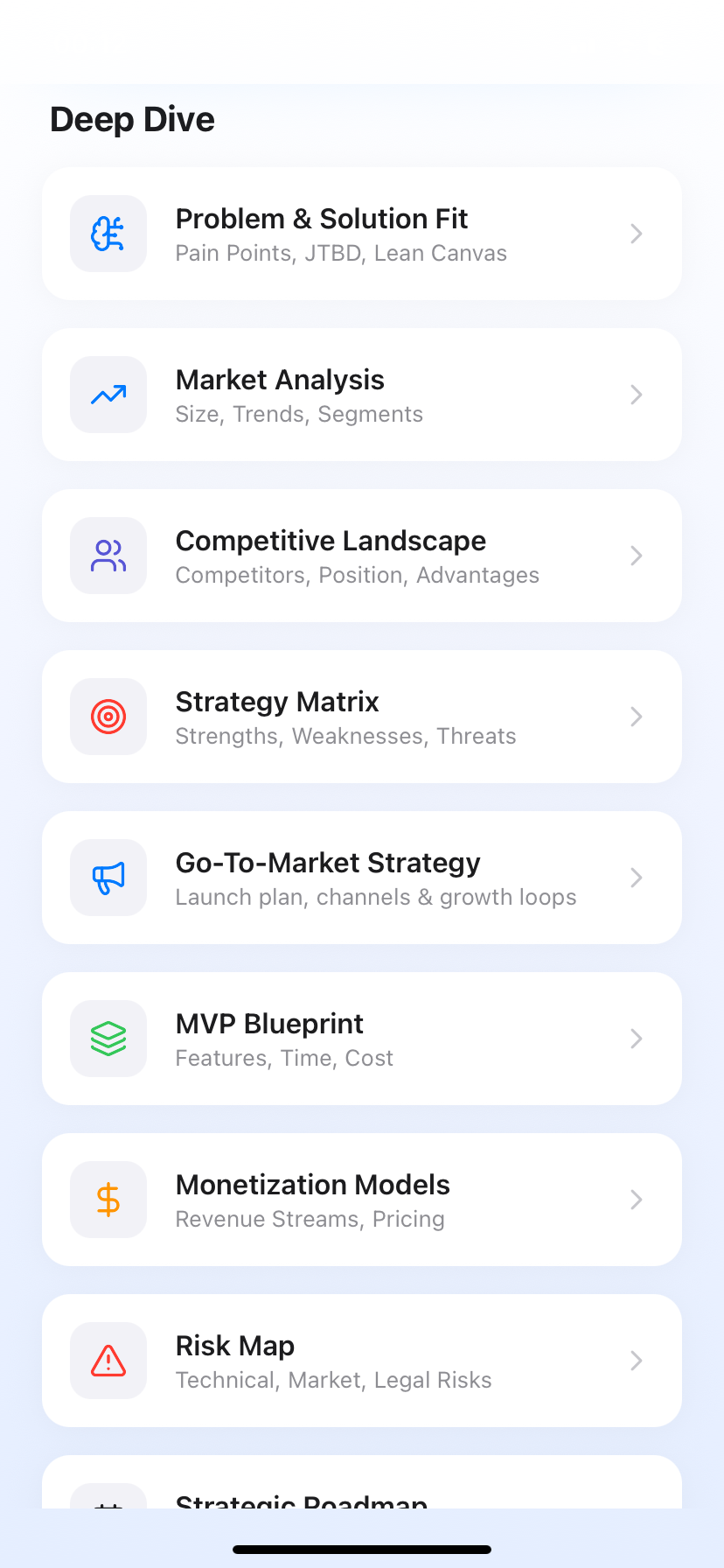

IdeaX: Business Idea Analysis
The algorithmic auditor. Not a generator.
Don't generate fluff. Audit the truth.
IdeaX is explicitly not a business plan generator. It is a high-density Analysis Engine: it interrogates your concept through adversarial frameworks, calculates your unit economics against category benchmarks, identifies specific competitive vulnerability gaps, and outputs a prioritized mitigation checklist — not a PDF. In 10 minutes, IdeaX gives you more actionable strategic intelligence than a 40-page generated document gives you in 40 seconds. Use the right tool.
Frequently Asked Questions (FAQ)
What is an AI Business Plan Generator and why is it dangerous?
It takes a brief text prompt and produces a 40-page formatted PDF filled with professional-looking language. It's dangerous because it formats your assumptions without testing them — producing a false sense of strategic validation. It never asks whether the business model is financially viable; it simply formats whatever you tell it.
What makes an AI Business Analysis Tool different?
It is structurally adversarial — it has no incentive to produce a polished output. Instead of formatting inputs into a document, it interrogates them: flagging logical inconsistencies, identifying missing monetization mechanisms, benchmarking your unit economics against category norms, and generating a specific threat rating for each structural vulnerability.
Is a 40-page business plan ever necessary?
Almost never — except when an SBA loan application or traditional bank credit facility explicitly requires the document format for underwriting. For VC pitches, angel rounds, accelerator applications, and product development, a one-page Lean Canvas plus real traction data is dramatically more valuable than any generated PDF.
Can a generated business plan pass investor due diligence?
No. Experienced investors immediately identify generated plans: round TAM figures with no cited source, generic competitive analysis, Year 3 profitability projections regardless of model, and "first-mover advantage" listed in a market with dozens of competitors. Investors respond to traction evidence, not document formatting quality.
What should I use instead?
The 4-step execution stack: (1) Lean Canvas to map hypotheses, (2) Unit Economics Model to verify financial viability, (3) Painted Door test to generate real purchase intent data, (4) Traction Memo summarizing validation evidence. About 10 hours and $200 — infinitely more credible than any generated PDF.