
Best Tools for Evaluating a Startup Idea in 2026
The majority of startup failures share a common origin: the founder evaluated their idea informally — through conversations with friends, personal enthusiasm, and optimistic market assumptions — and launched into execution before a single structural risk was formally identified. In 2026, there is no excuse for informal evaluation. The landscape of purpose-built startup evaluation tools has never been richer, and the time required to run a comprehensive structural audit has never been shorter. The correct tool stack can compress what previously required weeks of unfocused research into 2 focused days of structured evaluation — before a single line of code is written.

- Category 1 — AI Structural Analysis Apps: Fast-kill fatal flaws before investing research time.
- Category 2 — Search Demand Validators: Confirm organic market pull with behavioral data.
- Category 3 — Competitive Intelligence Tools: Map the landscape and find differentiation gaps.
- Category 4 — Customer Interview Frameworks: Probe pain severity and willingness to pay.
- Category 5 — Unit Economics Modeling: Calculate whether the business math works at scale.
The Difference Between Evaluating and Validating an Idea
Before selecting tools, it is critical to distinguish between two distinct activities that most founders conflate: evaluation and validation.
Evaluation determines whether the structural model of your idea is viable — does the TAM support a company, can the unit economics work mathematically, is there a defensible competitive moat, and is the pain severe enough that people will pay to eliminate it? Evaluation is primarily desk research and analytical work that can be completed before talking to a single customer.
Validation proves that real humans with real money will buy the specific product you plan to build — through customer discovery conversations, prototype usability tests, and Painted Door conversion experiments. Validation follows evaluation. Running expensive validation experiments (ads, landing pages, prototype user tests) on a structurally broken model is the most common and most expensive research mistake founders make.
Category 1: AI Structural Analysis Apps
Use first. Every time. Before running any other evaluation activity, a dedicated AI analysis app runs your concept through a standardized venture framework: Pain Severity rating, TAM estimation by category, competitive moat assessment, and unit economics viability — in under 15 minutes. This fast-kills structurally broken concepts before you invest hours in search research or days in customer interviews.
The structural distinction from generic AI tools: analysis apps are optimized for adversarial risk identification, not engaging conversation. They surface the same structurally disqualifying findings a VC would identify in the first 5 minutes of a pitch — unit economics that don't work at realistic CAC, a TAM too small for venture scale, a competitive moat that a funded player replicates in 60 days — and they do so regardless of how compelling your concept sounds.
Category 2: Search Demand Validators
After confirming structural viability, verify organic market pull. Search demand data is the most actionable proxy for "people are actively looking for a solution to this problem" available before building anything.
| Tool | What to Look For | Cost |
|---|---|---|
| Google Trends | Upward trend in search interest over 5 years (not a plateau or decline) | Free |
| Google Keyword Planner | Monthly search volume for high-intent problem + solution queries | Free |
| Ahrefs / SEMrush | Keyword difficulty vs. volume ratio — identify low-competition, high-intent entry points | $99-449/mo |
| Reddit / Quora | Language patterns your ICP uses to describe the pain — becomes your landing page copy | Free |
Category 3: Competitive Intelligence Tools
Competitive intelligence moves beyond search demand into the specific landscape of solutions already existing in the market. The goal is not to be intimidated by competitors — it is to map the landscape with enough precision to identify your Differentiation Gap: the specific customer segment that all existing solutions underserve.
- G2 / Trustpilot / App Store Reviews: Search your top 5 competitors on review platforms. Read every 1-star and 2-star review. Categorize them by theme. The recurring theme in 30%+ of negative reviews is your entry wedge: the specific thing incumbents cannot fix without alienating their existing customer base.
- SimilarWeb: Estimates traffic volume and channel mix for competitor websites. Identifies whether competitors depend primarily on organic search, paid ads, or direct traffic — revealing which distribution channels are already saturated and which remain accessible.
- LinkedIn + Crunchbase: Research competitor founding teams, funding history, and headcount growth. A competitor that raised $30M and has 150 employees moving at large-company speed is a different threat than a bootstrapped competitor with 3 people and strong product-market fit in a specific niche.
Category 4: Customer Interview Frameworks
No evaluation tool replaces the qualitative signal generated by a live customer discovery conversation with a qualified prospect. This is the one category where human judgment and empathy provide a signal quality that no algorithm replicates. The tools here are frameworks, not software.
Category 5: Unit Economics Modeling
The final evaluation category requires no specialized software — just a Google Sheet and honest numbers. Before committing to building, calculate three metrics that determine whether the business is financially viable at realistic scale.
| Metric | Formula | Benchmark |
|---|---|---|
| LTV | Avg Monthly Revenue ÷ Monthly Churn Rate | Category-dependent |
| CAC | Total Acquisition Spend ÷ Customers Acquired | Research channel CPC benchmarks |
| LTV:CAC Ratio | LTV ÷ CAC | ≥ 3:1 required for viability |
| Payback Period | CAC ÷ Monthly Gross Profit per Customer | < 12 months for healthy SaaS |
If LTV:CAC is below 3:1 at realistic numbers, the business model requires either a higher price point, a radically lower-cost acquisition channel, or a fundamentally different distribution mechanism — before a single line of code is written.
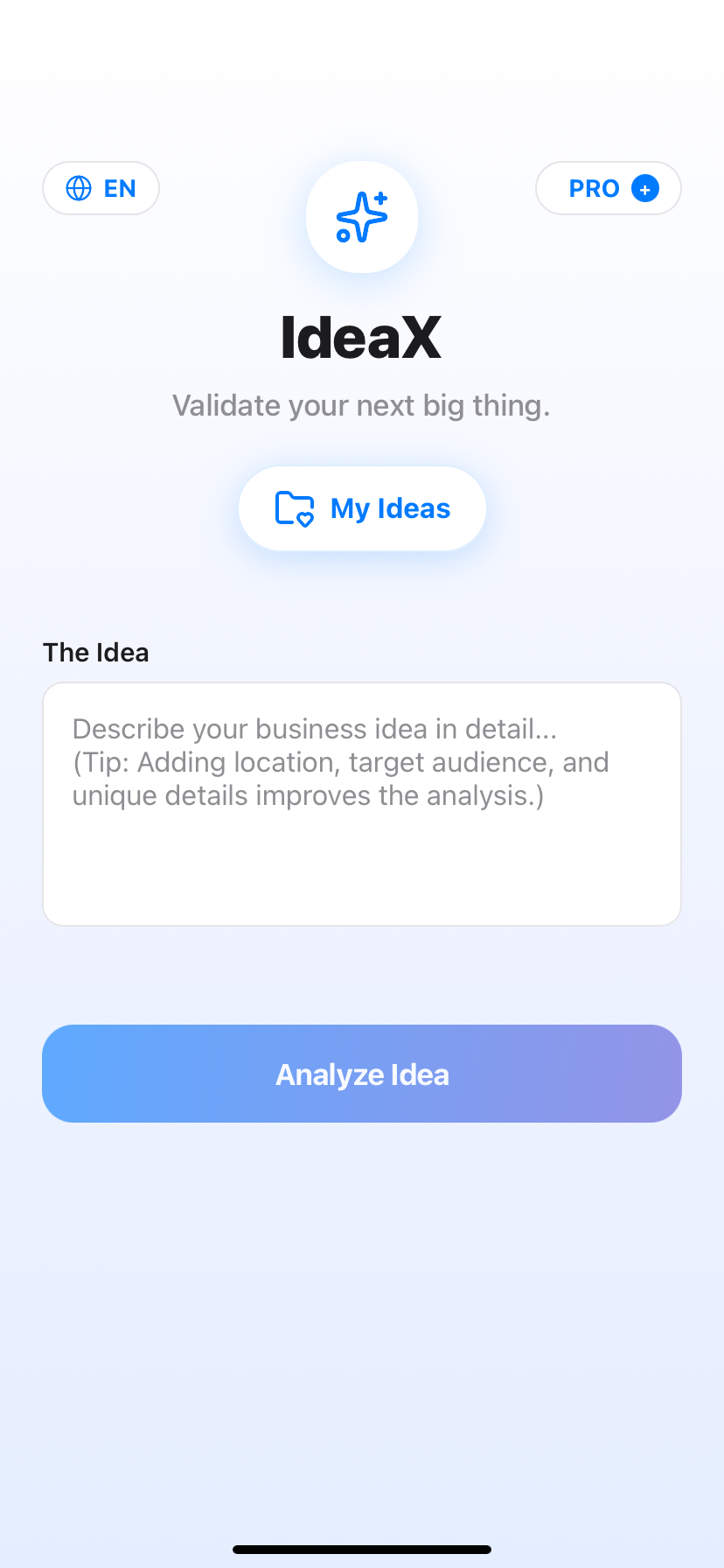
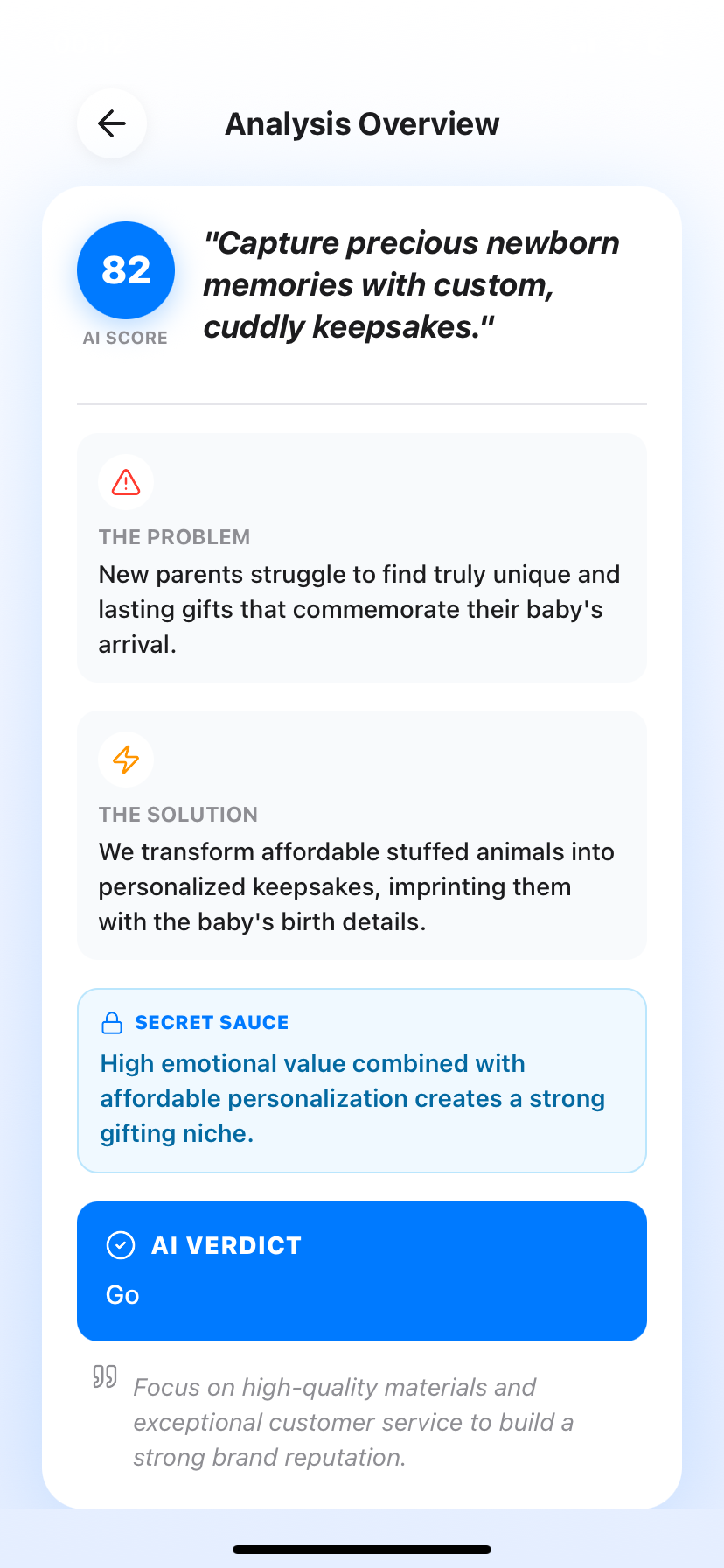
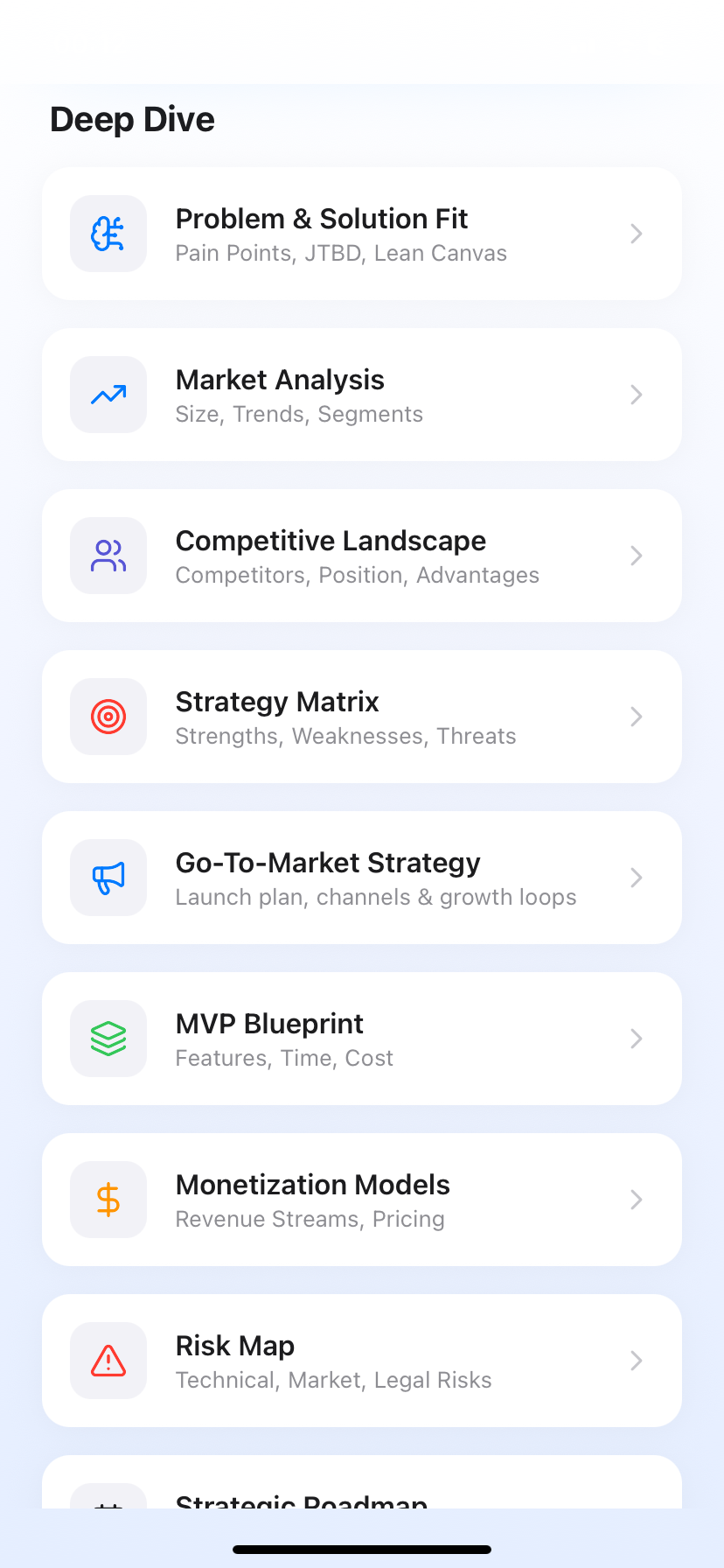

IdeaX: Business Idea Analysis
Category 1 in the evaluation stack. Use first.
Run the structural audit before anything else.
The most expensive mistake in startup evaluation is spending 40 hours on search research, competitive mapping, and customer interviews — only to discover a fatal structural flaw that was detectable in 10 minutes. IdeaX is Category 1 in the optimal evaluation stack: AI-powered structural audit that calculates Pain Severity, TAM range, competitive moat rating, and unit economics viability before you invest a single additional hour. Fast-kill fatal flaws. Invest your research time only in structurally viable concepts.
Frequently Asked Questions (FAQ)
What is the most important tool for evaluating a startup idea?
A dedicated AI Idea Analysis app — used first, before any other evaluation activity. These apps apply structured venture frameworks to identify structural flaws within minutes, preventing weeks of research effort on an idea with a fatal flaw detectable in 10 minutes. After structural viability is confirmed, move to search demand validators, competitive intelligence, customer interviews, and unit economics modeling.
What is the difference between evaluating and validating a startup idea?
Evaluation assesses structural model viability (TAM, unit economics, competitive moat, pain severity) through analytical desk work. Validation proves that real humans will buy the specific implementation through customer conversations, prototype tests, and Painted Door experiments. Evaluation comes first — running validation experiments on a structurally broken model wastes money.
How long does a thorough startup idea evaluation take?
With the right tools: AI analysis (10 minutes), market size validation via Google Trends/Keyword Planner (2-3 hours), competitive landscape mapping (4-6 hours), and unit economics modeling (2-3 hours). Total structural evaluation: 10-16 hours of focused effort — radically less than weeks of unfocused manual research.
Can I evaluate a startup idea for free?
Yes, substantially. Free stack: Google Trends (demand trend), Google Keyword Planner (search volume), G2/Trustpilot/App Store for competitor reviews, Typeform free tier (10-response pain survey), Zoom free tier (discovery calls), Google Sheets (unit economics model). Only recommended paid element: a dedicated AI Analysis app that compresses 30-40 hours of the above into under 15 minutes.
What is a unit economics model and why does it matter?
A unit economics model calculates per-customer financial dynamics: LTV (avg. monthly revenue ÷ churn rate), CAC (total acquisition spend ÷ customers acquired), and LTV:CAC ratio. If LTV:CAC is below 3:1, every customer you acquire costs more in marketing than they return in revenue — making the business unviable regardless of how many customers you acquire. This calculation takes 15 minutes and can prevent years of loss-generating execution.