
How to Create a Go-to-Market Plan for a New Idea
The absolute worst strategic assumption in all of entrepreneurship is: "Build it, and they will come." The internet is a deafeningly loud, violently competitive attention economy. Unless you implement a precise, engineered plan to actively insert your product into the hands and minds of your specific target customer, it will die in profound, invisible silence. A Go-to-Market strategy is your detailed battlefield blueprint for breaking through that noise and systematically securing your first 100 paying customers without relying on luck, viral magic, or a famous co-founder.

- Phase 1 — Defining the Ideal Customer Profile (ICP): Who is the most desperate buyer?
- Phase 2 — Mapping the Distribution Wedge: The one channel to dominate first.
- Phase 3 — Engineering the Cold-Start Messaging: The 'X for Y' conversion formula.
- Phase 4 — The Launch Sequencing Protocol: Soft Beta, Broad Launch, Scale.
- Phase 5 — The North Star Metric: How to know if the GTM is working.
Why a GTM Plan Must Precede the Product
Most non-technical founders build the GTM plan after the product is launched. Most engineers build it never. Both approaches are catastrophically backwards.
Your distribution channel deeply influences which features must be built into the core product. If your GTM depends on viral referral loops (sharing the product gives both parties a benefit), that referral mechanism must be embedded natively into the product's architecture from day one — not bolted on as an afterthought after you've built a monolithic, un-shareable application.
Similarly, if your GTM relies on SEO content marketing, you must commit to 6+ months of runway before expecting organic traffic results, which dramatically changes your required funding timeline. A robust business plan must incorporate the GTM strategy into its core financial model before a single line of production code is deployed.
Phase 1: Define the Ideal Customer Profile (ICP)
You fundamentally cannot afford to market to "everyone." Marketing to everyone means you are spending every dollar of your limited advertising budget reaching people who have no acute, urgent reason to buy your specific product today. The result is a catastrophically high Cost-Per-Click combined with a catastrophically low conversion rate.
Building the Hyper-Specific ICP
Your Ideal Customer Profile is a highly specific, almost uncomfortably detailed description of the one type of person who is experiencing the pain your product solves with the maximum possible intensity — and who has both the financial means and the authority to make a purchasing decision today.
Consider the difference between these two ICP definitions for the same productivity tool:
❌ Weak ICP
"Small business owners who want to be more productive."
Too broad. Could describe 50 million people. Impossible to message, impossible to find, impossible to convert.
✅ Strong ICP
"US-based freelance Premiere Pro video editors earning $60K+/year who manage 6+ client projects simultaneously and currently use a combination of email and spreadsheets for project tracking."
Specificity enables hyper-targeted messaging and audience selection.
The stronger ICP appears to restrict the market. In reality, it dramatically accelerates customer conversion because your messaging speaks with laser precision to their exact, lived daily experience. Writing for your exact target audience's specific frustration yields a 5-10x higher click-through rate than generic copy.
Phase 2: Map the Single Distribution 'Wedge'
The distribution wedge is the single, tightly focused channel you will use exclusively to acquire your first 100 customers. Attempting to be everywhere simultaneously at launch — TikTok, LinkedIn, YouTube, SEO, cold email, paid search, influencers — guarantees you will perform at a mediocre level across all channels while achieving excellence on none.
The 5 Core Startup Distribution Channels
SEO Content Marketing
Long-term, compound, zero marginal cost. Requires 6+ months before meaningful traffic. Best for: B2B SaaS with clear problem-search queries. Worst for: Consumer apps that people don't search for.
Cold Outreach (LinkedIn / Email)
High precision, low cost, immediately testable. Best for: B2B tools targeting VP/Director-level buyers. Worst for: Consumer apps, developer tools with strong DIY culture.
Community Building (Reddit, Discord, Slack)
Authentic, high-trust, zero ad spend. Best for: Dev tools, niche SaaS, creator economy products where the community is tight-knit. Requires genuine participation, not spam.
Paid Acquisition (Google / Meta Ads)
Immediate traffic, fully measurable. Requires positive LTV:CAC to be financially viable. Best for: Products with proven >5% landing page conversion rates. Worst for: Untested, unvalidated products.
Strategic Partnerships & Integrations
High-leverage for B2B. If you build a Shopify plugin, you get access to Shopify's 2M+ merchant base. Best for: Products that augment existing platforms. Requires careful contract negotiation.
Phase 3: Cold-Start Messaging Engineering
When absolutely nobody knows who you are — when you have zero brand equity, zero reviews, and zero social proof — your marketing must be mathematically precise rather than creatively clever. The messaging in a cold GTM launch cannot afford ambiguity. Ambiguity kills conversion rates.
The 'X for Y' Positioning Formula
The most reliably high-converting cold-start messaging framework is the "X for Y" positioning formula combined with a specific, measurable outcome statement. This structure anchors your product to an existing known reference point while immediately communicating the specific audience it serves.
When your competitors are attempting to sound like billion-dollar corporate enterprises with abstract brand slogans, you will win the early market by sounding like exactly the specific, urgent medicine your niche customer needs right now.
Phase 4: The 3-Stage Launch Sequencing Protocol
Experienced founders never "launch" a product with a single dramatic announcement. They execute a carefully orchestrated three-stage launch sequence designed to maximize learning velocity while minimizing the risk of a catastrophic, public, unrecoverable launch failure.
Stage 1 — Closed Beta (Weeks 1-4)
Invite 10-20 highly specific, hyper-motivated early adopters who perfectly match your ICP. Give them completely free access in exchange for structured weekly feedback sessions. Use this stage exclusively to identify your most critical product gaps before exposing the product to a broader, more impatient audience.
Stage 2 — Soft Public Launch (Weeks 5-8)
Post to Product Hunt. Write a detailed "Problem → Solution" launch story on the relevant subreddit. Push a single announcement email to your waitlist. Set a realistic goal: 50 sign-ups, not 50,000. Use real payment collection (no free plans; even $1 is proof of intent). Analyze which acquisition source produces the lowest CAC and highest activation rate.
Stage 3 — Paid Scale (Week 9+)
Only after proving a >3:1 LTV:CAC ratio in Stage 2 using organic channels is it appropriate to activate paid acquisition. Introduce Google Search Ads targeting your exact ICP pain-point queries. Establish systematic referral mechanisms. Create SEO content targeting the keyword clusters your Stage 2 customers used to find you.
Phase 5: The North Star Metric
A GTM plan without a North Star Metric is a map without a destination. Every team member must align around one single number that simultaneously measures product value delivery and business health.
The North Star Metric is not Revenue (a lagging indicator). It is the behavioral user action that directly precedes and reliably predicts long-term revenue. Examples:
- Slack: Number of messages sent per team per week (proxy for daily engagement and retention).
- Airbnb: Number of nights booked per month (proxy for supply-demand balance and marketplace liquidity).
- Your B2B SaaS tool: Number of "core actions" completed per user per week (the action that delivers core value, such as "reports generated" or "projects tracked").
- Your Marketplace: Number of successful buyer-seller transactions per week (proxy for liquidity and match quality).
If your North Star Metric is growing, your GTM is working. If it is stagnant or declining, you must diagnose which stage of the funnel is broken: awareness, activation, or retention.
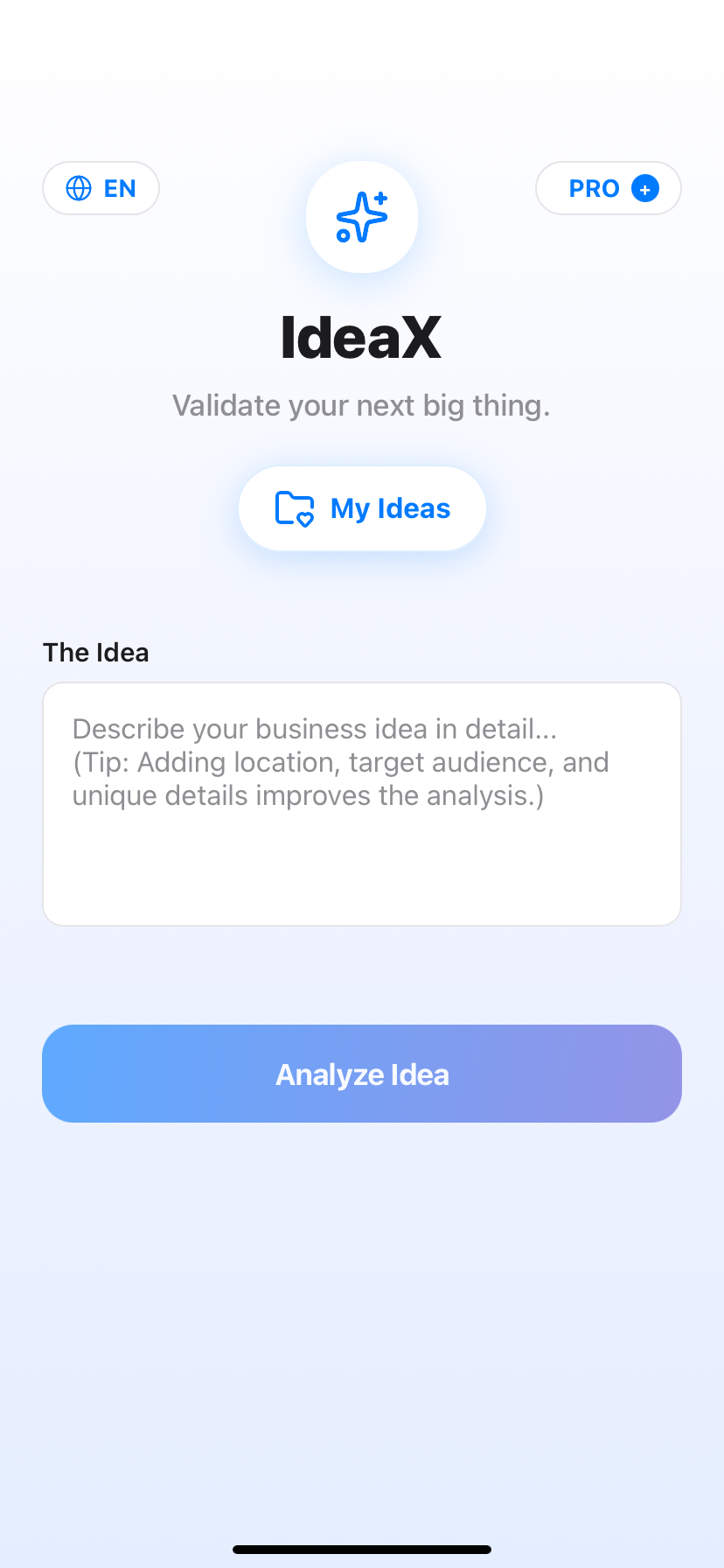
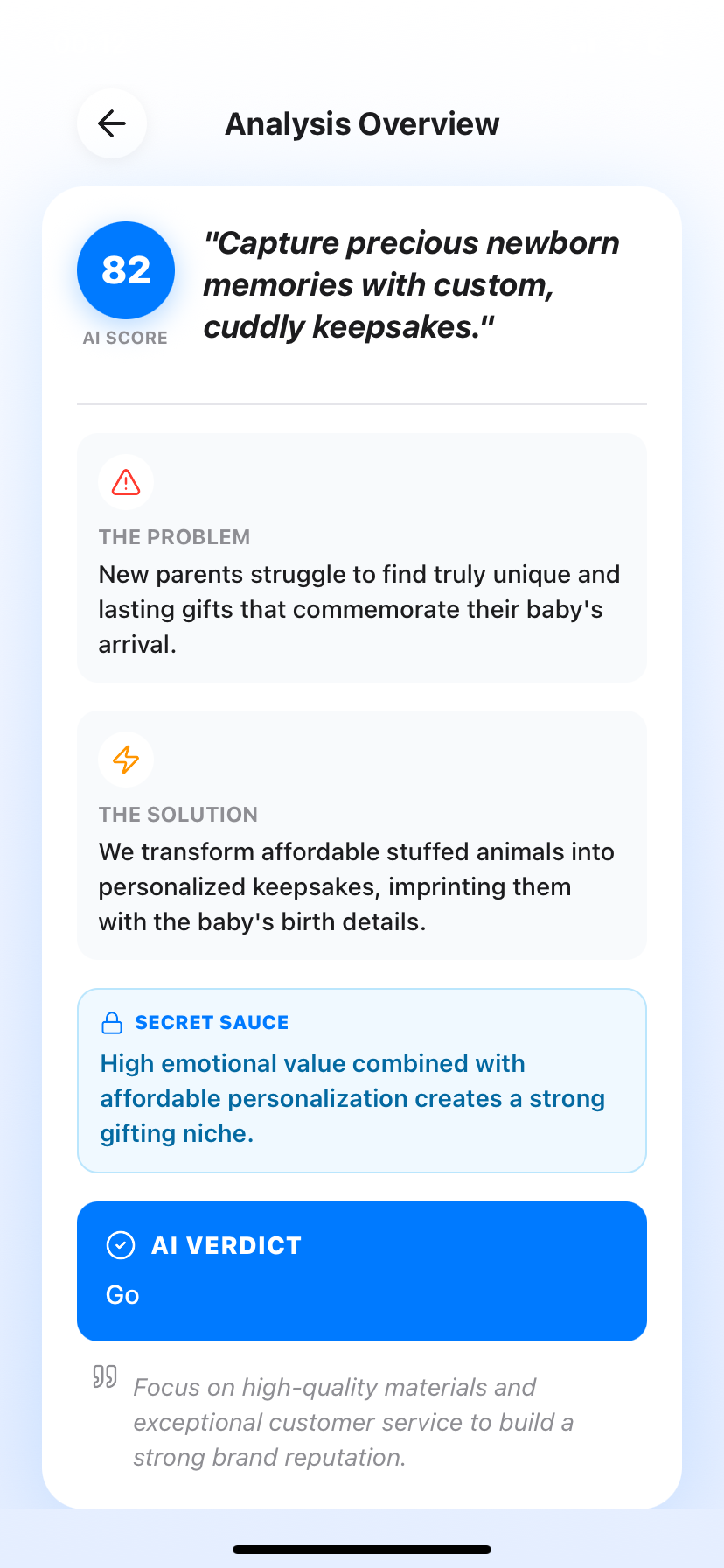
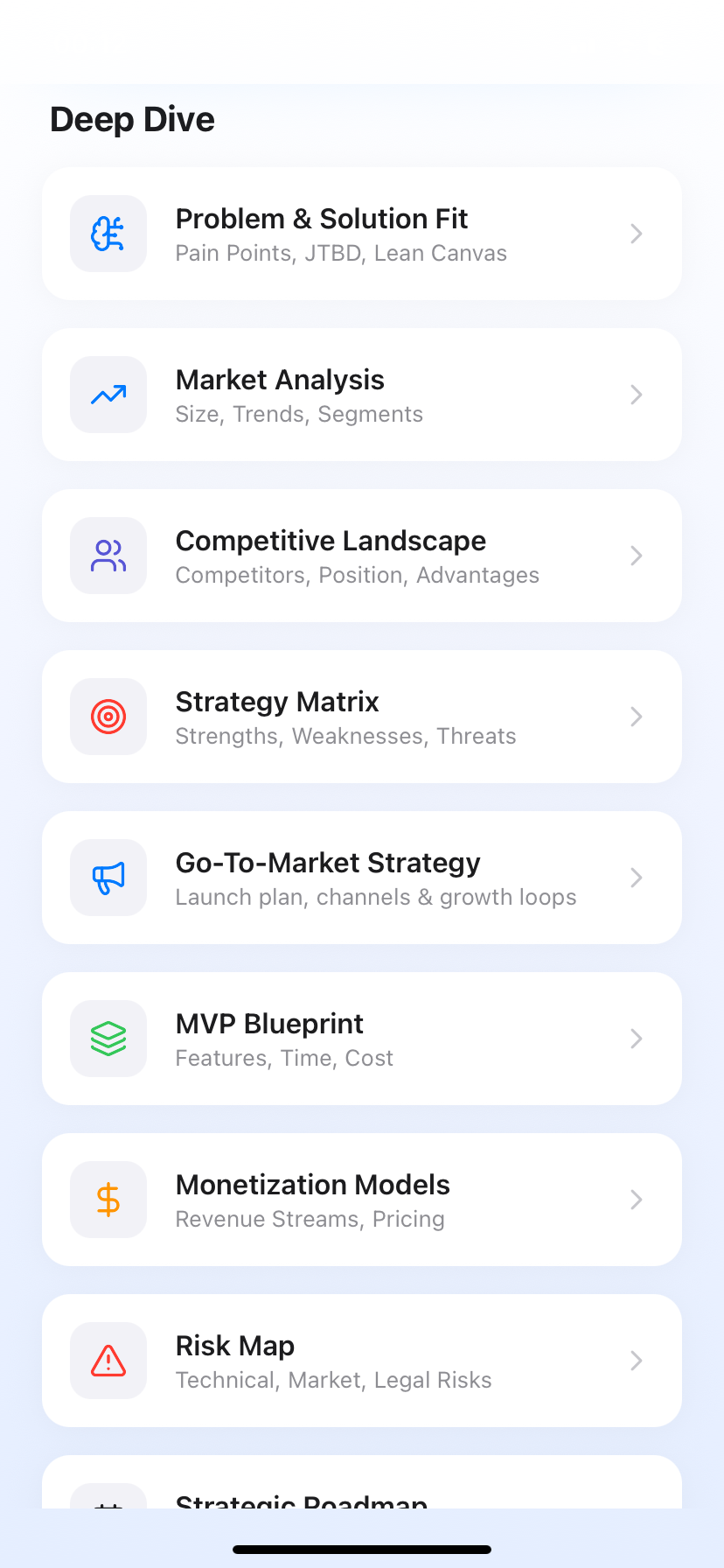

IdeaX: Business Idea Analysis
A structured space for evaluating what to build next.
Generate your GTM distribution map mathematically.
Stop guessing where your customers are concentrated. By uploading your core concept to IdeaX, the AI performs deep demographic synthesis to map your highest-probability Customer Acquisition Channels — ranked by estimated CPC, audience density, and ICP match quality. IdeaX will generate a draft Initial Wedge document: the single channel, messaging template, and conversion sequence you should test first. Don't launch blindly. Launch with coordinates.
Frequently Asked Questions (FAQ)
What is a Go-to-Market (GTM) plan?
A GTM plan is a tactical, step-by-step roadmap detailing exactly how a company will launch a product to a specific target audience to achieve competitive advantage and secure early revenue. It answers: Who are we selling to? What specific transformation are they buying? And through exactly which channel will they find out about us?
When should I start building my GTM plan?
Before you write a single line of production code. Your distribution strategy often directly dictates your product's required feature set. If your GTM depends on viral social sharing, you must engineer share-loops natively into the MVP from day one.
Why do I need a GTM plan if my product is objectively great?
Because 'build it and they will come' is categorically false. The startup graveyard is overflowing with objectively superior products that lost to inferior competitors who possessed better distribution systems and clearer messaging. Product quality is necessary but insufficient.
How many distribution channels should I target at launch?
Exactly one primary channel. Founders who launch on six platforms simultaneously achieve mediocrity on all six. Choose the single channel where your ICP congregates in the highest density, master it until you hit your first 100 customers, then systematically expand to the second channel.
What is the difference between a GTM plan and a marketing plan?
A marketing plan is an ongoing, operational document describing how you'll promote an established business over time. A GTM plan is a one-time, time-bound strategy for the specific event of launching a new product into a new market. GTM plans have end dates; marketing plans do not.