
Idea Validation App vs Manual Research: Which Wins in 2026?
In 2019, doing "your homework" before launching a startup meant spending three weeks manually compiling a competitor feature matrix in Google Sheets, reading every blog post about your market category, and filling a Notion workspace with bookmark folders of half-digested research. In 2026, this approach is a strategic handicap — not because the information is less valuable, but because doing this manually instead of using purpose-built validation software costs your most finite resource (time) and systematically distorts your conclusions with confirmation bias. The founders who move fastest to customer evidence win. Manual data aggregation is a bottleneck that software eliminates; customer discovery conversations are a competitive advantage that software cannot replicate.

- The direct time cost and cognitive distortion cost of manual research.
- 5 structural advantages of dedicated Idea Validation Apps over manual methodology.
- How confirmation bias systematically corrupts manual research outputs.
- The one irreplaceable manual activity apps cannot substitute.
- The optimal hybrid workflow for maximum validation efficiency.
The Two Hidden Costs of Manual Research
Manual startup research has two costs that most founders fail to calculate explicitly: the direct time cost and the cognitive distortion cost.
Direct time cost: A comprehensive manual competitor analysis — identifying all relevant competitors, reading their pricing pages, scraping their G2 and Trustpilot reviews, compiling feature comparisons, and attempting a TAM estimation — typically requires 30-50 hours for a diligent first-time founder. If that founder values their execution time at $75-100/hour, the manual research process costs $2,250-5,000 in opportunity cost before a single customer has been spoken to.
Cognitive distortion cost: Humans conducting research about their own ideas are systematically biased observers. Confirmation bias — the documented cognitive tendency to search for, weight, and remember information that confirms existing beliefs — operates invisibly during manual research. Founders emphasize the competitor's negative reviews while discounting their 4.8-star rating. They categorize a market with 40 funded competitors as "validated demand" without analyzing whether differentiation is achievable. They interpret ambiguous regulatory questions as non-issues because considering them threatens the idea they are emotionally invested in. Purpose-built apps eliminate this distortion entirely.
5 Structural Advantages of Dedicated Idea Validation Apps
| Capability | Manual Research | Dedicated Validation App |
|---|---|---|
| Time to structural risk report | 30-50 hours | 8-12 minutes |
| Confirmation bias risk | Very high — founder is the analyst | None — algorithmic, adversarial |
| Framework consistency | Varies by founder knowledge | Standardized venture framework applied every time |
| Unit economics calculation | Requires separate financial modeling expertise | Calculated automatically from concept inputs |
| Competitive moat assessment | Informal and highly subjective | Categorized rating with specific gap identification |
| Iteration speed | Pivoting requires restarting the research cycle | Re-run analysis on new positioning in minutes |
The One Irreplaceable Manual Activity
Manual data aggregation should be fully automated by software. But one critical validation activity remains irreplaceable by algorithms, and any founder who tries to substitute an app for it will miss the highest-quality signal available: the customer discovery conversation.
Sitting across from (or on a video call with) a qualified human being who matches your Ideal Customer Profile and asking them specifically about the problem you propose to solve produces a category of signal that no algorithm currently generates: the nuanced, spontaneous, unfiltered behavioral response of a real human in the presence of acute pain recognition. When a prospect leans forward and says "yes, that's exactly the problem — it costs us about 6 hours every Monday," and their facial expression shifts from skepticism to genuine interest, you have obtained a quality of data that no app can synthesize.
What the App Does That the Manual Researcher Cannot
The most important structural advantage of a purpose-built validation app is adversarial objectivity. The app has no emotional investment in the idea. It has no reason to tell you your concept is more viable than the evidence supports. When the unit economics calculation reveals that your proposed LTV:CAC ratio is 0.8:1 at realistic acquisition costs — meaning every customer you acquire loses money — the app surfaces this conclusion without softening it, without searching for an alternative interpretation, and without weighing it against your months of excitement. It simply calculates the number and tells you what it means.
This adversarial objectivity is the single most valuable property a technical tool can bring to the validation process. It compensates directly for the confirmation bias that makes founder-directed manual research unreliable. Use the app first — before you have had time to develop emotional attachment to the concept through hours of manual research. The sequence matters.
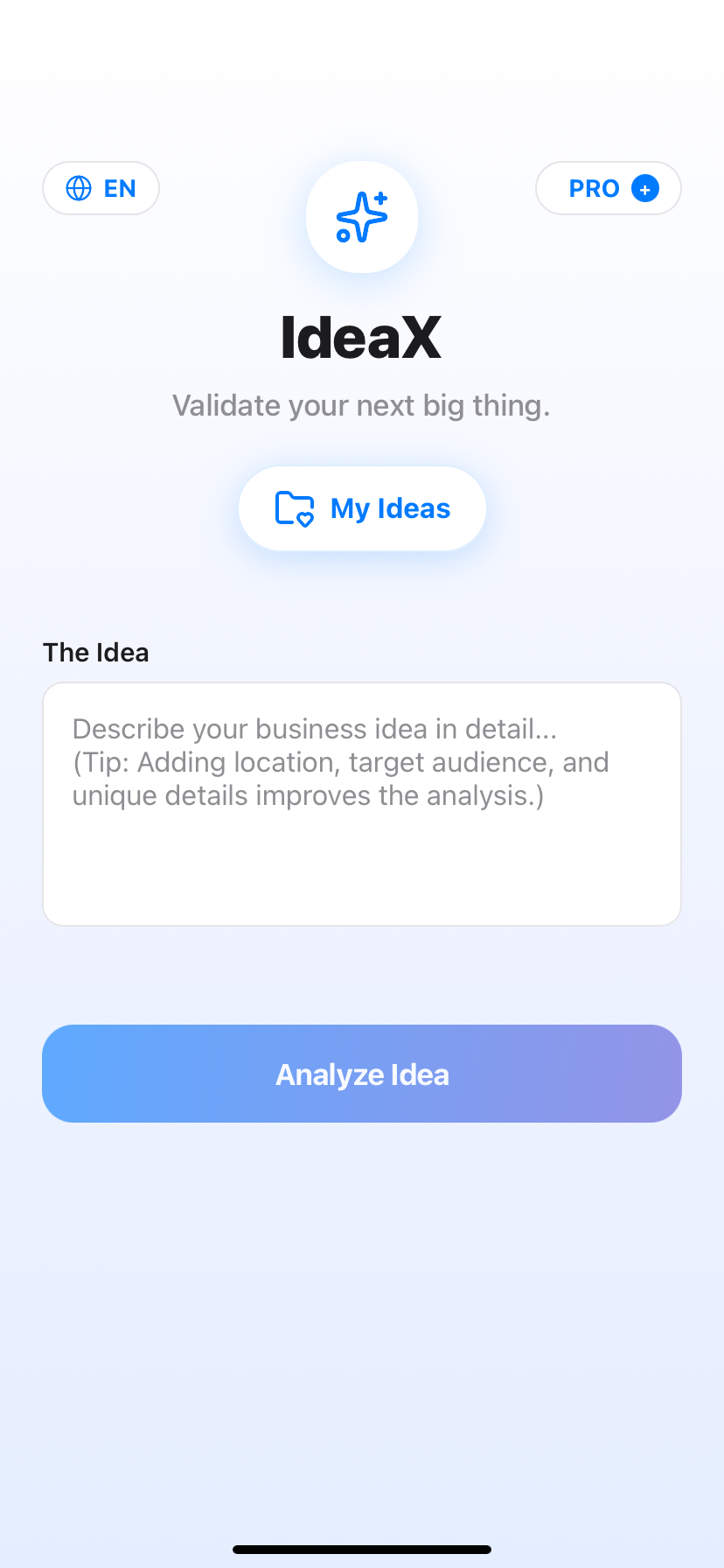
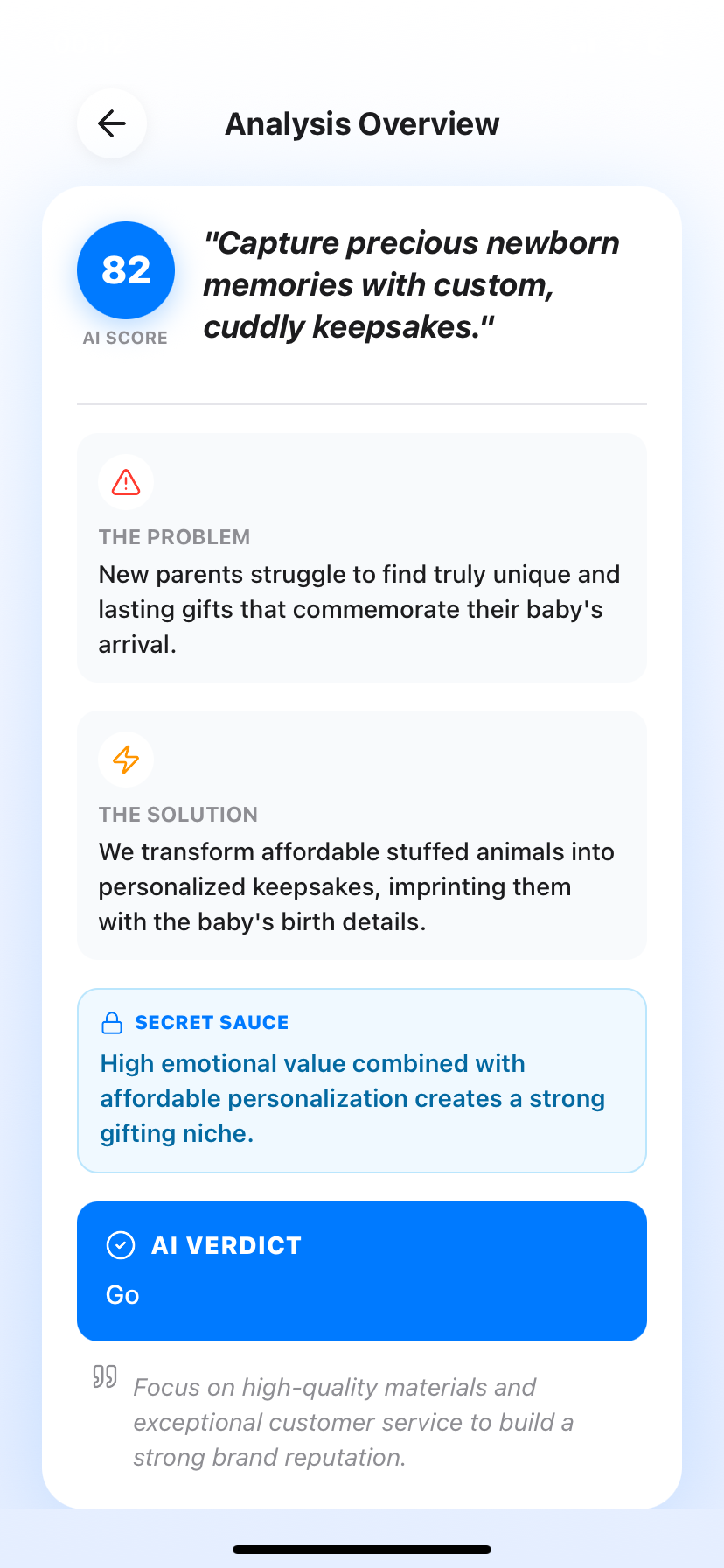
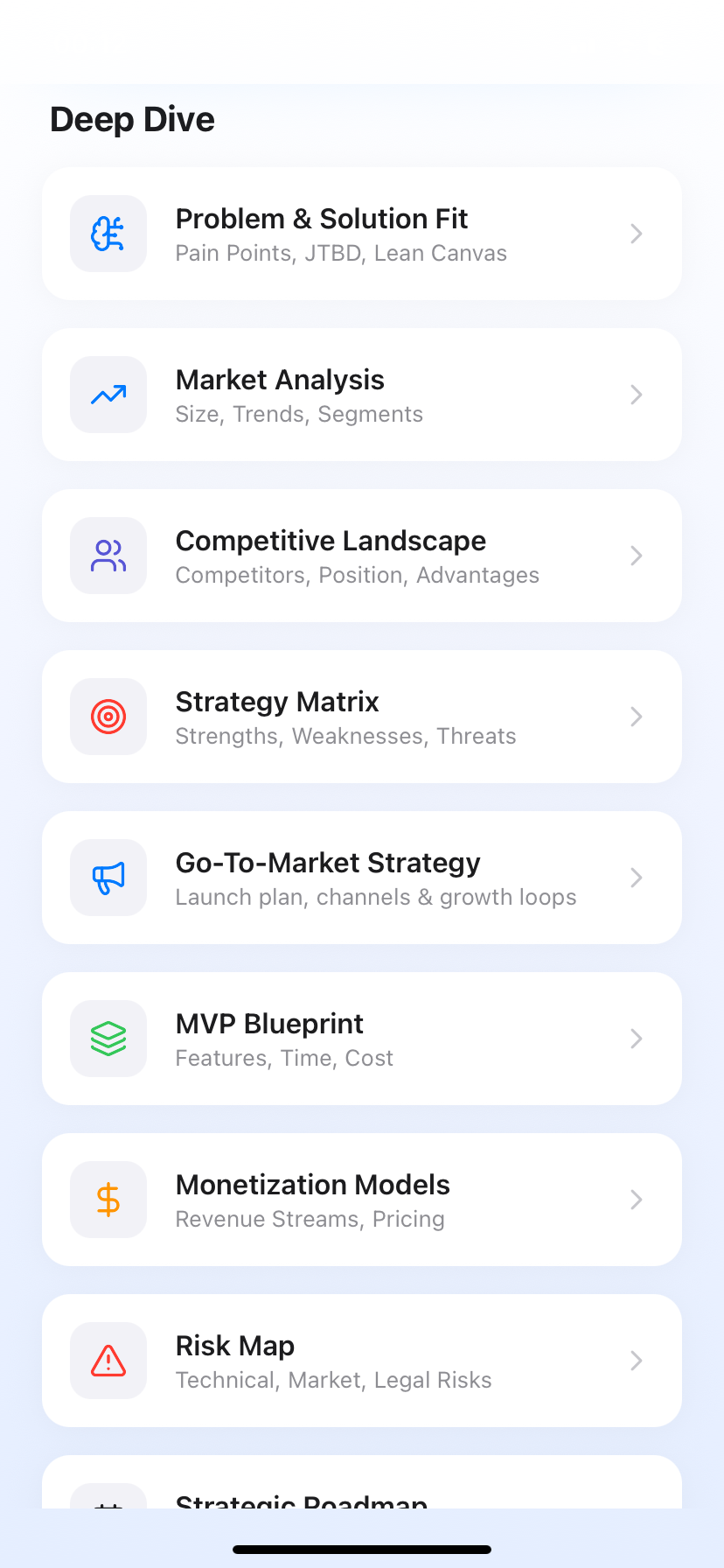

IdeaX: Business Idea Analysis
Adversarial objectivity. Zero confirmation bias.
Stop Googling. Start calculating.
IdeaX replaces 40 hours of manual research with 10 minutes of algorithmic adversarial analysis: Pain Severity rating, TAM estimation, competitive moat assessment, unit economics viability calculation, and a prioritized list of the 3 most critical structural risks to resolve — all before you open a single Chrome tab. Then spend your manual effort where it matters: 10 customer discovery conversations that generate the qualitative signal quality no algorithm can replicate.
Frequently Asked Questions (FAQ)
What is the real opportunity cost of manual startup research?
Two costs: (1) Direct time — 30-50 hours of data aggregation at $75-100/hour = $2,250-5,000 in forgone execution time, before a single customer is spoken to. (2) Cognitive distortion — confirmation bias systematically corrupts manual research outputs, causing founders to underweight disconfirming evidence and overweight supporting evidence.
How does a dedicated Idea Validation App work?
It applies structured venture evaluation frameworks (Pain Severity, TAM, competitive moat, unit economics) to the concept submitted — generating categorical risk scores independent of the founder's emotional investment. Unlike a generic AI assistant, it is structurally optimized for risk identification, not user satisfaction. It surfaces invalidating evidence regardless of how compelling the concept sounds.
Is manual research completely useless?
No — for one specific, mandatory activity: customer discovery conversations. Face-to-face or video interviews with ICP-matched humans produce a quality of signal (facial expressions, spontaneous elaboration, emotional responses to problem descriptions) that no algorithm replicates. Manual customer conversations are mandatory. Manual data aggregation should be fully automated.
What is confirmation bias in manual startup research?
The cognitive tendency to search for, weight, and remember information that confirms an existing belief. In practice: emphasizing one positive competitor review while discounting 40 negative ones; interpreting 50 funded competitors as "validated demand" without analyzing differentiation achievability; treating regulatory ambiguities as non-issues to protect an emotionally appealing concept. Apps eliminate this by applying the same adversarial framework regardless of the idea's appeal.
When is manual research still necessary?
Three activities: (1) Customer discovery conversations — 10-30 minute ICP interviews to probe pain severity and willingness to pay. (2) Forum signal mining — manually reading Reddit and Quora threads to identify the exact language your ICP uses for the pain (becomes landing page copy). (3) Competitor pricing page reviews — reading each competitor's pricing page to understand bundling and pricing psychology. These three benefit from human judgment that algorithms don't yet replicate.