
How to Prioritize Features for an MVP
The startup graveyard is entirely paved with "cool features" that nobody actually needed. Building software is psychologically intoxicating — the continuous illusion of forward progress causes founders to spend months polishing a Dark Mode toggle, a social sharing button, and Apple Pay integration instead launching the core product and acquiring paying customers. If you want to survive as a founder, you must become a ruthless, systematic assassin of your own feature ideas.

- The MVP mental model: what it actually means and what it doesn't.
- The MoSCoW Method: sorting every feature into four ruthless buckets.
- The Kano Model: separating basic requirements from delighters.
- The Perfectionism Trap: why embarrassment at launch is a feature, not a bug.
- The Wizard of Oz Technique: how to fake automation to validate before building.
What an MVP Actually Is (And What It Is Not)
An MVP — Minimum Viable Product — is not a "lite version" of your grand product vision. An MVP is a structured experiment. Its sole scientific purpose is to test one specific, falsifiable business hypothesis as cheaply and rapidly as humanly possible without destroying your credibility.
The experiment has two possible outcomes: (1) customers pay for the core value proposition, proving the hypothesis true and justifying capital investment in V2; or (2) customers don't engage meaningfully, proving the hypothesis false and saving you 18 months of wasted effort.
Any feature you add to the MVP that does not directly help prove or disprove that core hypothesis is not a feature — it is a time-expensive distraction that delays the moment of truth.
The MoSCoW Prioritization Framework
To eliminate scope creep before it infects your launch timeline, you need an objective, systematic sorting system — not a founder's gut feeling. The MoSCoW method forces every single proposed feature through four clearly defined priority buckets, making it structurally impossible to justify building non-essential functionality.
The Four MoSCoW Buckets
✅ MUST HAVE
Without this feature, the product is literally un-launchable, legally unsafe, or fundamentally incapable of delivering any core value. The test: if you remove this feature, does the product cease to function entirely? If yes, it's a Must Have. Example: A rideshare app Must Have a button to request a car.
📌 SHOULD HAVE
Important features that add significant UX value but have a clunky, acceptable manual workaround available for the first 30-60 days. Example: Automated password reset. For V1, just have users email you to manually reset it.
💡 COULD HAVE
Nice-to-have additions that do not impact core functionality. These are the features "the designer suggested" and "sound cool" but zero paying customers will churn over their absence. Example: Apple Pay integration. Force V1 users to type their card number — it's fine.
🚫 WON'T HAVE (This Version)
Explicitly deferred features. Writing them into this bucket makes them visible and prevents them from silently creeping back. This is the graveyard where Dark Mode, the onboarding video, and the mobile app live until V2.
The Kano Model: Basic vs. Delight Features
The Kano Model is a complementary framework that categorizes features by their emotional impact on user satisfaction. It helps you distinguish between features that are quietly expected (and cause massive dissatisfaction only when absent) versus features that create a powerful positive emotional "delight" reaction when present.
| Category | If absent | If present | MVP priority |
|---|---|---|---|
| Basic Expectations | High dissatisfaction | No special satisfaction | Must build |
| Performance Features | Linear dissatisfaction | Linear satisfaction | Build core version |
| Delight / Excitement | No dissatisfaction | Emotional delight | V2 if budget allows |
The practical takeaway: ensure all Basic Expectations are met (even if poorly), build the minimum viable Performance Features, and skip Delight features entirely until you have paying customers. Early adopters tolerate rough edges — they will not tolerate a broken core workflow.
The Perfectionism Trap
First-time founders are paralyzed by the fear of launching an imperfect product. They believe that if a user discovers a bug, a missing feature, or a rough interface, the brand's reputation will be permanently and irreparably destroyed. This is ego psychology, not product strategy.
Reid Hoffman, co-founder of LinkedIn, famously stated: "If you are not embarrassed by the first version of your product, you have launched too late."
Your Early Adopters — the specific target audience segment who experiences the core pain the most acutely — do not care if your CSS has pixel-perfect spacing or your onboarding flow has five unnecessary friction points. They care that you are solving the bleeding wound they are experiencing daily. They will endure a rough interface if the core Value Proposition is actually functional and genuine.
The Wizard of Oz Technique
The single most powerful MVP strategy for validating complex product hypotheses without significant engineering investment is the "Wizard of Oz" technique — named after the famous film scene where an apparently omnipotent wizard is revealed to be a small man pulling levers behind a curtain.
How to Execute a Wizard of Oz MVP
Present the customer with a product that appears to be fully automated and technology-powered. Behind the scenes, a human is manually performing the function. The customer sees no difference. You validate the commercial hypothesis without building any sophisticated backend infrastructure.
The rule: you only invest in the automation infrastructure after the manual version reaches the point where it is physically impossible to keep up with demand. That breaking point is proof that the business model works.
The MVP Launch Checklist
Before shipping, run through this brutal final filter:
- ☐ Can you articulate the ONE hypothesis this MVP is testing in one sentence?
- ☐ Have you applied MoSCoW and moved everything except Must Haves to Won't Have?
- ☐ Is there a payment mechanism? ($0 plans prove nothing; even $1 proves intent)
- ☐ Are there any features a human could manually replace for the first 30 days?
- ☐ Does it embarrass you a little to ship this? (If yes — ship it immediately.)
- ☐ Do you have a defined kill threshold? (Date and revenue target at which you pivot or kill)
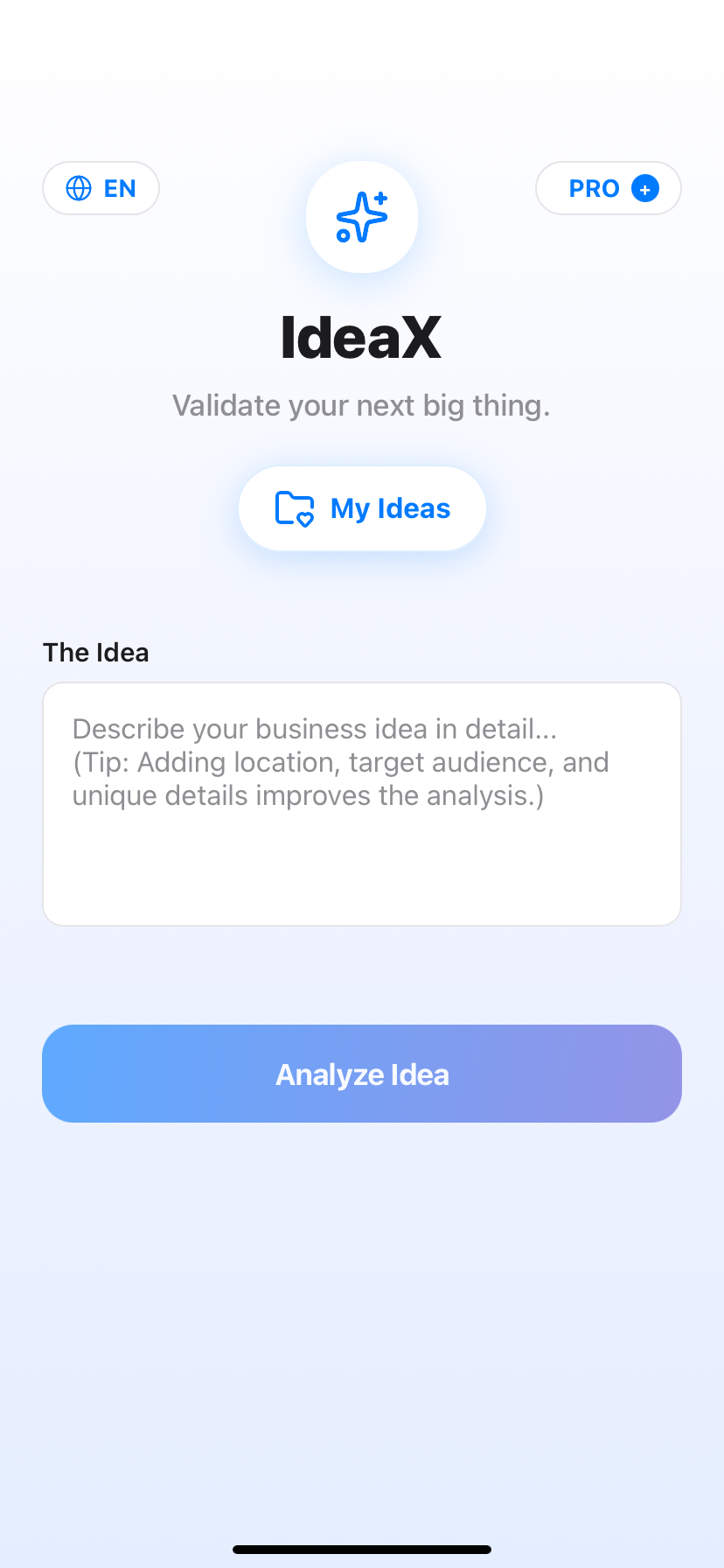
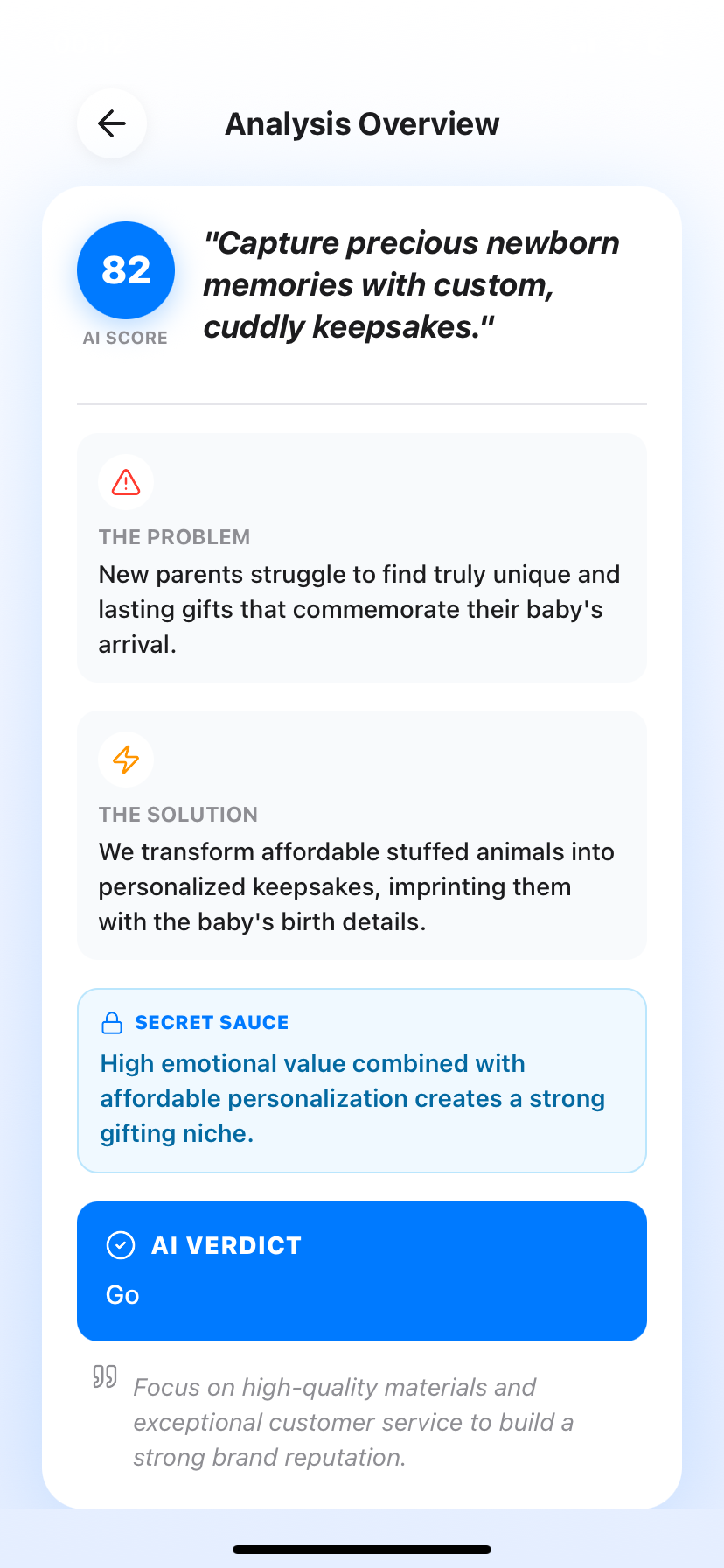
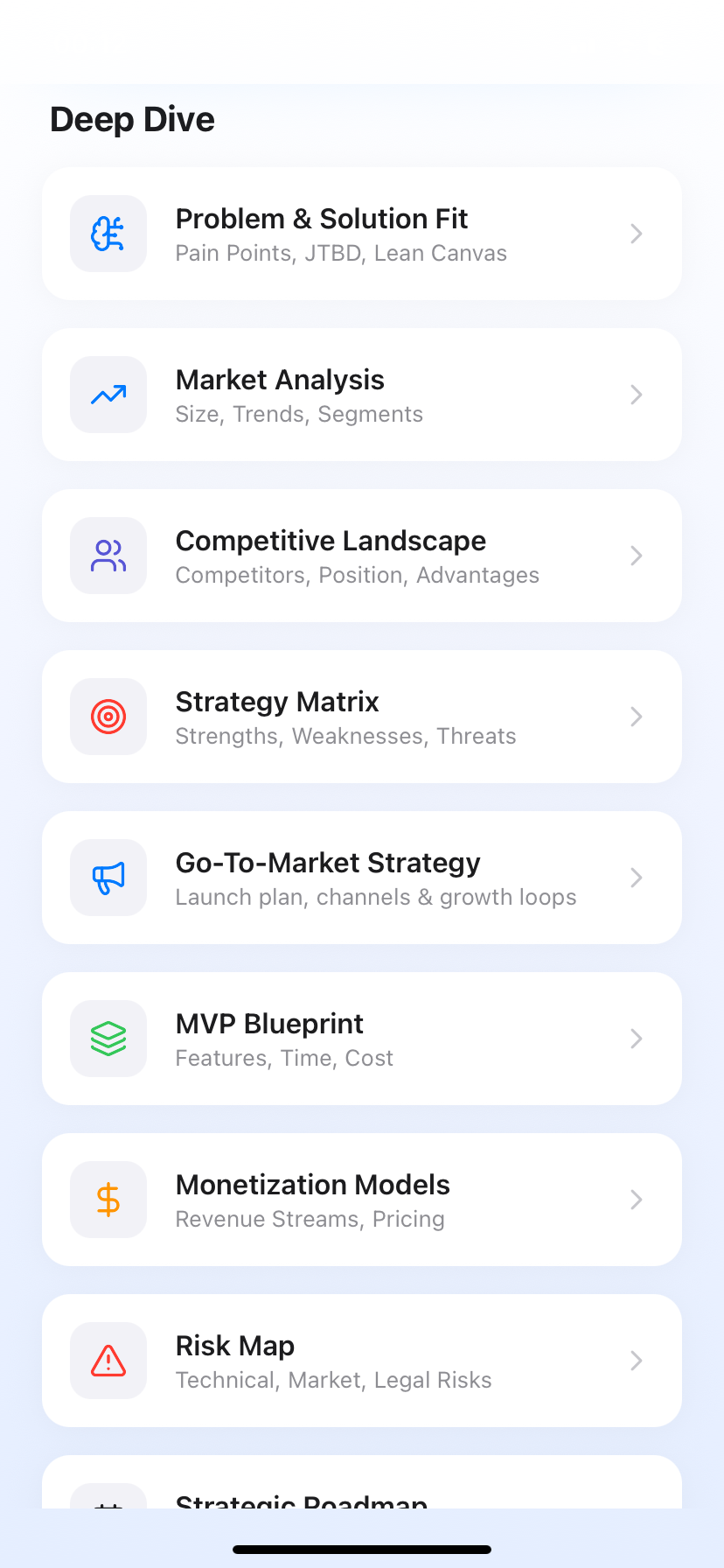

IdeaX: Business Idea Analysis
A structured space for evaluating what to build next.
Cut the bloated features automatically.
Founders are structurally incapable of editing their own grand visions — every feature feels equally essential when it's your idea. IdeaX is an unemotional, systematic editor. When you submit your "ideal product" concept to the AI engine, it performs an immediate Scope Audit: identifying the exact core "Must Have" value hypothesis, forcefully categorizing every other feature as scope creep, and providing a prioritized feature sequence ordered by their impact on initial user retention. Ship faster — let IdeaX trim the fat before it delays your launch by six months.
Frequently Asked Questions (FAQ)
What does MVP mean in product development?
MVP stands for Minimum Viable Product. It is the smallest, most stripped-down version of your product that can still solve the customer's core problem and generate real evidence of willingness to pay. It is a structured experiment, not a lite version of your grand vision.
What is scope creep and why is it fatal?
Scope creep is the gradual, unchecked expansion of a project's feature list beyond what is needed to test the core hypothesis. It is fatal because it extends launch timelines by months and consumes capital before a single paying customer has validated the business model.
How many features should be in an MVP?
Ideally, one core feature executed flawlessly. User profiles, dark mode, social login, and mobile apps are all V2. If you cannot articulate the single action your MVP allows a user to complete, the scope is already too large.
What is the Wizard of Oz MVP technique?
The Wizard of Oz technique is a validation method where the MVP appears fully automated to the customer but is secretly powered by human manual labor behind the scenes. It lets founders test product hypotheses without expensive backend infrastructure. You only automate after the manual version proves commercially viable.
How do I use the MoSCoW method for MVP features?
Sort every proposed feature into four buckets: Must Have (core, un-launchable without it), Should Have (important but workable manually), Could Have (nice-to-have with no impact on core), and Won't Have (explicitly deferred to future versions). Only build Must Have features for V1.