
How to Know If Your Startup Idea Is Worth Pursuing
Time is the single most uncompromising asset a founder possesses; unlike capital, you can never earn it back. Before you dedicate the next five years of your life to a grueling project, you must ruthlessly stress-test the core mechanics of the concept to guarantee it warrants the sacrifice.
- The psychology of "The Sunk Cost Fallacy."
- Unit Economics (Calculating CAC vs LTV ratios).
- Evaluating Defensive Moats against Big Tech clones.
- The difference between creating demand and capturing it.
- When to kill an idea, and when to aggressively pivot.

The Psychology of Idea Elimination
The difference between a hyper-successful serial entrepreneur and a habitual 'wantrepreneur' is not the ability to generate ideas. It is the ability to kill bad ideas instantaneously. Novices fall deeply, emotionally in love with their first concept. They tie their personal identity to the product and blind themselves to fundamental market flaws. Veterans understand that ideas are cheap commodities; they employ strict mental models to filter out the garbage before writing a single line of backend code.
The greatest enemy of an early-stage founder is the Sunk Cost Fallacy—the terrifying tendency to continue pouring late nights and venture capital into a doomed project simply because "we've already spent 6 months building it."
If you are currently sitting on a concept and wondering, "Is this actually worth pursuing, or am I just bored and looking for a project?", apply the following four uncompromising diagnostic filters. If the concept fails even one of these tests, you must drop your ego and pivot.
Diagnostic Filter 1: The "Hair on Fire" Necessity Test
The most important question you can ask during the initial phase is: Are people already actively trying to solve this problem, or do I have to convince them that the problem exists?
If you have to educate your prospective customer on why they need your product, your marketing budget will rapidly dry up. You should almost never try to create demand; creating demand requires tens of millions of dollars in educational lobbying (think of the early days of ridesharing). As a startup, you should aggressively aim to capture existing demand.
Hunting for Hacks and Workarounds
Look for target audiences who are currently stringing together messy spreadsheets, using Zapier to glue incompatible apps together, and spending unnecessary hours trying to patch a leaky operational process. If a logistics manager is spending four hours every Friday manually formatting CSV files because there is no API integration available, their "hair is on fire." If the frustration is palpable, quantifiable in lost wages, and highly frequent, the idea is worth exploring immediately.
Diagnostic Filter 2: The Brutal Economics of Acquisition
The startup graveyard is filled to the brim with beautifully designed software products that failed because of bad math. If it costs you $100 to acquire a customer, but they only generate $50 in total revenue before churning, your company is financially doomed, regardless of how great the UX design is.
Before you build, you must construct a theoretical model of your unit economics.
📉 The Death Spiral (CAC > LTV)
You build a consumer puzzle app that charges $2.99 once. But because the mobile app market is so saturated, buying a single install via Google Ads costs you $5.00. The more users you gain, the faster you go bankrupt.
📈 The Golden Ratio (LTV > 3x CAC)
You build B2B invoicing software that charges $50/month. The average user stays for 2 years (LTV = $1,200). You acquire users via LinkedIn outreach at a blended cost of $150 per lead. Your ratio is 8:1. You have a unicorn.
What specific channels will you use for marketing? SEO, cold email outreach, TikTok virality, or paid Google search? If you are relying purely on paid ads, but the market is heavily saturated by massive incumbent corporations driving the cost-per-click to $15, a cheap consumer application will statistically bankrupt you in a week.
Diagnostic Filter 3: The Competitive Moat
The terrifying question every venture capitalist will ask you is: "If this actually works and starts generating cash, what is stopping a development agency from cloning it over the weekend, or Google from launching it as a free feature?"
While executing quickly is often enough to secure your first 100 customers, you inevitably need a defensive moat to protect the castle. A first-mover advantage is almost never enough to survive a five-year timeline.
Types of Defensible Moats:
- Network Effects: (e.g., LinkedIn or Airbnb). The software becomes exponentially more valuable as more people join it. You cannot clone a network effect.
- High Switching Costs: (e.g., Salesforce). The software becomes so deeply embedded in the client's internal operations that ripping it out to save $20 a month is too painful.
- Proprietary Data Sets: You have accumulated proprietary machine-learning training data that is legally and logistically impossible for a competitor to scrape or replicate.
- Cult-Like Brand Ecosystem: (e.g., Apple). A community so rabid and loyal that they intentionally ignore cheaper, feature-matched competitors.
If your startup idea is just a thin graphical wrapper covering an existing OpenAI API endpoints with zero defensive positioning, it might generate cash flow early on, but it is highly vulnerable to immediate disruption. Understanding your competition is paramount.
Diagnostic Filter 4: The Opportunity Cost of Your Own Life
Finally, you must run the ultimate, highly personal calculation. Building a startup requires immense, punishing sacrifice. You will lose sleep, strain your personal relationships, drain your savings, and experience intense, rolling anxiety.
Project your life 5 years into the future. Imagine yourself working 80 hours a week staring precisely at this exact industry. Are you excited by the prospect? Or does the market genuinely bore you?
This concept is known as Founder-Market Fit. If you are building an auditing tool for corporate logistics managers purely because the spreadsheet told you to, but you personally despise the logistics industry, you will eventually burn out and quit roughly twelve months before the company actually begins to compound and succeed. Follow markets that you genuinely enjoy studying on a Saturday afternoon.
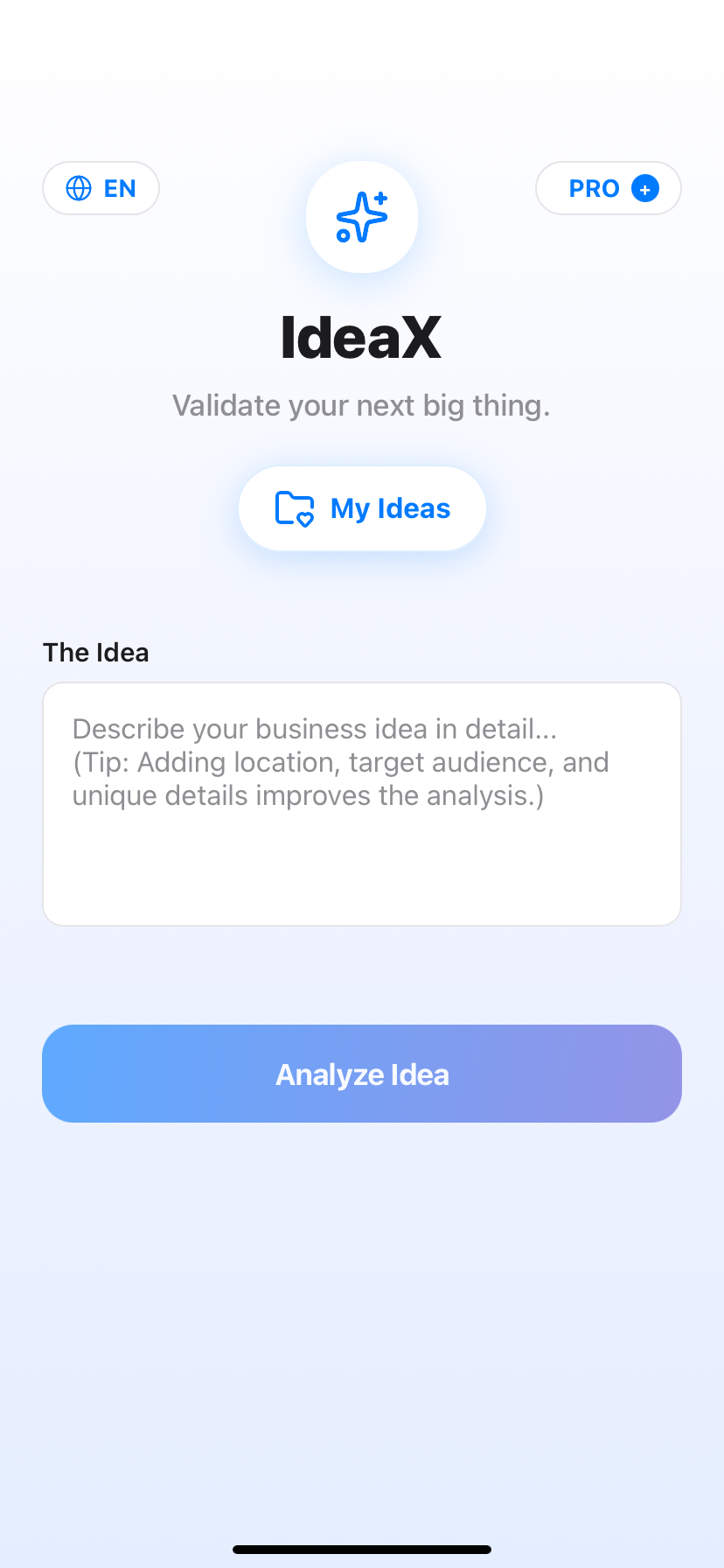
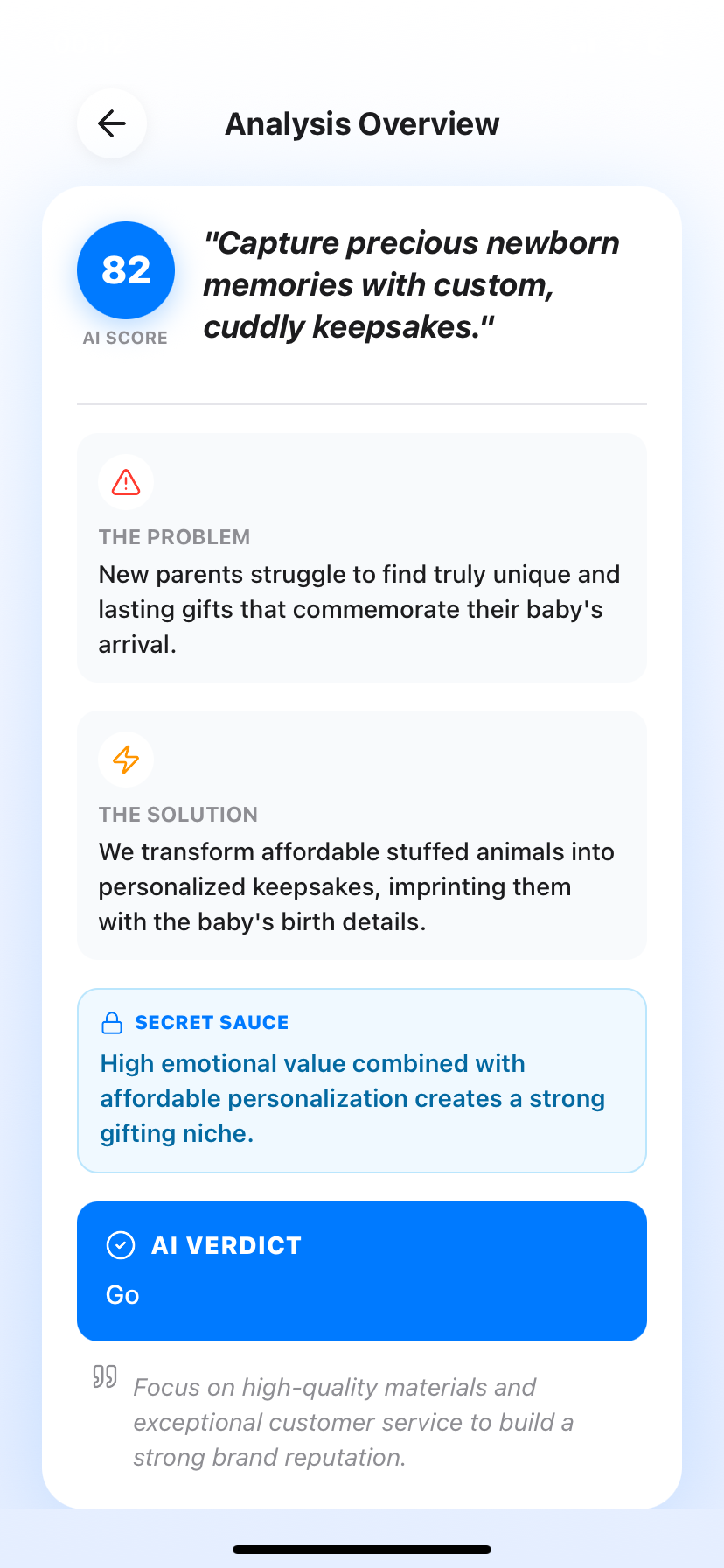
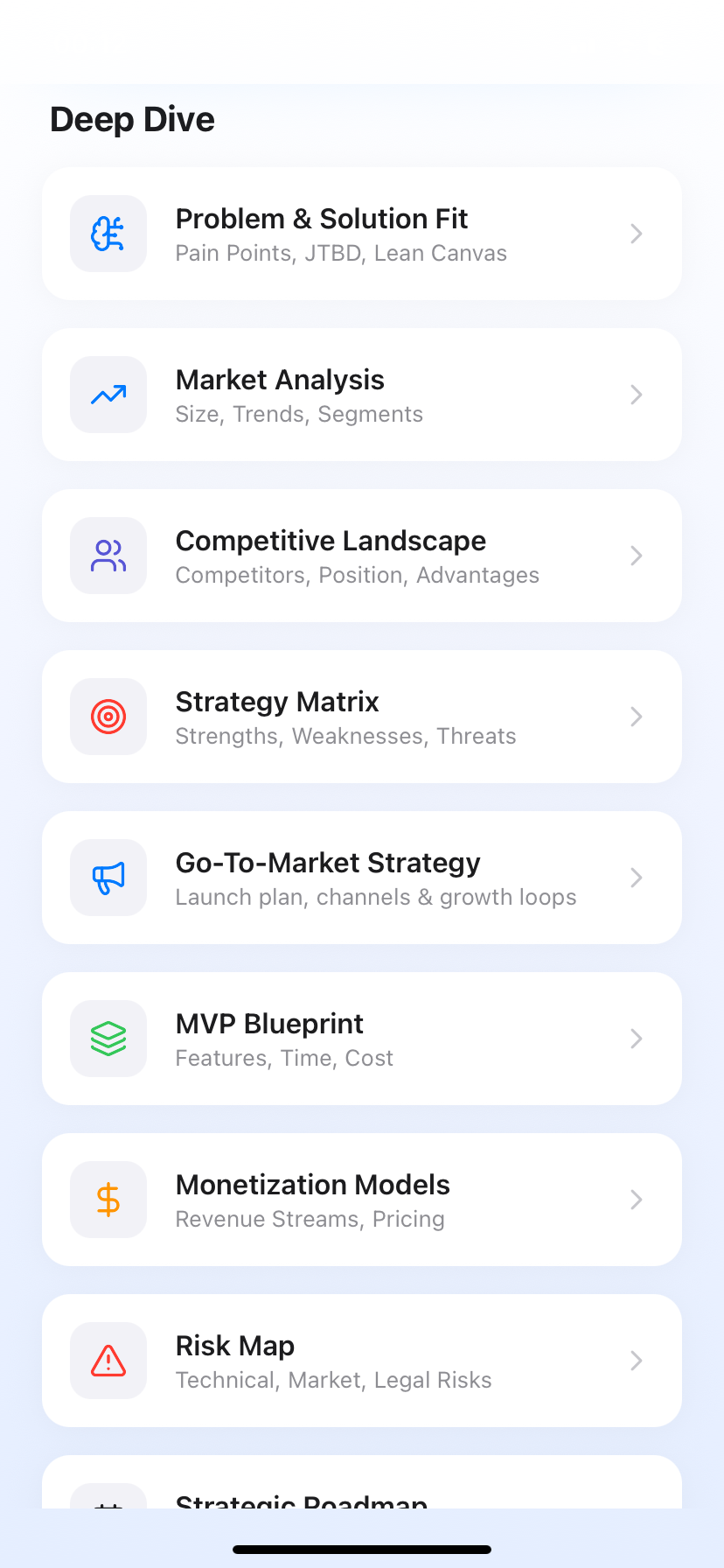

IdeaX: Business Idea Analysis
Your automated idea destruction engine.
Kill bad ideas instantly.
Your time is far too valuable to waste on doomed projects. IdeaX employs the exact same ruthless, mathematical evaluation frameworks used by top-tier venture capitalists. Input your concept, and IdeaX will automatically flag fatal structural flaws in your unit economics, pinpoint your lack of an identifiable competitive moat, and forcefully calculate if your idea is actually worth the next five years of your life. Don't guess. Audit.
Frequently Asked Questions (FAQ)
How much time should I spend validating before I build?
Spend at least 2 to 4 weeks purely focused on customer discovery, securing letters of intent, and financial modeling before writing a single line of backend code. If you cannot find 20 people willing to pre-pay, do not build the software.
What is the sunk cost fallacy in entrepreneurship?
The sunk cost fallacy is the dangerous psychological tendency to continue investing in a doomed project simply because you have already invested significant time, reputation, or money into it. A good founder knows when to ruthlessly abandon a failing idea, regardless of past effort.
Should I pivot my idea if the initial market feedback is bad?
Yes, absolutely. Rarely does a startup finish exactly as it started. If the market explicitly tells you they do not care about Feature A, but they absolutely love a tiny, accidental aspect of Feature B, you must detach your ego and pivot entirely toward Feature B.
What is the acceptable ratio for Customer Acquisition Cost (CAC) to Lifetime Value (LTV)?
As a baseline heuristic, a healthy SaaS business should maintain an LTV to CAC ratio of 3:1 or higher. This means that if it costs you $100 in marketing to acquire a customer, that customer must generate at least $300 in lifetime gross profit for the model to be sustainable.
How do I know if I have a competitive moat?
Ask yourself: "If this works, what stops Google or an offshore development agency from cloning it in a weekend?" A true moat involves high switching costs, proprietary data, strict network effects, or powerful brand cult-loyalty. First-mover advantage is rarely enough.