
What Is SWOT Analysis? A Practical Guide for Early-Stage Founders
SWOT analysis is one of the simplest strategic frameworks for understanding a business idea from multiple angles. It helps founders structure what is strong, what is weak, what opportunities exist, and what threats may slow execution.
What SWOT stands for
SWOT stands for Strengths, Weaknesses, Opportunities, and Threats. The first two look inward. The second two look outward. That mix is useful because founders often overfocus on either internal excitement or external risk.
Why the framework still matters
Early-stage teams need a fast way to compare ideas, pressure-test assumptions, and make better prioritization decisions. SWOT is simple, but simplicity is often the reason it works. It forces clarity before execution gets expensive.
How to use SWOT well
Good SWOT analysis is specific. "Strong product" is too vague. "Founding team has direct healthcare expertise and existing distribution access" is much more useful. The sharper each statement becomes, the more actionable the framework becomes.
You should also compare the four quadrants together. A strong technical moat may be real strength, but a tiny addressable market may still make the idea unattractive.
Common mistakes
Teams often confuse features with strengths, list generic risks, or write the same idea into multiple quadrants. SWOT is most useful when each point is grounded in evidence, not optimism.
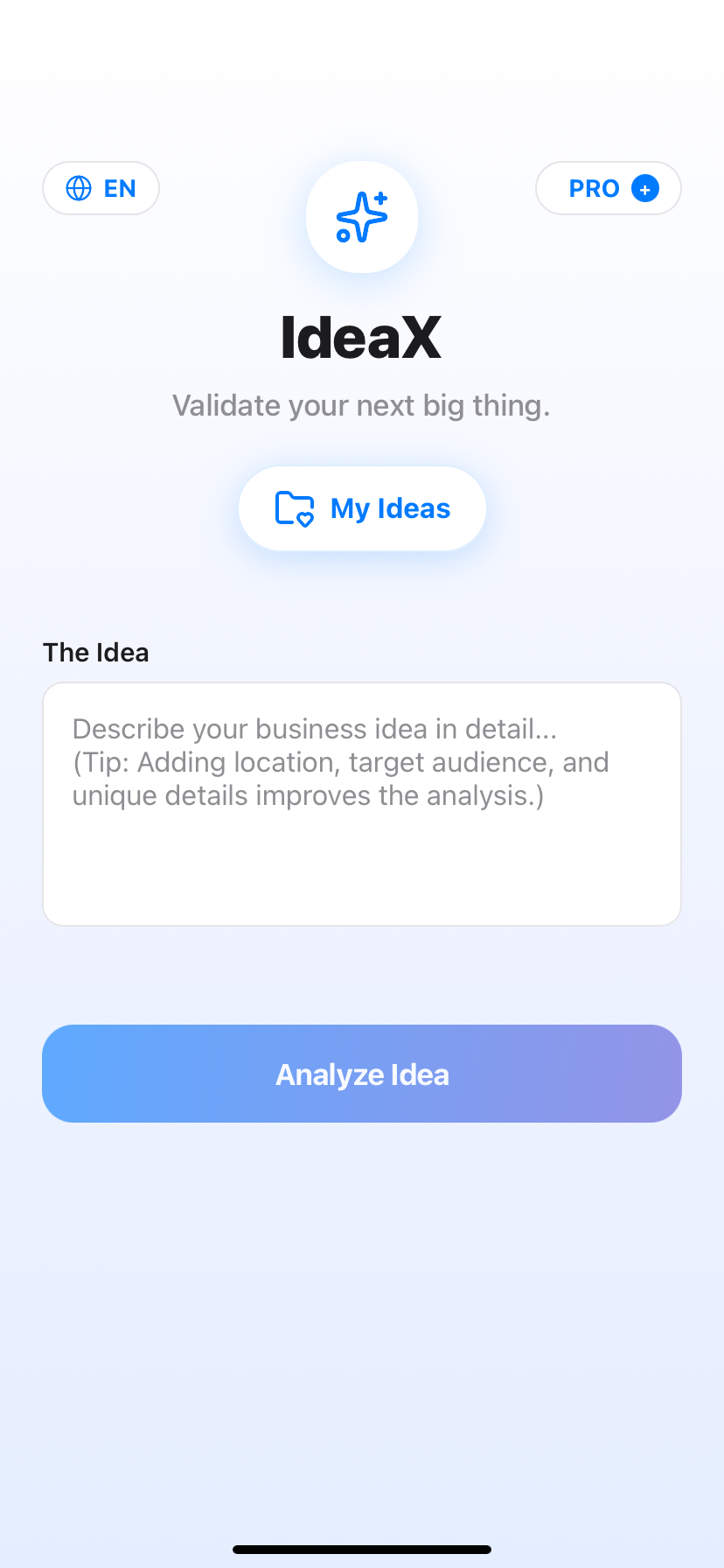
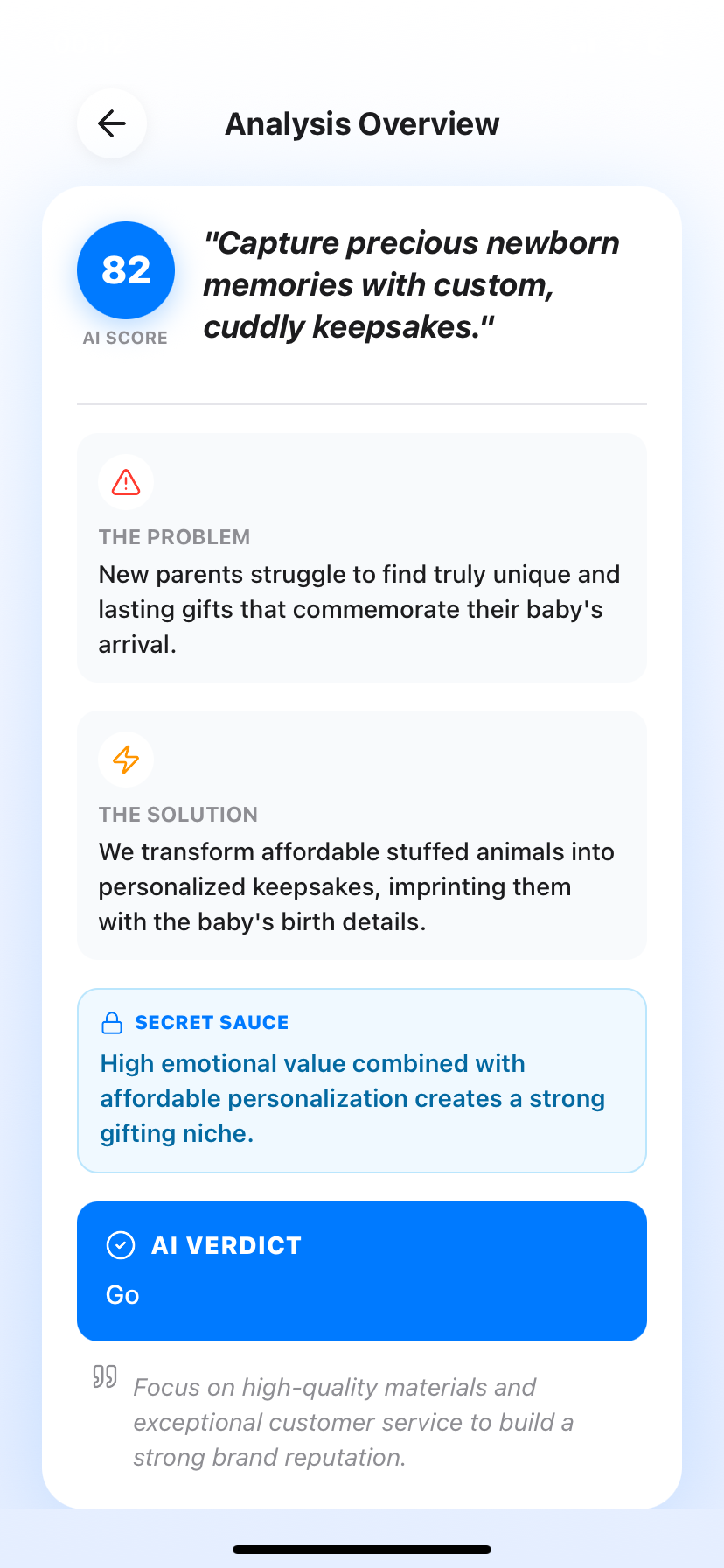
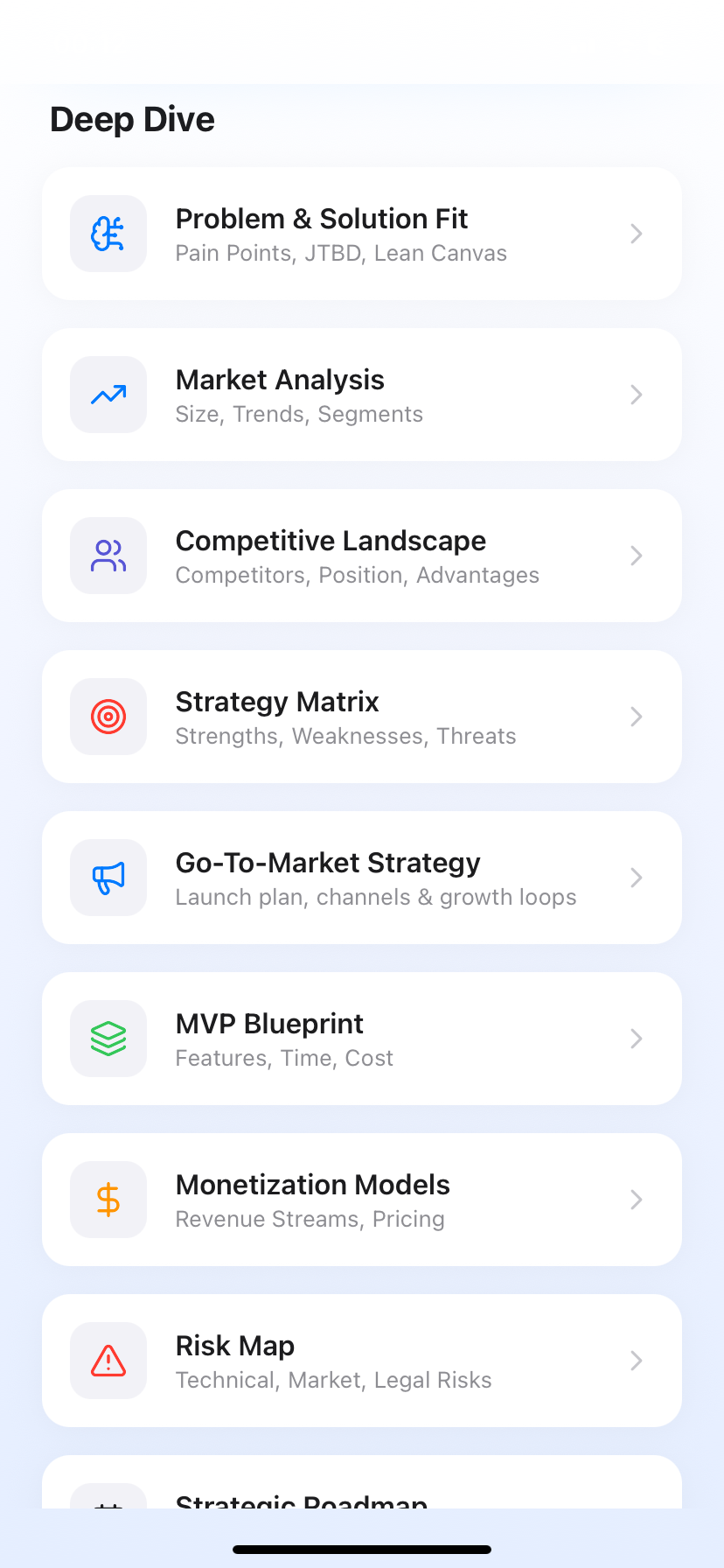

IdeaX: Business Idea Analysis
A structured space for evaluating what to build next.
Validate your business idea before you build.
Turn your idea into a clear business plan. Validate demand, spot risks, and get actionable insights with AI - in minutes, not months.