The Anatomy of SWOT
At its core, SWOT stands for Strengths, Weaknesses, Opportunities, and Threats. The elegance of the framework comes from its division into two distinct axes: the internal vs. the external.
- Internal Factors (Strengths & Weaknesses): These are variables you control. They exist within the walls of your startup. Your proprietary code architecture, your lack of distribution channels, your robust cash reserves, or your inexperienced management team.
- External Factors (Opportunities & Threats): These are variables you do not control but must react to. They exist in the broader market environment. A new regulatory shift, changing consumer behaviors, the entry of a well-funded competitor, or an economic downturn.
Breaking Down the 4 Quadrants
1. Strengths (Internal, Positive)
Strengths are your competitive advantages. They are the reasons customers choose you over alternatives. The most common mistake founders make here is being vague. "We have a great product" is a useless absolute. "Our onboarding flow converts 40% higher than the industry average" is a specific, actionable strength.
2. Weaknesses (Internal, Negative)
Weaknesses are the internal bottlenecks holding you back. These are areas where you lack resources, expertise, or structural integrity. Acknowledging these is painful for visionary founders, but necessary. "We don't have enough money" is too generic. "Our customer acquisition cost (CAC) currently exceeds our 12-month lifetime value (LTV)" is a precise weakness that demands immediate strategic intervention.
3. Opportunities (External, Positive)
Opportunities represent external shifts that your startup can exploit for growth. These are not things you *do* (like "build a mobile app"); they are market realities you *capitalize on* (like "smartphone usage in our demographic grew 300% last year"). Spotting a market gap before incumbents do is the lifeblood of early-stage startups.
4. Threats (External, Negative)
Threats are external forces that could damage your business model. They are the risks that keep investors awake at night. Is a new law going to make your data-scraping tool illegal? Is Google about to release a free feature that cannibalizes your core offering? Defensive planning starts here.

IdeaX: Eliminate Founder Bias
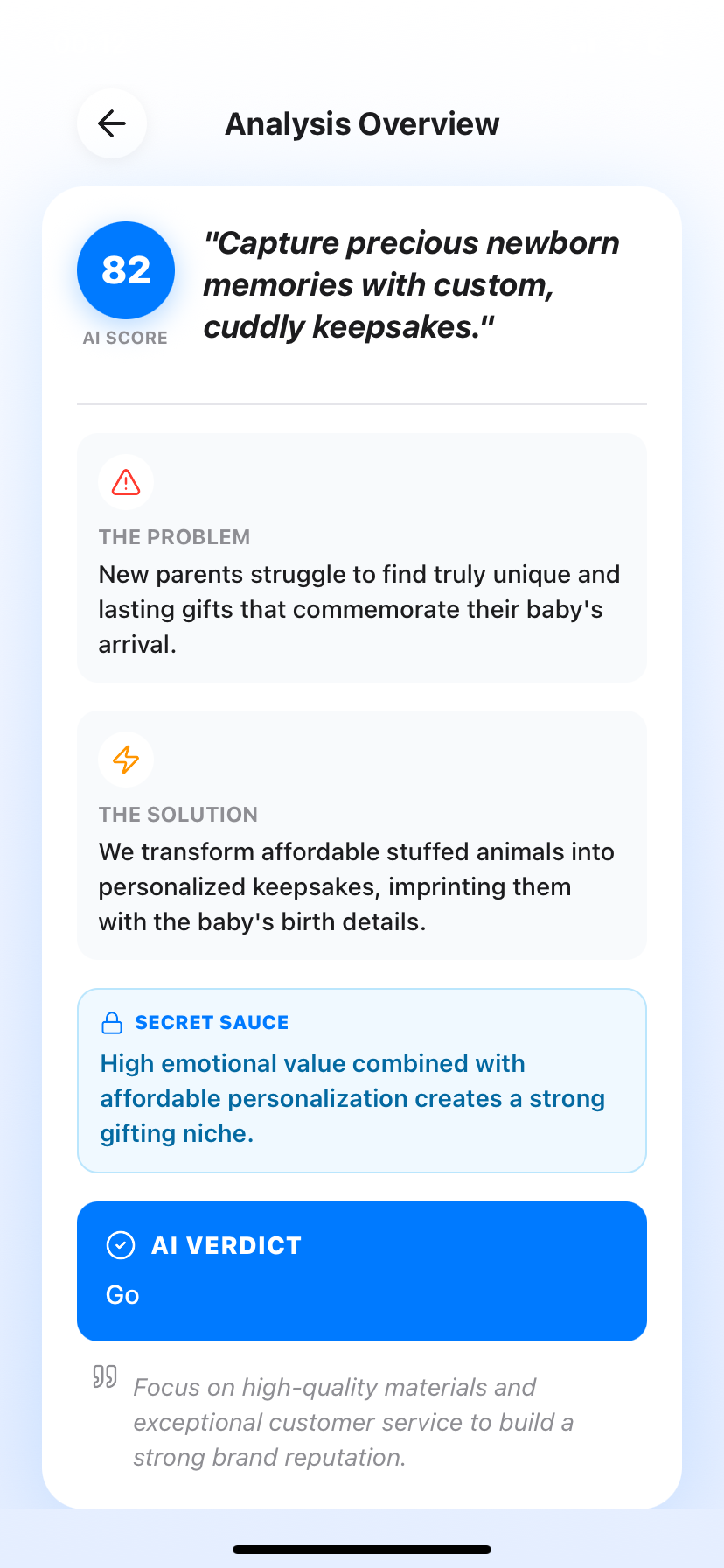
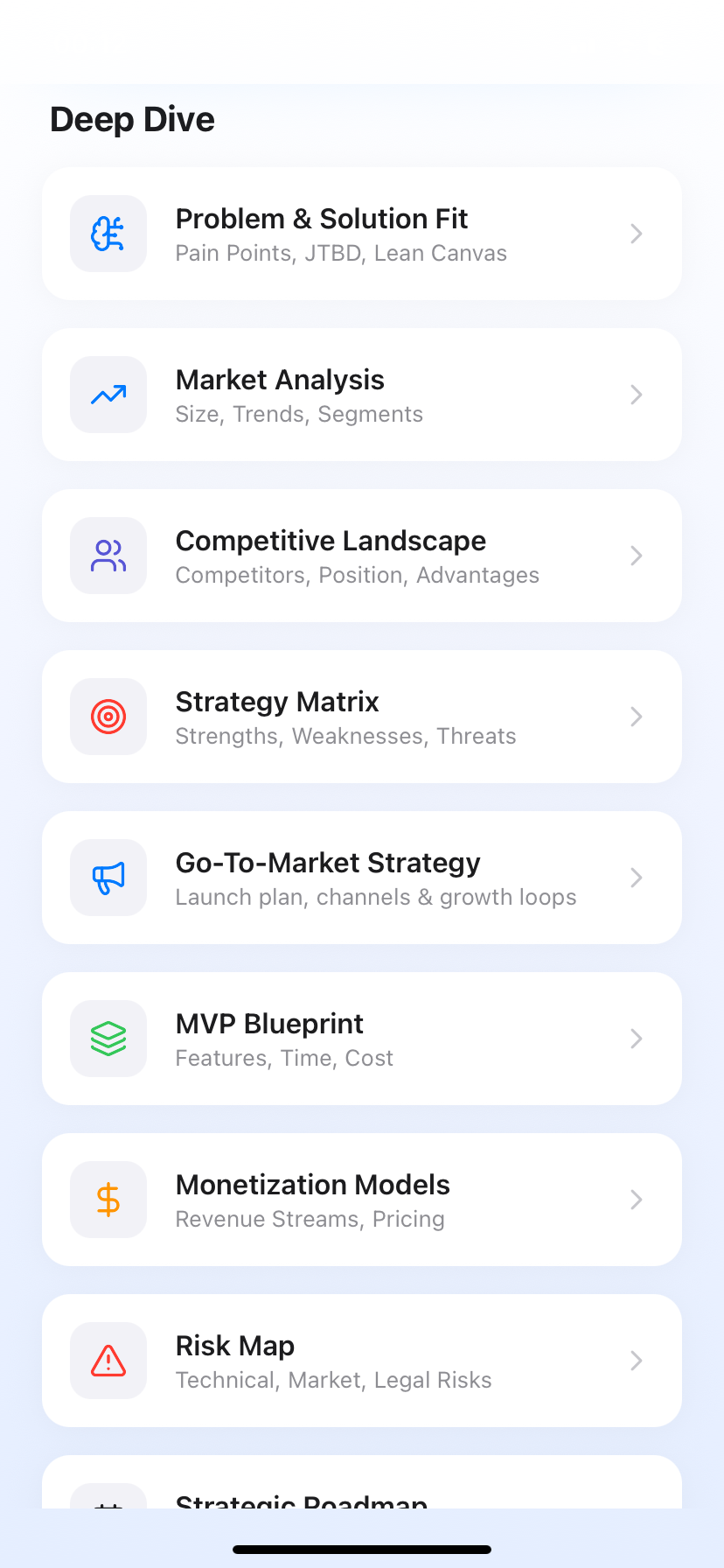
IdeaX acts as an impartial AI judge, structuring your SWOT without emotional attachment to the idea.
The Fatal Flaw of the Whiteboard SWOT
Why does a framework so logically sound fail so often in practice? The answer lies in human psychology. Founders are biologically wired to be optimistic. When a founding team sits around a whiteboard mapping their SWOT, they inherently overinflate their Strengths, minimize their Weaknesses, invent Opportunities, and ignore existential Threats. This creates a "feel-good" document, not a survival strategy.
To counter this, a SWOT analysis must be adversarial. You must actively try to break your own business model during the threat/weakness mapping phase. This is sometimes called a "Red Team" approach. If you cannot honestly list at least three fatal threats to your business, you haven't researched your market deeply enough.
Turning Diagnosis into Action (The TOWS Step)
A SWOT matrix by itself is just a map. To chart a route, you must cross the quadrants. This is known as a TOWS Analysis. By crossing Strengths with Opportunities, you find aggressive growth vectors. By crossing Weaknesses with Threats, you identify your most dangerous existential risks. A SWOT analysis that does not immediately result in a strategic action plan is a waste of a whiteboard marker.
Save Time by Using AI for Structural Analysis
Traditionally, gathering the data required to fill out a rigorous, unbiased SWOT analysis took weeks of market research, competitor audits, and financial modeling. Today, leveraging artificial intelligence drastically collapses that timeline. AI tools can synthesize vast amounts of market data to objectively highlight industry threats and opportunities that human founders—blinded by passion for their product—often overlook.