
How to Analyze a Business Idea in 10 Minutes
Experienced venture capitalists typically make their preliminary investment decision within the first 5 minutes of hearing a pitch — not because they are dismissive or arrogant, but because 90% of the structural flaws that will ultimately kill a startup are immediately visible to a trained analyst who knows exactly which questions to ask. The good news for founders: these questions are not secret. They are learnable, reproducible, and applicable to any concept regardless of industry. Master the 5-question rapid analysis protocol, and you will immediately be able to filter brilliant ideas from expensive mistakes — before committing a dollar of capital or a week of execution time.

- Q1 (Min 1-2): Aspirin or Vitamin? — The Pain Severity Test.
- Q2 (Min 3-4): The Friction Delta — Switching cost vs. value improvement ratio.
- Q3 (Min 5-6): The Napkin TAM Matrix — Is the market worth capturing?
- Q4 (Min 7-8): The Competitive Moat Audit — What prevents 90-day copying?
- Q5 (Min 9-10): The CAC Reality Check — Can unit economics survive realistic acquisition costs?
Why 10 Minutes Is Enough to Detect Fatal Flaws
The majority of startup failures are not caused by poor execution of a good idea. They are caused by excellent execution of a fundamentally broken business model. A founder can spend 14 months engineering a beautifully designed, technically impressive product — and fail immediately at launch because the TAM is too small to build a viable company, or because the switching cost to adopt it exceeds the value it delivers, or because a well-funded competitor can replicate the core mechanism in 60 days with no meaningful barriers.
All of these structural failures are detectable in minutes with the right analytical framework. The 10-minute analysis does not prove an idea will succeed — it proves whether an idea is doomed to fail. That is a far faster and cheaper filter than discovering the same thing after 14 months of execution.
Q1 (Minutes 1-2): The Pain Severity Test — Aspirin or Vitamin?
Aspirin eliminates an acute, severe, immediate pain. Nobody forgets to take an aspirin when they have a migraine — the pain is too immediate and too uncomfortable to ignore. Vitamins optimize a healthy life, and well-intentioned people forget to take them daily because the consequences of not taking them are diffuse and delayed.
Your startup idea falls somewhere on this spectrum. The closer it is to Aspirin, the lower your customer acquisition cost will be (because customers are actively searching for relief), the higher your retention will be (because stopping the solution reactivates the pain), and the more forgiving your market will be of early product imperfections.
💊 Vitamin-Level Pain (Hard to Sell)
- "Makes project management slightly more organized"
- "Helps you exercise more consistently"
- "Improves meeting productivity by 15%"
- "Social network for dog owners"
🩺 Aspirin-Level Pain (Easier to Sell)
- "Automates compliance reporting under $10K/day fine threat"
- "Eliminates 8-hour Monday manual data reconciliation"
- "Prevents chargeback fraud costing 3% monthly revenue"
- "Tracks employee time to eliminate payroll disputes"
Q2 (Minutes 3-4): The Friction Delta
The Friction Delta is the ratio between the switching cost your product imposes on a new user and the improvement in value it delivers over their current solution. For any product adoption to occur, the perceived value improvement must exceed the switching cost by a significant margin.
Q3 (Minutes 5-6): The Napkin TAM Matrix
Total Addressable Market (TAM) determines whether this business category is worth building a company inside. A profitable niche lifestyle business needs a TAM of approximately $10-50M. A venture-scale startup needs a TAM above $500M in the "beachhead" market (the specific initial segment you are targeting first), with a credible expansion path to $1B+.
TAM napkin calculation — no spreadsheet required:
Q4 (Minutes 7-8): The Competitive Moat Audit
If your business idea works — if it genuinely serves a large market with an Aspirin-level solution at a reasonable price — a well-funded competitor will notice and attempt to replicate it. The only structural defense against this is a genuine competitive moat: something about your business that becomes progressively more difficult to replicate the longer you operate.
| Moat Type | How It Works | Strength |
|---|---|---|
| Proprietary Data | Dataset grows more valuable over time, improving product quality automatically | Very Strong |
| Network Effects | Each additional user makes the product more valuable for all existing users | Very Strong |
| Switching Cost Lock-In | Deeply embedded workflows make migration expensive and painful | Strong |
| Regulatory License | Compliance certifications or exclusive licenses that limit new entrants | Strong |
| Brand + Community | Community loyalty and brand equity create psychological switching resistance | Moderate |
| Feature Superiority | Better features that a funded competitor can replicate in 60-90 days | Weak — Not a moat |
Q5 (Minutes 9-10): The CAC Reality Check
The final question is purely mathematical. At your target price point, and with realistic customer acquisition costs for your category and chosen channels, does your LTV:CAC ratio exceed 3:1? If not, every new customer you acquire loses money — and no amount of execution excellence will overcome a structurally negative unit economics model.
Run the calculation in 60 seconds: research the typical Cost-Per-Click or Cost-Per-Lead for your category in Google Ads or Facebook. Estimate your conversion rate from traffic to paying customer conservatively (1-3% for cold traffic). Divide your estimated average revenue per user by your churn rate to get LTV. If LTV ÷ CAC is below 3, the model is financially unviable at this price point — and requires either a higher price, a lower-cost acquisition channel, or a fundamentally different distribution mechanism.
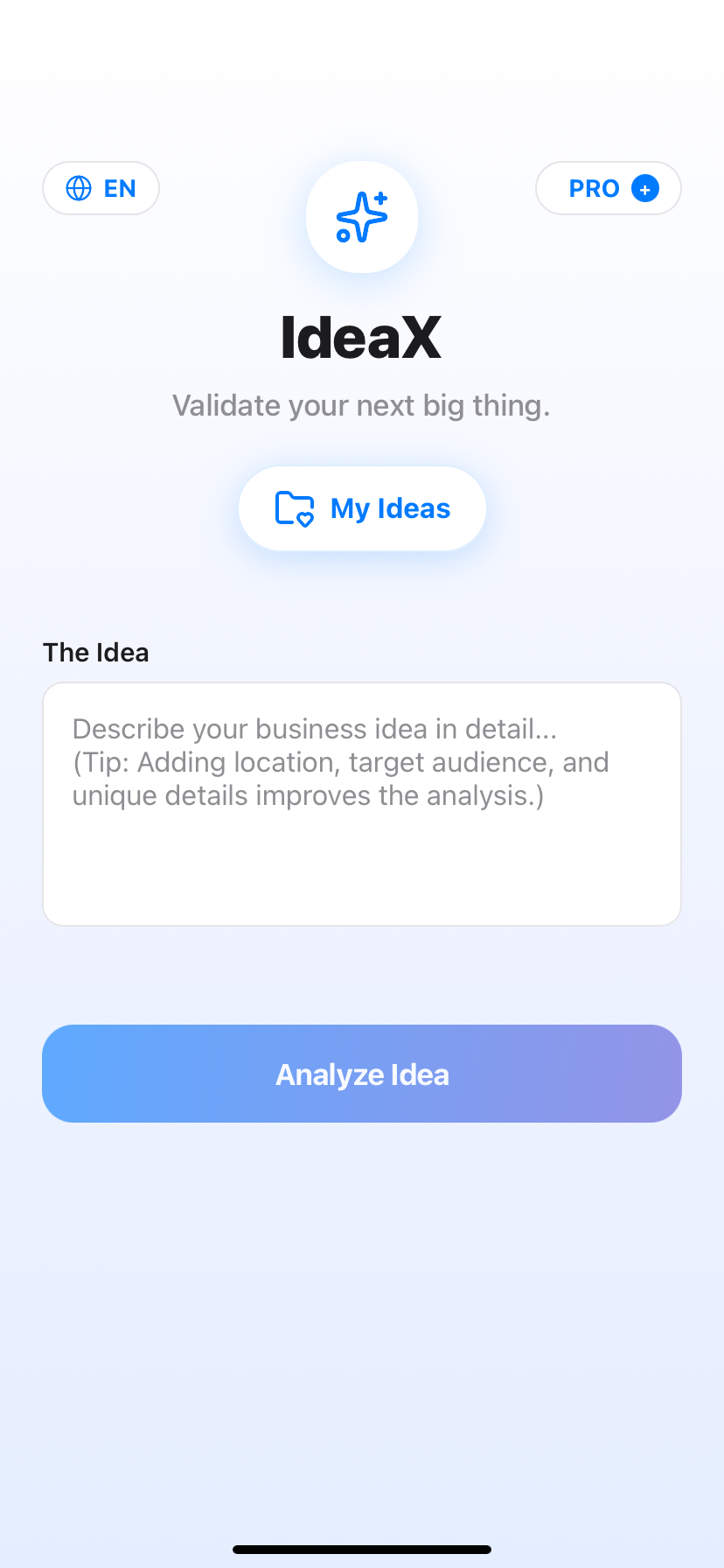
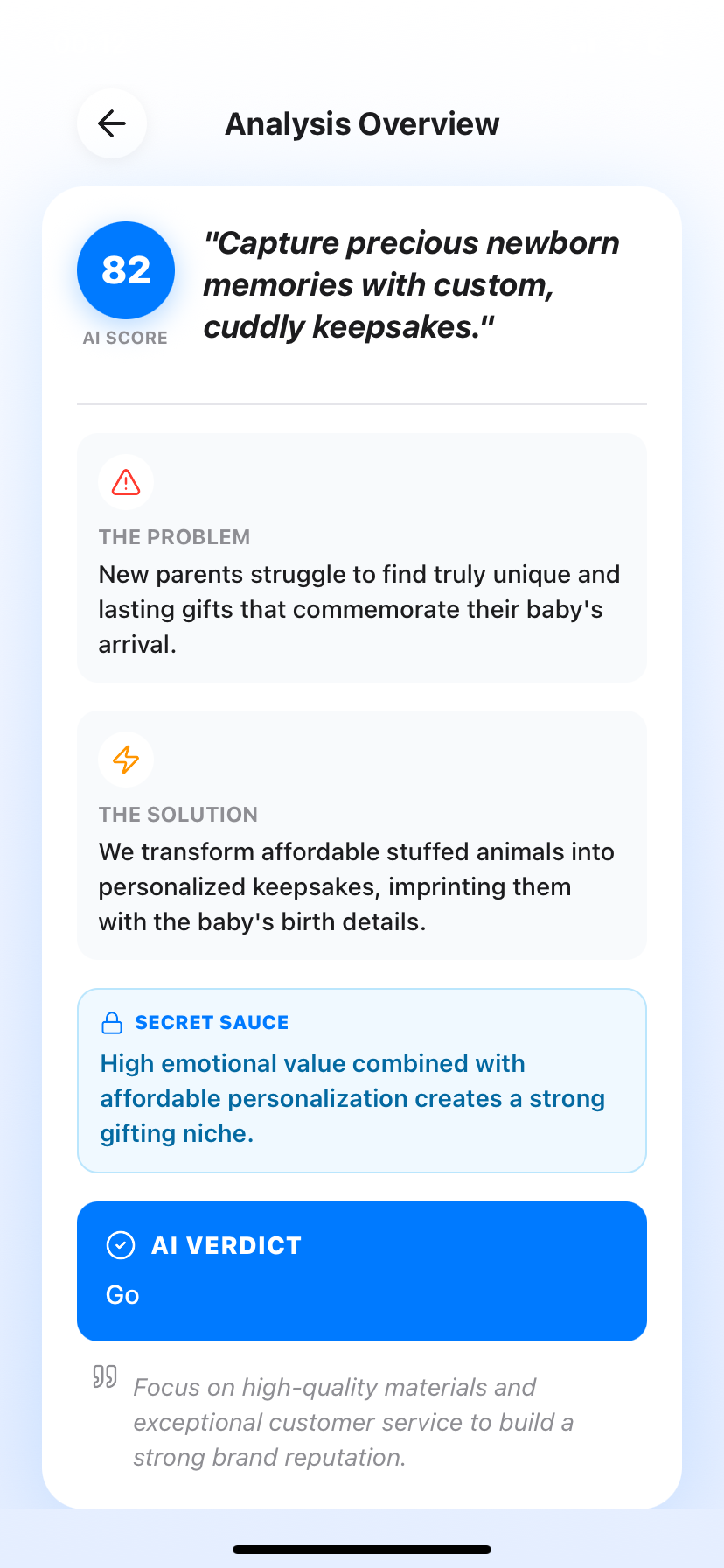
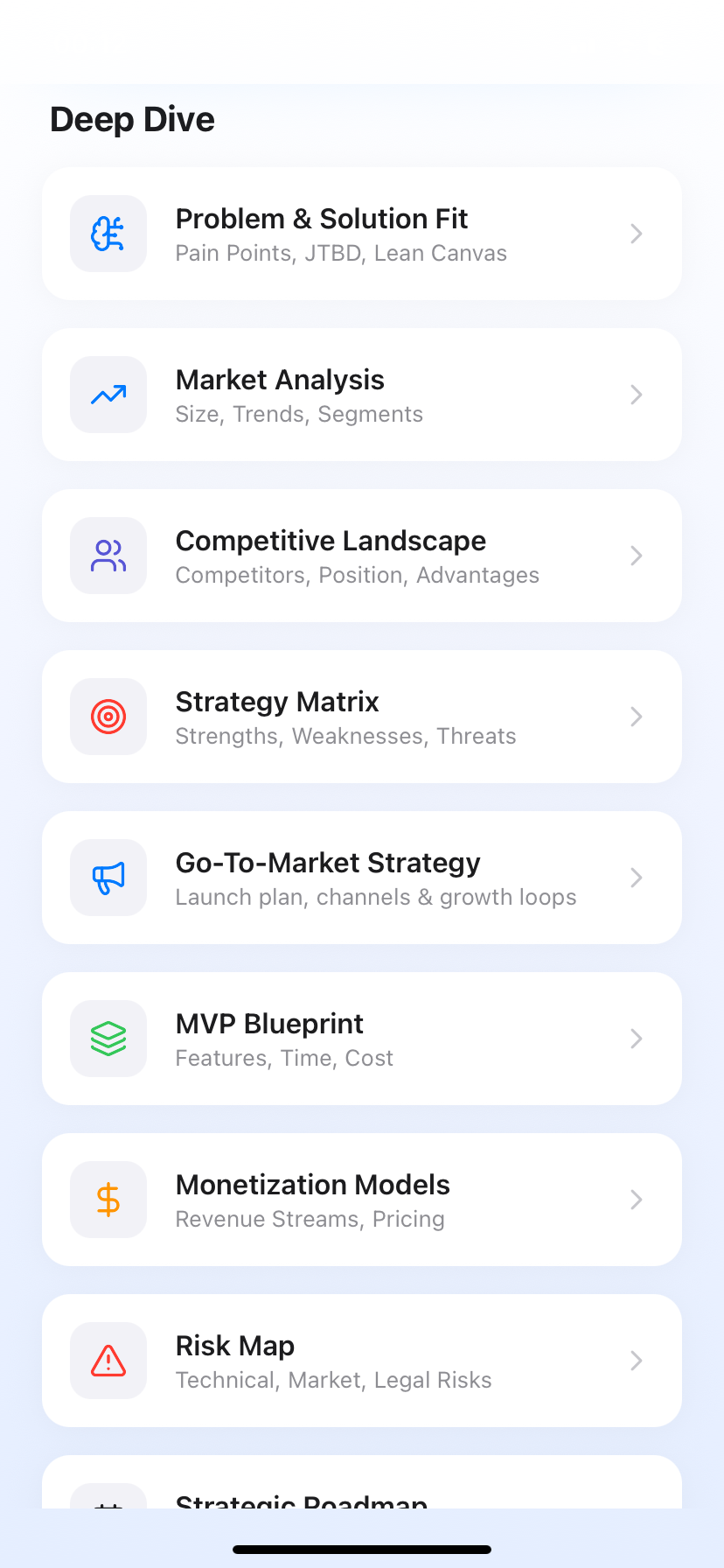

IdeaX: Business Idea Analysis
The full 5-question audit. In under 10 minutes.
Automate your 10-minute analysis.
Running all 5 questions manually requires research, calculation, and significant domain knowledge about VC evaluation frameworks. IdeaX automates the entire analysis: submit your raw concept and the AI instantly calculates Pain Severity, the Friction Delta, a TAM range for your category, a competitive moat rating, and a unit economics viability score — in under 10 minutes. Get the same analytical rigor that venture capitalists apply to every pitch, applied to your concept before you commit a single hour of execution time.
Frequently Asked Questions (FAQ)
Can I really evaluate an entire business model in 10 minutes?
Yes — with an important qualification. A 10-minute analysis does not prove your idea will succeed. It is a structured filter to determine whether the idea is mathematically doomed to fail before you invest capital. Experienced VCs use this approach because 90% of structural flaws become visible in the first 5 questions. Only ideas that pass the filter are worth investing weeks of detailed analysis.
What is the Aspirin vs. Vitamin test?
Aspirin eliminates acute, severe, immediate pain — nobody forgets to take it when they have a migraine. Vitamins optimize a healthy life — people regularly forget them. Aspirin-level startup ideas grow through word of mouth because users urgently need relief. Vitamin-level ideas require expensive marketing to create adoption behavior. For a first-time founder, Aspirin is dramatically more likely to succeed.
How do I calculate TAM quickly?
Napkin TAM = (Number of people globally who experience this problem acutely) × (Maximum they would realistically pay per year). Under $10M: lifestyle business only. $10M-$100M: small venture fundable. Over $500M: venture-scale beachhead. Validate your ability to capture the initial 1% before extrapolating to full market capture.
What is the Friction Delta?
The ratio between switching cost imposed on new users versus the value improvement delivered. For mainstream adoption: value improvement must be ≥ 10× switching cost. For early adopters only: ≥ 3× is sufficient. Feature superiority alone (25% better) rarely exceeds a high switching cost — and results in a product that looks impressive but fails to convert.
Why do VCs reject most startup ideas quickly?
They run a rapid structural filter — TAM, Pain Severity, Competitive Moat, Unit Economics viability. If any of these calculations produces a disqualifying result, they move on immediately. Their fund's performance depends on capital allocation efficiency. It is not harshness; it is pattern recognition developed across hundreds of evaluations.