
How to Know If Your Business Idea Solves a Real Problem

IdeaX: Business Idea Analysis
Check customer pain, market demand, risks, and MVP priorities before you build.
A business idea solves a real problem when a specific group of people already feels the pain, tries to solve it somehow, loses time or money because of it, and would take action if a better solution appeared. If the problem only sounds interesting in your head, it is not validated yet.

Many ideas fail because the product is built around a clever solution, not a painful customer problem. The founder sees a gap, imagines the product, builds the first version, and only then discovers that customers are not urgently looking for relief.
The fix is simple but uncomfortable: test the problem before you test the product. This guide gives you a practical way to decide whether your business idea solves a real problem before you spend serious time on design, code, inventory, or marketing.
Your business idea probably solves a real problem if the same customer segment describes the pain without prompting, already uses workarounds, experiences the problem often or severely, has budget or authority to fix it, and will commit to a call, waitlist, pilot, deposit, or purchase before the product is fully built.
What Counts as a Real Business Problem?
A real business problem is not just something inconvenient. It is a repeated source of pain that affects behavior. People spend time, money, attention, reputation, or emotional energy trying to deal with it.
A weak problem sounds like this: "It would be nice if planning meals were easier." A stronger problem sounds like this: "Busy parents spend Sunday night building grocery lists from three apps, forget ingredients, waste food, and keep ordering takeout even though they want to cook."
The second version gives you a customer, context, cost, frequency, and current behavior. That is the level of clarity you need before building.
Test 1: Can Customers Describe the Problem Without Being Led?
The first sign of a real problem is spontaneous language. If people only recognize the problem after you explain your idea, you may be creating agreement rather than discovering pain.
Ask open-ended questions:
- "Walk me through the last time this happened."
- "What made it frustrating?"
- "What did you try before?"
- "What happens if you do nothing?"
- "How do you solve this today?"
Avoid asking, "Would you use my app?" or "Do you think this is a good idea?" Those questions reward politeness. You want stories about real behavior.
Test 2: Are There Ugly Workarounds?
A strong problem usually produces workarounds. People do not wait calmly for a perfect product. They patch together spreadsheets, templates, manual checklists, Zapier automations, calendar reminders, agencies, freelancers, or multiple tools.
Workaround signals
- Strong: They pay for an imperfect tool, consultant, template, or manual service.
- Good: They maintain a spreadsheet, checklist, or repeatable process to manage the pain.
- Moderate: They complain often but only use lightweight reminders or notes.
- Weak: They say the problem exists but have never tried to solve it.
Workarounds matter because they show the customer has already crossed from opinion into action. If nobody has tried to solve the problem in any way, the pain may not be strong enough.
Test 3: How Frequent and Severe Is the Pain?
A problem becomes commercially interesting when it happens often, hurts badly, or both. Use the frequency-severity matrix to avoid overvaluing small annoyances.
| Problem type | What it means | Business potential |
|---|---|---|
| High frequency, high severity | Happens often and causes meaningful cost or stress. | Strongest early-stage opportunity. |
| Low frequency, high severity | Rare, but painful when it happens. | Viable if the buyer fears the downside. |
| High frequency, low severity | Annoying but not urgent. | Can work with large volume or strong habit formation. |
| Low frequency, low severity | Rare and not painful. | Usually not worth building for. |
If the pain still feels vague, run a broader market demand analysis before writing code.
Test 4: Is There a Buyer, Budget, or Clear Value?
A real problem is not always a good business. The customer may care, but lack budget. The user may feel the pain, but the buyer may be someone else. The value may be emotional, but too hard to price.
Ask these questions before you build:
- Who feels the pain?
- Who controls the money?
- How much time, money, revenue, risk, or frustration does the problem create?
- What does the customer currently pay for alternatives?
- Would solving this problem be a must-have, nice-to-have, or someday-maybe?
If you cannot connect the problem to value, pricing will be difficult. Use revenue estimation and profitability checks before assuming the idea can become a business.
Test the Problem First
IdeaX helps evaluate customer pain, target audience, monetization, risks, and MVP priorities from a raw idea.
Test 5: Do Reviews, Forums, or Search Behavior Confirm the Pain?
Customer interviews are useful, but they should not be your only evidence. Look for public signs that people are already searching, complaining, comparing, or paying.
- Competitor reviews mention the same missing feature or frustration.
- Forum posts ask for a better way to solve the problem.
- Search terms show people looking for solutions, alternatives, templates, or examples.
- YouTube comments, Reddit threads, and community posts show repeated "me too" responses.
- People already buy related tools, courses, services, or templates.
If competitor reviews reveal repeated pain, use the review-mining process in how to find market gaps using competitor reviews. If the public evidence is weak, the idea may still be valid, but you need stronger direct validation.
For community-based evidence, use Reddit market research for startup ideas to separate repeated pain patterns from isolated comments.
If the signal appears across several forums, groups, and comment threads, use how to find pain points in online communities to score the evidence.
Test 6: Can You Get a Real Commitment Before Building?
The strongest proof is not praise. It is commitment. A real problem motivates people to trade something: money, time, reputation, attention, or access.
If you want to validate without writing code, use the process in how to validate a business idea without building anything. For the interview stage, use problem interview questions for startup ideas.
Signs Your Business Idea Does Not Solve a Real Problem
You do not need perfect proof before building, but you should watch for weak signals.
- You cannot name the exact customer segment.
- Customers only agree after hearing your pitch.
- Nobody has tried a workaround.
- The pain is rare and low-stakes.
- The user and buyer are different, and you have not spoken to the buyer.
- People say they would use it, but avoid calls, pilots, waitlists, or payment.
- Your main evidence is your own frustration.
If several of these are true, do not force the idea forward. Narrow the audience, restate the problem, or use the business idea validation checklist before building.
Real Problem Scorecard
Score each question from 0 to 2. A strong idea should score at least 12 out of 16 before you invest heavily.
- Can you name the exact customer segment?
- Can customers describe the problem without your pitch?
- Does the problem happen frequently or cause serious pain?
- Are there existing workarounds?
- Is there a buyer with budget or clear value?
- Do reviews, forums, or search behavior show repeated demand?
- Can you get a commitment before building?
- Can the first MVP test the problem directly?
For a broader viability view after this step, use the startup idea scorecard.
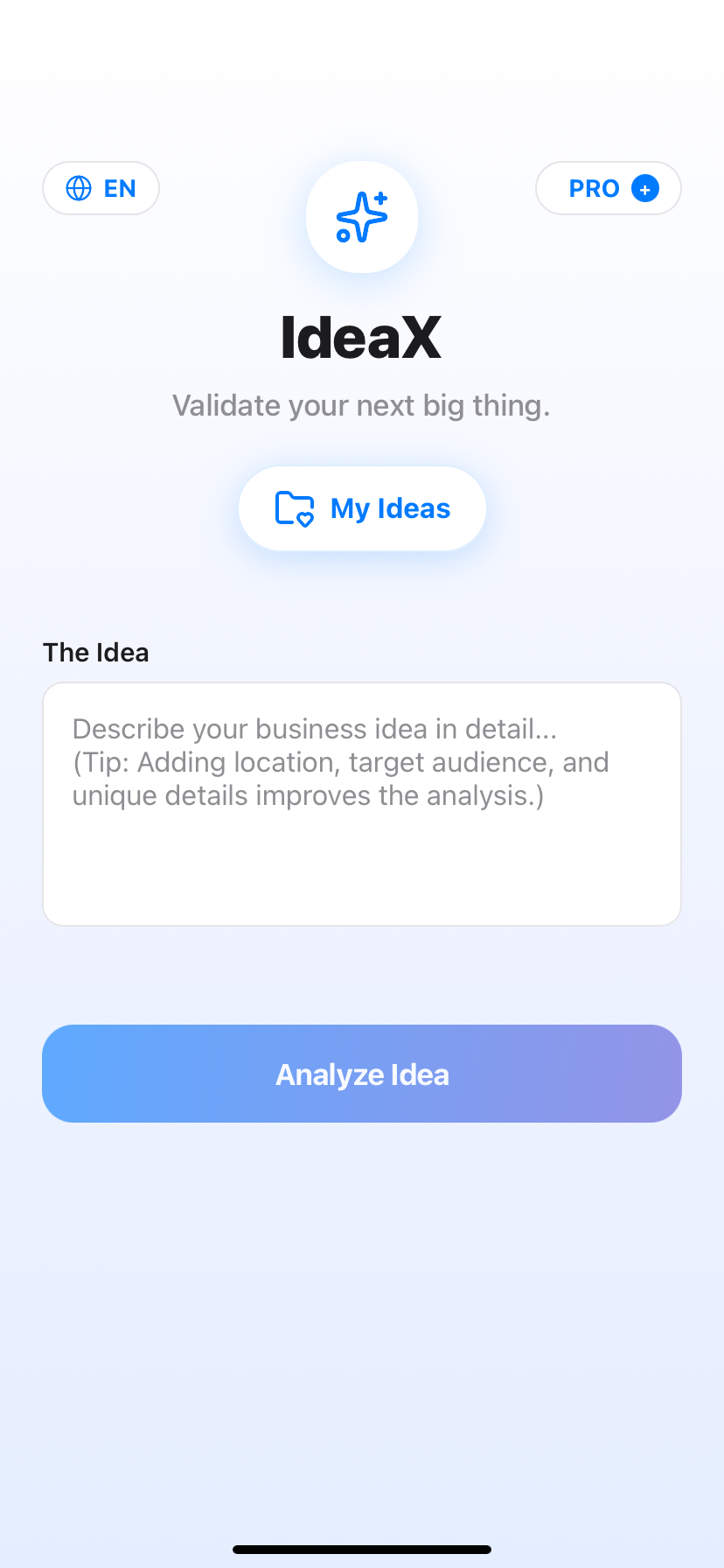
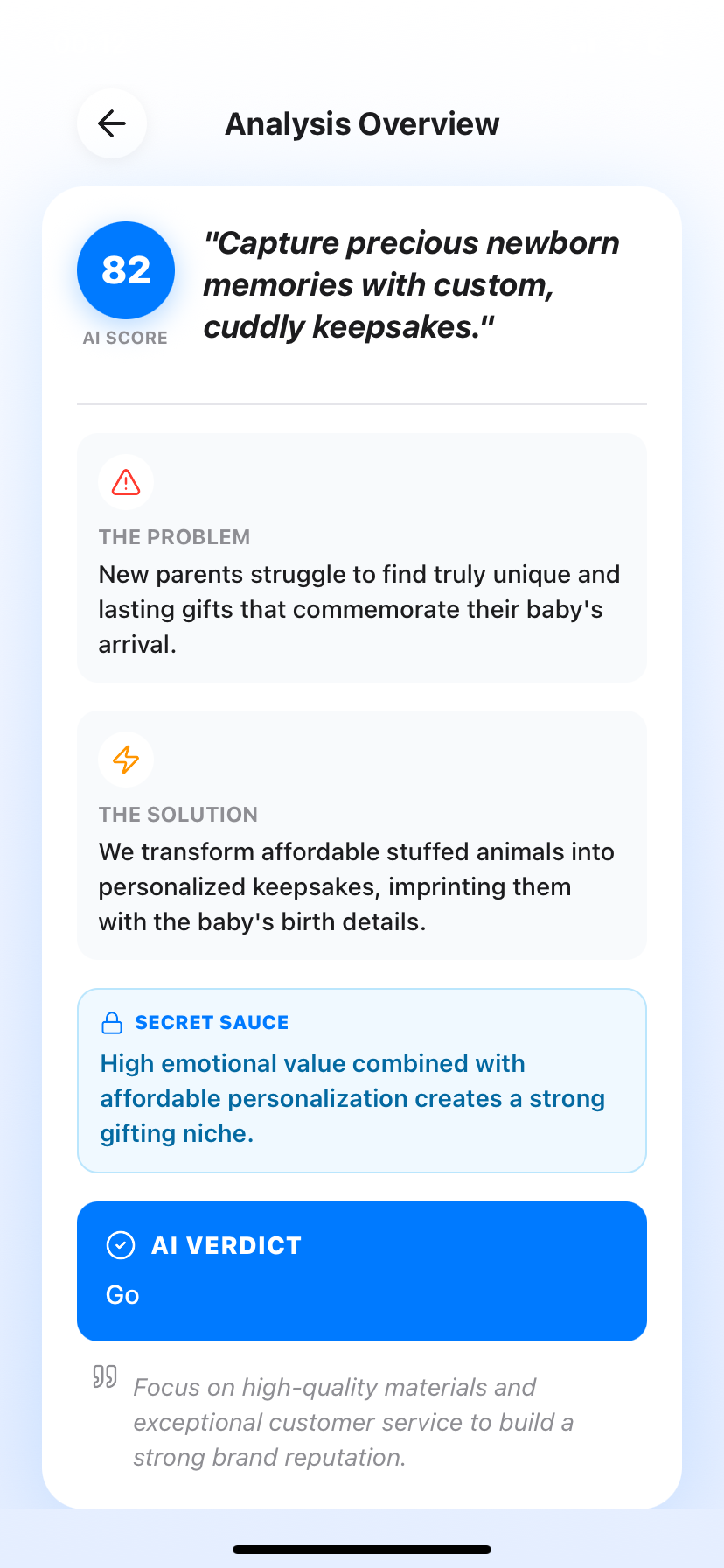
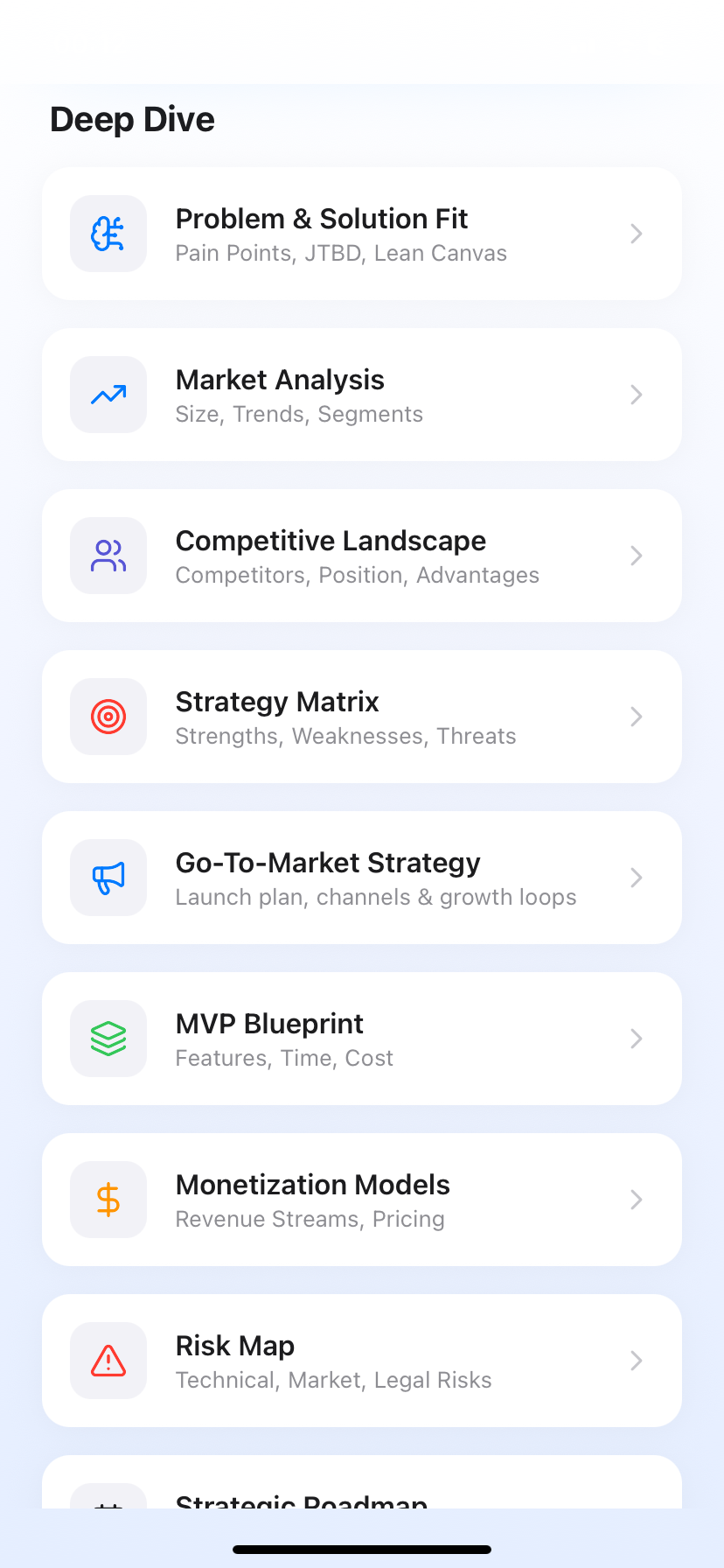
IdeaX: Business Idea Analysis
A structured way to evaluate what to build next.
Check whether the problem is strong enough.
IdeaX helps founders analyze the customer problem, target audience, market demand, competitor gaps, monetization logic, risks, and MVP priorities before development starts.
Frequently Asked Questions
How do I know if my business idea solves a real problem?
Your idea solves a real problem if a specific customer segment already experiences the pain, can describe it without being led, uses workarounds, loses time or money because of it, and is willing to take a concrete next step before the product is fully built.
Is customer feedback enough to prove a real problem?
Customer feedback is useful, but behavior is stronger. Look for calls booked, workarounds shown, deposits, paid pilots, preorders, letters of intent, or repeated public complaints from the same customer segment.
What if people like my idea but will not pay?
That usually means the problem is not painful enough, the buyer is unclear, the value is hard to measure, or the proposed price is wrong. Treat interest without commitment as a weak signal.
Should I build an MVP before proving the problem?
Usually no. First prove that the problem exists and that the customer wants relief. Then build the smallest MVP that tests the riskiest assumption, not the full product you imagine.