
No One Understands My Business Idea: How to Clarify It
There is a peculiar form of founder blindness that affects almost every technically gifted startup builder. You have spent 6 months obsessively architecting the most elegant solution to a real and painful market problem. You understand every layer of your system with crystalline clarity. You know the database schema, the integration architecture, the monetization mechanics. And yet every time you open your mouth to explain it to another human being, their eyes glaze over in approximately 11 seconds. The problem is not your product. The problem is your vocabulary — and the order in which you present information.

- Framework 1 — The X-for-Y Analogy: Uploading complex mental models in under 10 words.
- Framework 2 — The Enemy Opening: Name the pain before you name the solution.
- Framework 3 — The Mom Test for Jargon: Purging technical vocabulary from your entire pitch.
- Framework 4 — The One-Sentence Pitch Formula: The definitive template for instant comprehension.
- Framework 5 — The 5-Second Test: Validating that strangers understand your value in 5 seconds.
Why Founders Lose People in the First Sentence
The human brain does not process new information as a blank slate. It processes new information by comparing it against existing mental models — categories, analogies, and familiar reference points it has already stored. When you describe your startup by leading with its technical architecture ("a decentralized, end-to-end encrypted ledger paradigm"), you are handing the listener's brain a concept it has no existing model to anchor it to. The brain, unable to categorize the information, simply discards it.
Now compare: "It's a way to send money overseas without the bank taking 8%." Every word maps directly onto an existing mental model the listener already holds. The brain processes the concept in under 3 seconds, generates rapid emotional resonance ("yes, bank fees are painful"), and opens a mental space for your solution. The technical sophistication of your architecture is entirely irrelevant in this moment. The only relevant variable is whether the listener immediately understands and feels the pain your product addresses.
Framework 1: The X-for-Y Analogy
The "X-for-Y" framework is a Silicon Valley positioning shortcut that has been used to describe hundreds of successful startups at their earliest conceptual stage. It works by referencing a category-defining brand the listener already deeply understands, and then specifying the new context or audience you serve.
X-for-Y Pitch Examples:
- "We are Airbnb for office spaces" → instantly communicates: short-term rental, person-to-person marketplace, premium pricing.
- "We are Stripe for Southeast Asia" → instantly communicates: payment infrastructure, developer-focused, underserved geography.
- "We are Notion for construction teams" → instantly communicates: flexible workspace software, industry vertical, non-technical users.
- "We are LinkedIn for healthcare professionals" → instantly communicates: professional network, compliance-focused, credentialed membership.
Each of these pitches uploads an entire business model, category, pricing expectation, and user psychology in under 8 words. The X-for-Y framework is most effective when your product genuinely operates in an established category but serves a distinct new audience, geography, or vertical. Do not use X-for-Y if your product is genuinely novel in category — it will create false expectations that damage your pitch.
Framework 2: The Enemy Opening
Most founders structure their pitch in the order that feels intuitive to them: "Hi, I'm building [Product Name]. It does [technical function]. It's different because [feature comparison]." This structure leads with the solution before the listener has any emotional reason to care about it.
The Enemy Opening inverts this entirely: name the specific, universally despised problem first, and force the listener to viscerally relive their frustration with it before you introduce the product. The listener's brain, now emotionally activated by the recognition of a pain it personally experiences, is neurologically primed for a solution.
The listener who nods at the Enemy Opening has just self-identified as your ideal customer. More importantly, they have emotionally activated themselves as a prospect — without you doing any selling at all.
Framework 3: The Mom Test for Technical Jargon
Technical founders are afraid that simplicity signals intellectual unseriousness. This fear is entirely unfounded. The most respected scientists, engineers, and entrepreneurs in history — Feynman, Jobs, Musk — are consistently celebrated for their ability to explain enormously complex concepts in language that a teenager can immediately understand.
Run every sentence of your pitch through the Mom Test: read it aloud. If a non-technical family member cannot understand the complete sentence's meaning and implication within 5 seconds of hearing it for the first time, delete it and rewrite it with simpler vocabulary.
❌ Jargon — Delete These Words
- Synergy / Paradigm shift
- Disrupt / Disintermediate
- AI-driven algorithms
- Blockchain-enabled solution
- End-to-end architecture
- Seamless / Granular
- Scalable infrastructure
✅ Concrete Verbs — Use These Instead
- Automates / Removes
- Saves [X hours/dollars]
- Finds / Generates / Tracks
- Eliminates / Prevents
- Calculates / Outputs
- Reduces [specific metric] by [%]
- Works without [hated complexity]
Framework 4: The One-Sentence Pitch Formula
Every founder should be able to deliver their entire pitch in a single, precisely crafted sentence that immediately communicates: who this is for, what problem it eliminates, and what makes it distinctly better than the alternative they're currently using.
Framework 5: The 5-Second Test
Once you have drafted your One-Sentence Pitch using the formula above, validate it with strangers — not team members — using the 5-Second Test. Show a stranger your pitch sentence on a screen for exactly 5 seconds, then cover it and ask: "Can you tell me in your own words what this product does?" If they cannot accurately describe the core value proposition from memory after a 5-second exposure, the sentence is too complex. Rewrite it.
Repeat the 5-Second Test with a minimum of 10 strangers who match your target audience. Track the pass rate. A pass rate below 60% indicates a fundamental clarity problem. A pass rate above 85% indicates your pitch is ready for cold acquisition campaigns.
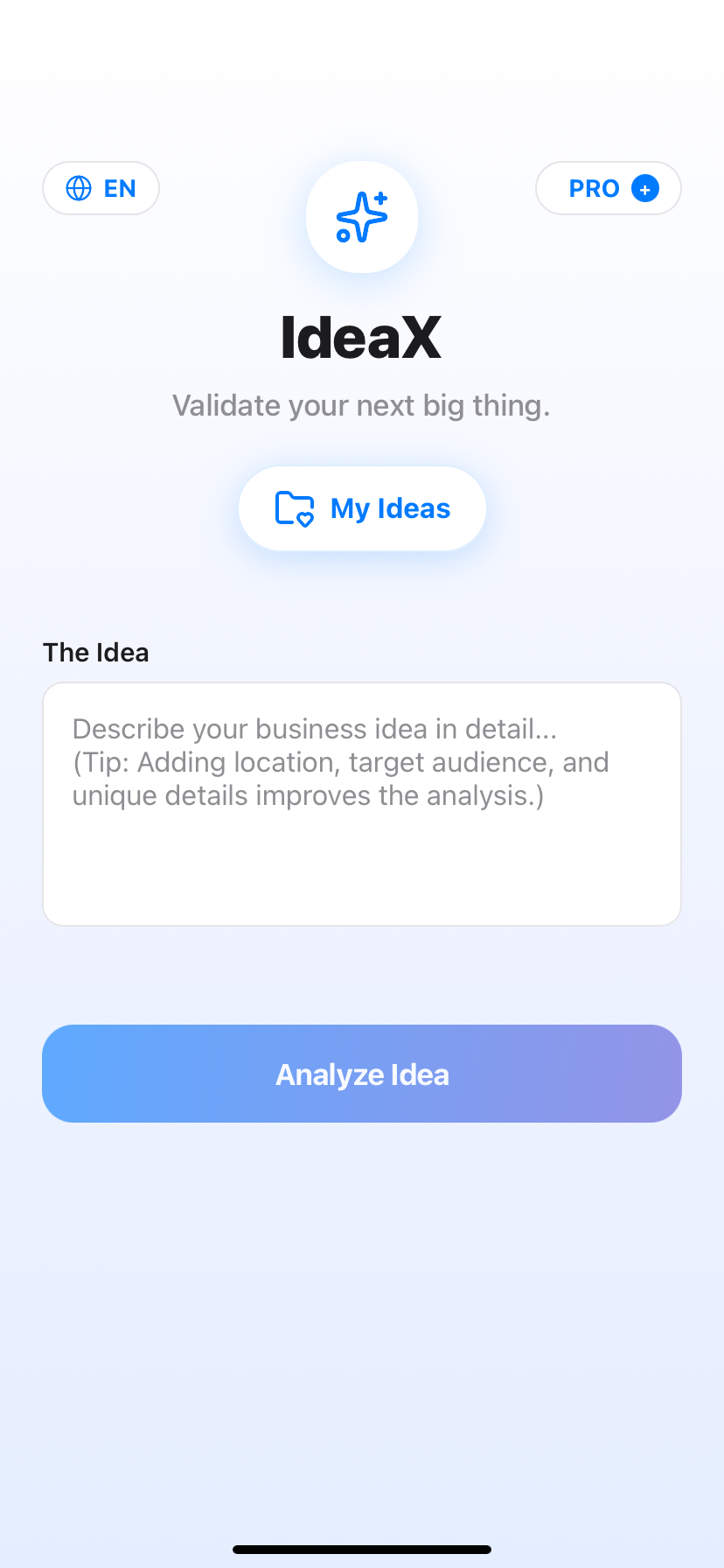
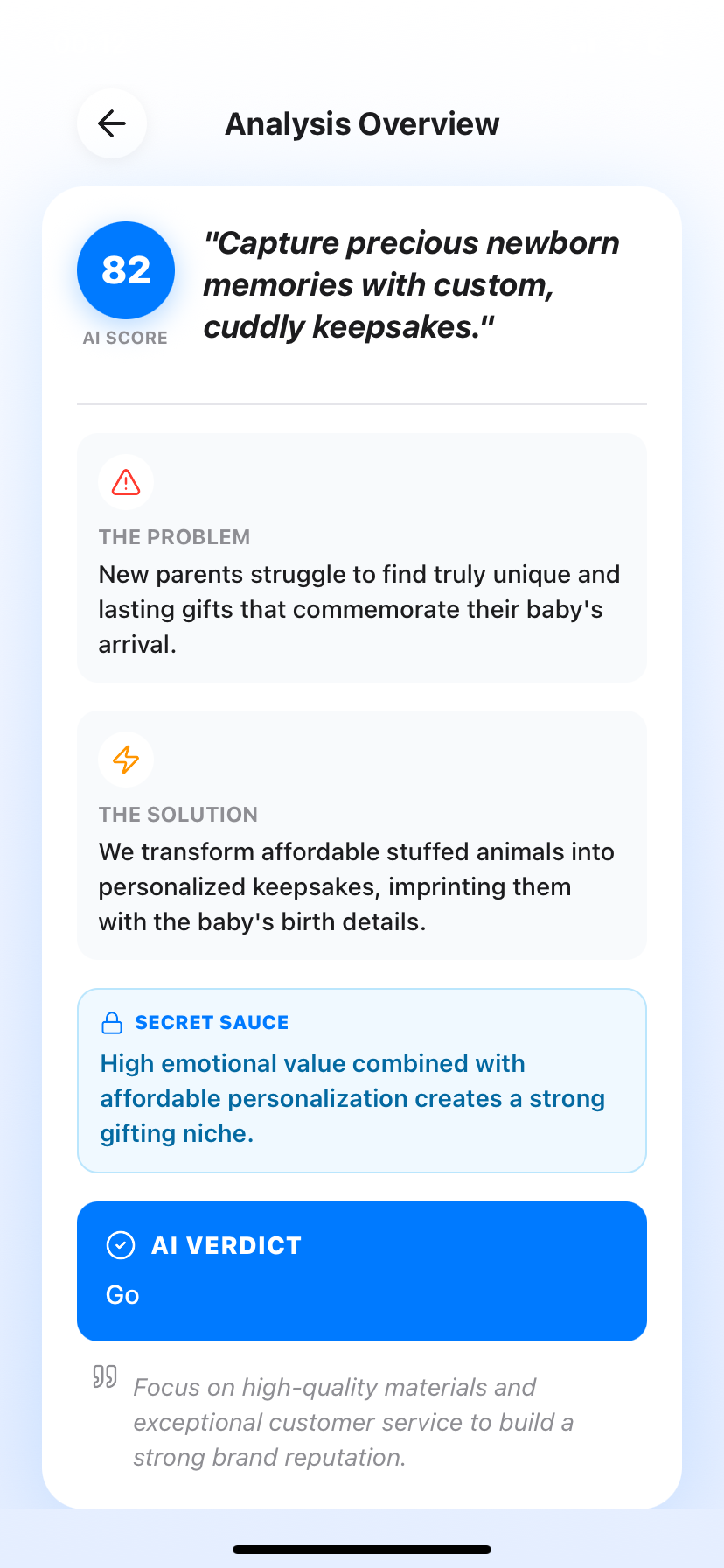
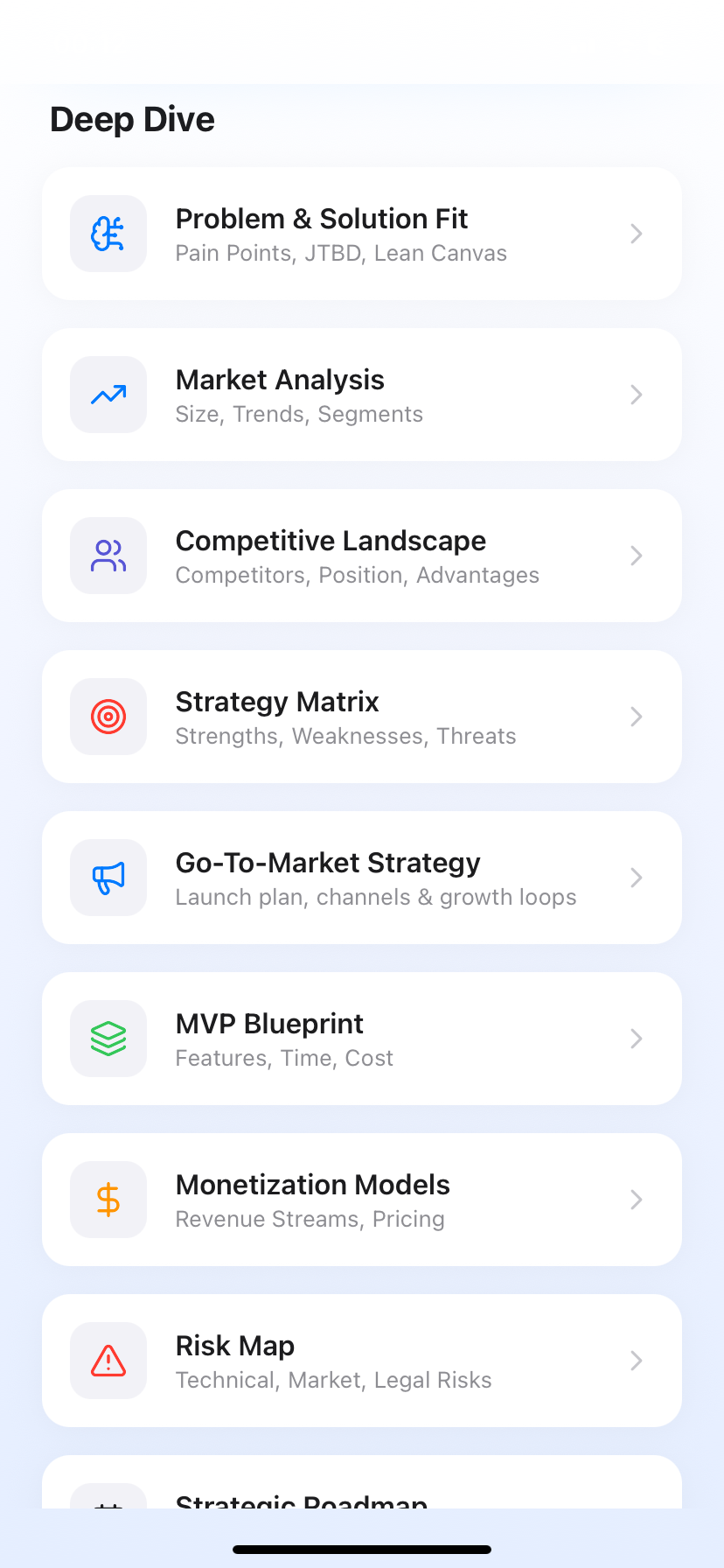
IdeaX: Business Idea Analysis
A structured space for evaluating what to build next.
Turn jargon into a flawless pitch.
You are too close to your own concept to write the perfect pitch for it — your brain fills in the gaps from context the listener doesn't have. IdeaX acts as your external messaging strategist: feed it your sprawling, overly-complex technical description, and the AI distills it through the One-Sentence Pitch Formula, identifies the Enemy Opening for your specific pain point, and generates a concise, jargon-free value proposition ready for your landing page, investor deck, and cold outreach campaigns.
Frequently Asked Questions (FAQ)
Why do people's eyes glaze over when I explain my startup?
Because you are pitching your solution's architecture instead of your customer's relief. The human brain is wired to engage with pain it recognizes — not technical descriptions of solutions it doesn't understand yet. Start with their pain, not your product.
What is the X-for-Y framework?
A positioning shortcut that describes a novel concept by referencing a category-defining brand the listener already deeply understands. "Airbnb for office spaces" uploads an entire business model — marketplace, short-term rental, premium pricing — in under 8 words. Most effective for vertical or audience-specific plays in established categories.
What is the Enemy Opening?
A pitch structure that names the specific, universally hated pain point before introducing your solution. It activates the listener's emotional recognition of the problem, priming their brain for your product — without you doing any selling. The listener self-identifies as your ideal customer before the pitch begins.
What words should I never use in my pitch?
Never use: synergy, disrupt, paradigm shift, AI-driven algorithms, blockchain-enabled, end-to-end solution, seamless experience. Replace with concrete outcome verbs: automates, saves, eliminates, generates, reduces, finds. If a stranger can't parse the sentence in 5 seconds, rewrite it.
What makes a good one-sentence pitch?
Follow this template: "[Product Name] helps [specific target audience] [achieve specific outcome / eliminate specific pain] without [the thing they hate most about current solutions]." Under 20 words, zero jargon, immediate value clarity. Validate with the 5-Second Test on 10+ strangers who match your target audience.