
How to Know Whether Your Idea Solves a Real Problem
An uncomfortable statistical truth: the majority of brilliant engineers, designers, and entrepreneurs spend between six and twenty-four months building meticulous, technically impressive solutions for problems nobody is actually paying to solve. The result is beautiful, unused software and a devastating loss of capital and time. If you want to avoid becoming a statistic, you must master the empirical tools for testing whether a problem is genuinely real, genuinely painful, and genuinely worth paying to eliminate — before writing a single line of production code.

- Test 1 — The Inventor's Trap: The cognitive bias that kills more startups than bad code.
- Test 2 — Aspirin vs. Vitamin: Is your product treating a wound or selling a supplement?
- Test 3 — The Frequency-Severity Matrix: Plotting problems on the axes that determine commercial value.
- Test 4 — The Ugly Workaround: Finding behavioral proof that a problem is genuinely painful.
- Test 5 — The Wallet Test: The only survey that cannot be faked by politeness.
The Inventor's Trap: Building Before Discovering
The Inventor's Trap is a recurring cognitive bias pattern observed almost universally among technically skilled first-time founders. A founder encounters an exciting new technology — machine learning, a new API, blockchain, augmented reality — becomes deeply fascinated by its computational possibilities, and immediately begins building a sophisticated product that leverages the technology. Only after months of development do they attempt to identify a problem the product can solve — and discover with horror that no such urgent problem exists in the market.
The correct product development workflow: begin with a documented, articulated, validated customer problem. Only after the problem is proven — through behavioral evidence and financial transactions — do you design and build the technological solution.
The test: before writing any code, ask yourself this question aloud: "Which specific group of people experiences which specific painful problem, with what frequency and at what financial cost?" If you cannot answer this question precisely in two sentences, you are building in the Inventor's Trap. Exit immediately.
Test 1: The Aspirin vs. Vitamin Framework
The most immediately actionable framework for evaluating whether your idea addresses a "real" problem is the Aspirin vs. Vitamin test. This framework categorizes your product's core value proposition into one of two fundamentally different commercial categories.
💊 Aspirin Product
Eliminates an acute, specific, urgent pain the customer feels RIGHT NOW.
- Customer was already actively searching for relief
- Purchasing urgency is immediate and high
- Willingness to pay is high
- Churn rate is low (the pain doesn't go away by itself)
🌿 Vitamin Product
Delivers a nice, preventative, long-term improvement without eliminating acute pain.
- Customer "could use it, but doesn't urgently need it"
- Purchasing urgency is low and easily deferred
- High churn risk when budget is tight
- Requires expensive ongoing marketing to maintain activation
Your goal is to build an Aspirin. This does not mean vitamins cannot be successful businesses — multi-vitamin supplements are a $35B market. But for an early-stage startup with no brand credibility, no established distribution, and no marketing budget, you desperately need the organic urgency that only an Aspirin product generates.
Test 2: The Frequency-Severity Matrix
Not all problems are created equally. Problems exist on a 2×2 grid measuring two critical dimensions: how often the problem occurs (Frequency) and how costly or painful it is when it occurs (Severity).
✅ High Frequency + High Severity
The commercial sweet spot. Happens frequently, costs significantly each time. Premium pricing justified. Example: slow, unreliable expense reporting software losing finance teams 3+ hours per week.
📌 Low Frequency + High Severity
Viable if the cost per occurrence is massive. Example: tax compliance software used only once yearly, but a tax error costs $50,000. Low frequency, but catastrophic stakes when it occurs.
⚠️ High Frequency + Low Severity
Possible if volume is very high. Example: a microtransaction tool for a problem that costs $2 per occurrence but happens 10 times a day. Margins must compensate for low per-incident severity.
🚫 Low Frequency + Low Severity
Zero commercial viability. If the problem happens rarely and barely hurts when it does, no one will pay to prevent it. Kill this idea immediately before investing further.
Test 3: Looking for Ugly Workarounds
The single most powerful behavioral proof that a problem is genuinely, commercially painful is the existence of widespread "Ugly Workarounds" — complex, fragile, time-consuming manual rituals that people have independently invented specifically to work around the absence of a proper solution.
When a problem is severe enough, people will not simply complain about it and wait for a solution. They will build their own messy, improvised approximation of the solution using whatever tools are available — Excel spreadsheets, Zapier automations, manual email chains, paper forms, or custom Google Apps Scripts.
The discovery process: conduct structured customer discovery interviews with at least 10 people from your target audience. Ask them specifically: "Walk me through exactly how you handle [the pain point] today, step by step." If they describe a multi-step manual workaround involving 3+ tools or applications, you have empirical behavioral proof that the problem is severe enough to justify a commercial solution.
The Workaround Severity Rubric
- Tier 1 (Strong signal): They built a custom multi-step Zapier automation or Google Apps Script specifically for this problem.
- Tier 2 (Good signal): They maintain a dedicated spreadsheet with 5+ tabs of custom formulas they update manually.
- Tier 3 (Moderate signal): They use a combination of copy-paste between two or more applications weekly.
- Tier 4 (Weak signal): They manually track information in a notes app or calendar.
Test 4: The Wallet Test (The Only Unfakeable Metric)
Opinion data is structurally unreliable because it costs the respondent nothing to give it. If you show a stranger a polished mockup and ask "Would you pay $29/month for this?" the overwhelming psychological tendency is to say "Yes, sure" out of social politeness — even if they would never actually open their wallet.
The only data point that proves a problem is genuinely, commercially real is a completed financial transaction. The Wallet Test creates the conditions for a real transaction before the product exists.
How to Run the Wallet Test
When someone clicks "Buy Now" for a product that doesn't yet exist at a real price point, they are communicating more valuable market intelligence than 500 survey responses. They are saying: "This problem is so real and so painful that I am willing to pay money right now for a solution that doesn't even exist yet." That is the most powerful market signal available.

IdeaX: Business Idea Analysis
A structured space for evaluating what to build next.
Verify the pain point with data, not optimism.
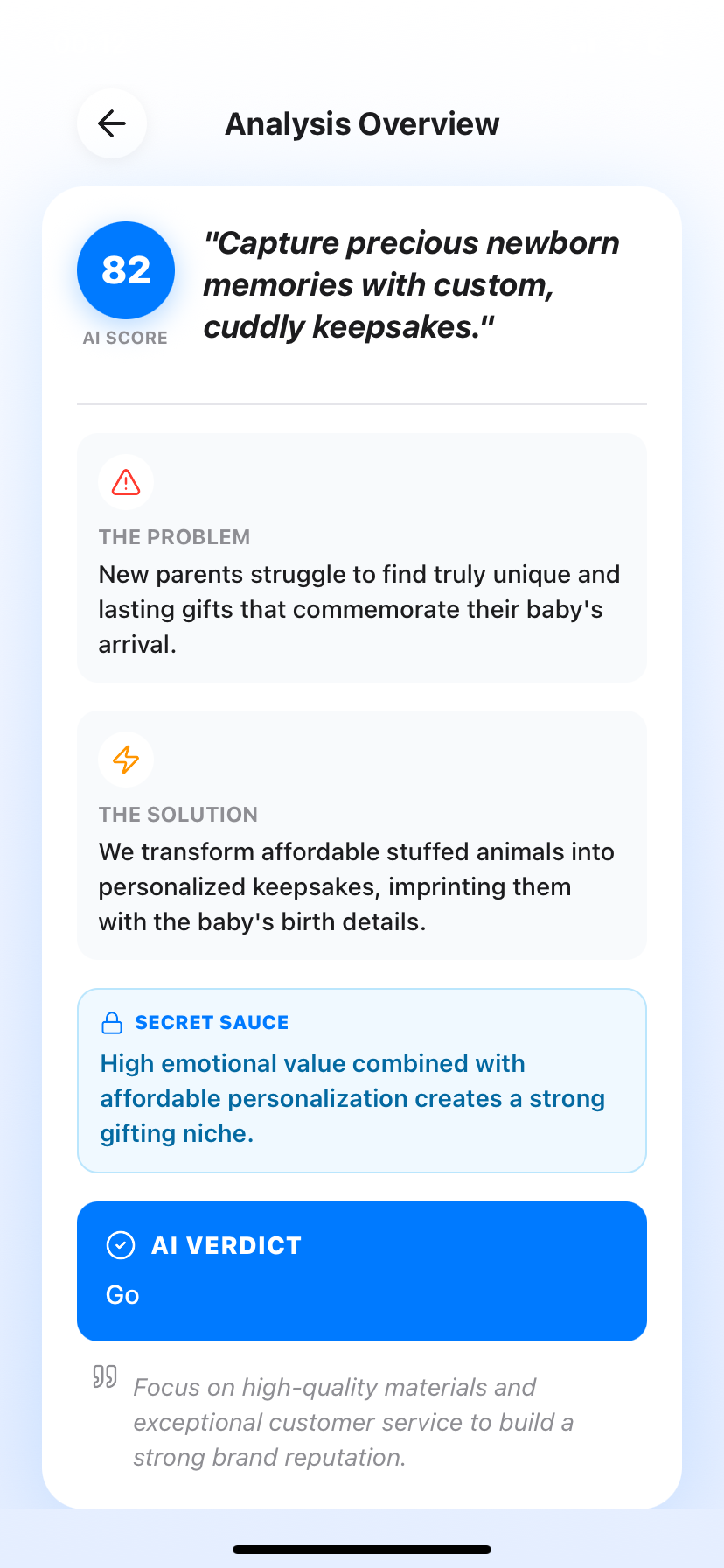
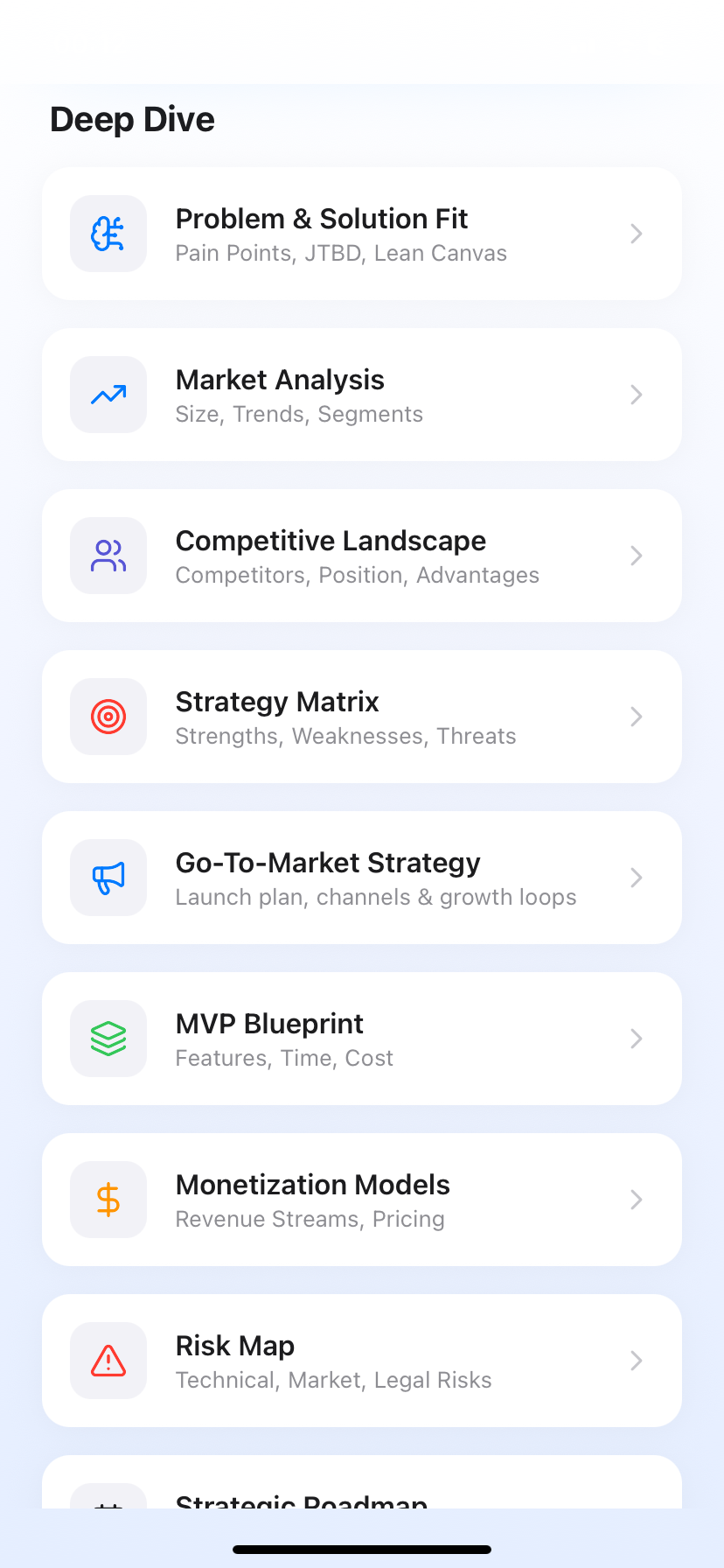
It is structurally impossible to be objective about your own idea — your brain has a $30,000 cognitive stake in believing the problem is real. IdeaX serves as an unbiased, data-driven reality check. Feed it your concept, and the AI engine applies the Aspirin vs. Vitamin framework, cross-references industry complaint data across review platforms, and plots your idea on the Frequency-Severity Matrix to generate a definitive "Problem Severity Score." Know instantly, before writing any code, whether the pain your idea addresses is genuinely commercial — or just intellectually interesting.
Frequently Asked Questions (FAQ)
Why shouldn't I ask friends or family if my idea is good?
Because people who care about your feelings consistently tell you what you want to hear. This creates a dangerous false positive. You must test exclusively with strangers who match your target demographic and have no personal stake in your emotional wellbeing — only their behavior (and their wallets) tells the truth.
What is the 'Aspirin vs. Vitamin' test?
It categorizes your product. An Aspirin eliminates acute, urgent, current pain — people buy it immediately and consistently. A Vitamin delivers a nice long-term benefit without eliminating immediate pain — people buy it occasionally and cancel when their budget is tight. Build Aspirin products for early commercial traction.
What is the Inventor's Trap?
It occurs when a technical founder builds a sophisticated product using an exciting technology, then searches for a problem it can solve. Product development must always start with a deeply felt, documented customer problem — never with an interesting technology stack.
How do I run the Wallet Test?
Build a Painted Door landing page describing your solution at a real price point. Add a real payment button. Drive 300-500 targeted, qualified visitors using $80-150 of ads. If 0 people attempt checkout, the problem isn't commercially severe. If 2-3%+ attempt checkout, the problem is validated and worth building.
Do customers always know what problem they have?
Customers are excellent at experiencing and articulating problems but consistently terrible at designing optimal solutions. Listen exclusively to their problem descriptions during discovery interviews. Never adopt their proposed solutions — that's your job as the founder.