
How to Check if a Business Idea Is Profitable
A beautifully engineered product with one million active users that loses $0.50 on every single transaction is not a business. It is a highly sophisticated, well-designed mechanism for going bankrupt at scale. The technology industry has systematically glorified "hyper-growth at all costs" as if revenue growth were a substitute for fundamental financial viability. Unless you have raised $100 million in institutional capital and have explicit board approval for a multi-year loss-making growth strategy, your business idea must exhibit clear, calculable profitability mechanics from day one.

- Metric 1 — Gross Margin: Whether the product economics are structurally viable.
- Metric 2 — LTV:CAC Ratio: Whether you can acquire customers and profit from them.
- Metric 3 — Payback Period: How long your capital is tied up per customer.
- Metric 4 — Burn Rate and Runway: When you run out of money at current spending.
- Metric 5 — Breakeven Units: How many sales you need to reach "Default Alive."
The "Unit Economics First" Principle
Being profitable does not mean having $1 million in the bank on Day One. It means the unit economics of your business are healthy — the financial mechanics of a single transaction make mathematical sense independent of scale. A business with strong unit economics can grow its way into overall profitability. A business with broken unit economics gets worse, not better, as it scales — because every additional customer deepens the loss.
Metric 1: Gross Margin — The Foundation of Everything
Gross Margin is calculated as: (Revenue – COGS) ÷ Revenue × 100. It represents the percentage of each sale that is available to pay for operating expenses, marketing, salaries, and ultimately profit. Gross Margin dictates the entire financial ceiling of your business model.
| Business Model | Typical Gross Margin | Marketing Budget Headroom | Scalability |
|---|---|---|---|
| SaaS / Software | 75-90% | Excellent — can sustain 30-40% S&M spend | Very High |
| Digital Products/Courses | 80-95% | Excellent — marginal cost near zero | Very High |
| Services / Consulting | 40-65% | Moderate — constrained by labor COGS | Limited by headcount |
| E-commerce (branded) | 35-55% | Tight — after ads, often <15% net | Moderate |
| E-commerce (commodity) | 10-25% | Minimal — nearly no room for paid ads | Very Hard |
If your business model generates less than 40% Gross Margin, the fundamental math of marketing, hiring, and growth becomes structurally very difficult for a bootstrapped founder. The lower the Gross Margin, the more perfectly you must execute every operational efficiency to remain profitable during growth.
Metric 2: The LTV:CAC Ratio — The Central Profitability Test
Customer Acquisition Cost (CAC) is the total amount you spend to convince one stranger to become a paying customer. Customer Lifetime Value (LTV) is the total net revenue that customer generates across their entire relationship with your company.
The LTV:CAC ratio is the single most important number in a B2C or B2B SaaS startup's financial model. It determines whether growth is mathematically self-sustaining or whether every new customer deepens a structural loss.
Metric 3: Payback Period
Even at a healthy 3:1 LTV:CAC ratio, if it takes 36 months to recoup your acquisition cost per customer, you need 36 months of operating capital before the business becomes self-funding. Payback Period = CAC ÷ Average Monthly Net Revenue Per Customer.
The benchmark: world-class SaaS companies target a Payback Period under 12 months. Consumer businesses typically target under 6 months. A Payback Period above 24 months creates a severe cash flow problem in a bootstrapped or lightly funded startup — you must keep finding capital to fund the gap between spending on acquisition and receiving the earned revenue.
Metric 4: Burn Rate and Runway
Even with healthy unit economics, if your fixed costs (salaries, rent, SaaS subscriptions, infrastructure) exceed your revenue, you are operating at a net loss each month. This monthly net loss is your Burn Rate. Your Runway is the number of months you can survive at current burn rate before running out of cash.
The survival principle: "Default Alive." Coined by Paul Graham, "Default Alive" means the point at which your monthly revenue finally exceeds your monthly total costs — making you independently sustainable without requiring additional capital. Before launching, calculate exactly how many paying customers you need to reach Default Alive, and whether that number is realistically achievable within your current runway.
Metric 5: Breakeven Units
Breakeven is when total monthly revenue exactly equals total monthly costs. The Breakeven Unit calculation tells you the exact number of product units (subscribers, orders, clients) needed monthly to sustain the business:
Breakeven Units Formula:
Breakeven Units = Fixed Monthly Costs ÷ (Price Per Unit – Variable Cost Per Unit)
Example: $3,000 fixed costs ÷ ($29 subscription – $3 variable cost) = 188 subscribers to break even.
If the Breakeven Unit count requires capturing an unrealistic percentage of your addressable market immediately after launch, the pricing model needs adjustment — either increase the price point or reduce fixed costs — before the business can be structurally viable.

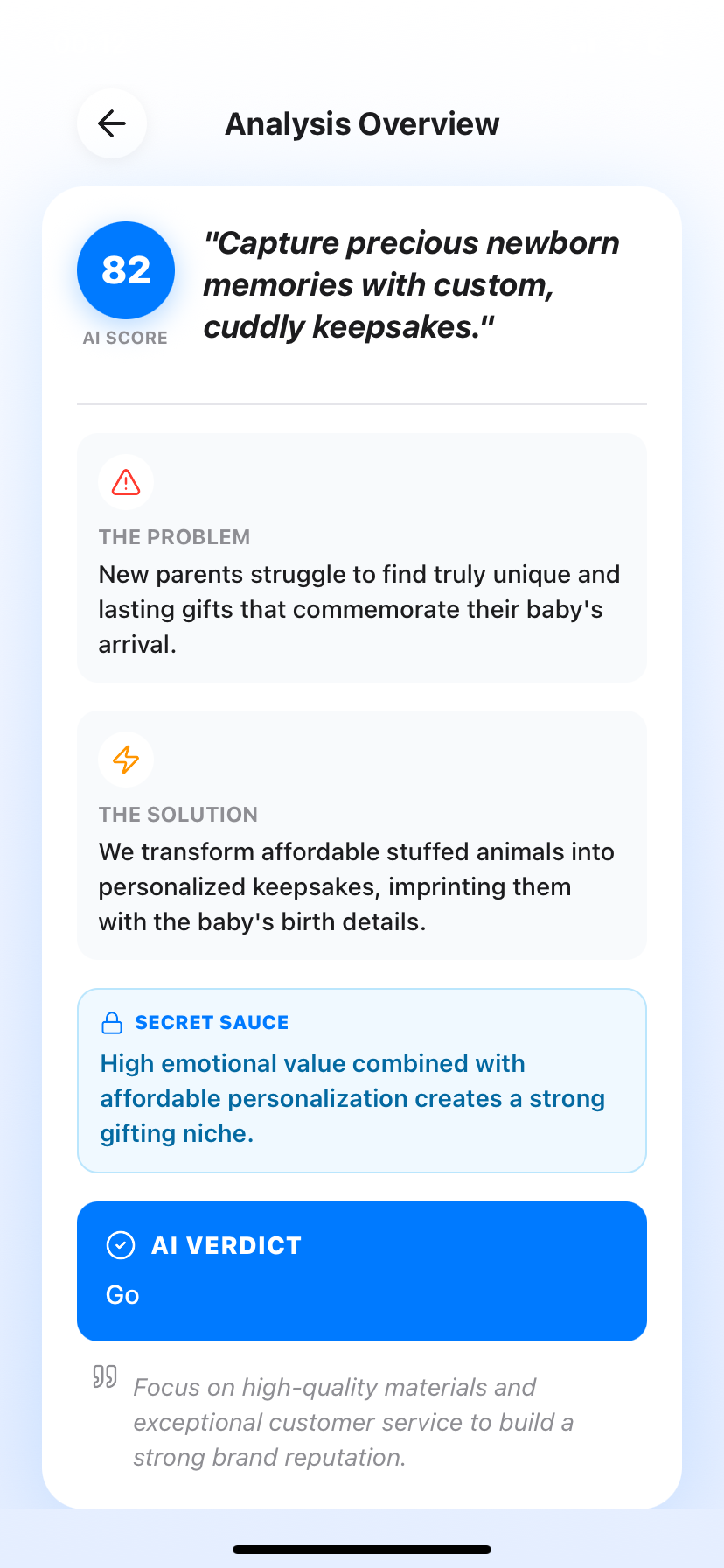
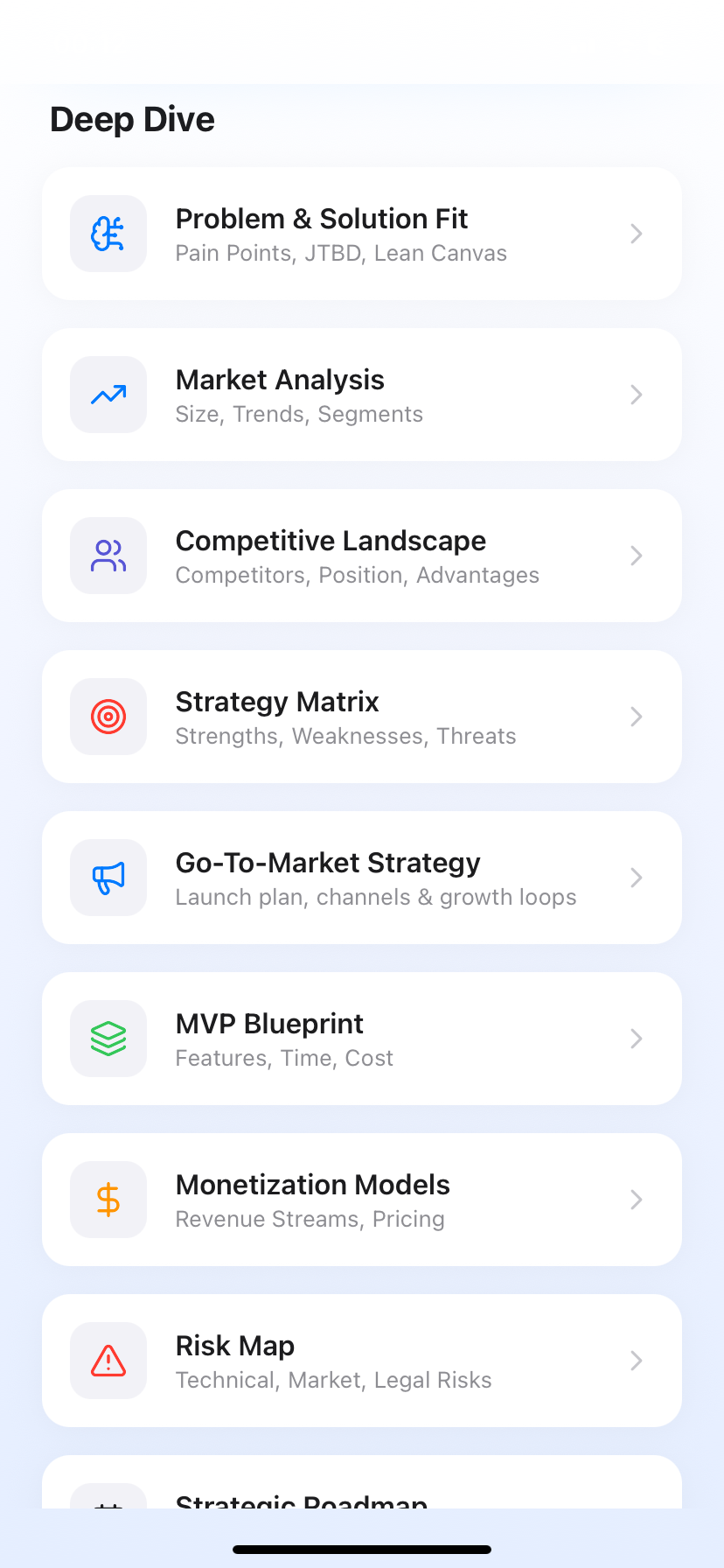

IdeaX: Business Idea Analysis
A structured space for evaluating what to build next.
Don't guess your profit margins.
Calculating unit economics by hand is stressful and highly susceptible to optimistic bias — founders consistently underestimate CAC and overestimate LTV. IdeaX features a built-in Financial Modeling engine specifically calibrated for early-stage founders: input your pricing and channel assumptions, and the AI calculates your LTV:CAC ratio, Payback Period, Breakeven Units, and the minimum monthly customer count for Default Alive — saving you from devastating financial miscalculations before you spend a single dollar.
Frequently Asked Questions (FAQ)
What is COGS and why does it matter?
COGS (Cost of Goods Sold) is the direct production cost per unit. For SaaS, it's server and API costs. For physical goods, it's manufacturing and shipping. COGS determines your Gross Margin, which determines how much revenue is available to fund marketing, salaries, and profit after each sale.
What is a healthy LTV:CAC ratio?
The minimum viable ratio is 3:1 — customer lifetime revenue should be at least 3× acquisition cost. World-class SaaS companies operate at 5:1+. A ratio below 2:1 requires fundamental restructuring of pricing or marketing channels before scaling investment.
Is it okay if I don't make a profit in the first year?
Yes — net losses during scaling are normal for startups investing in growth. However, the underlying unit economics — profitability per individual transaction — must be positive from day one. Losing money on each transaction doesn't improve with scale; it accelerates insolvency.
How do I calculate my Breakeven Point?
Breakeven Units = Fixed Monthly Costs ÷ (Revenue Per Unit – Variable Costs Per Unit). If fixed costs are $3,000 and each unit contributes $6 after variable costs, you need 500 monthly customers to break even. If reaching that number requires an unrealistic market share, the pricing model needs restructuring.
How do I lower my Customer Acquisition Cost?
Shift from paid advertising toward organic channels: SEO content marketing, niche community building, strategic partnerships, and product-led growth loops where existing users refer new ones. B2B cold outbound typically produces dramatically lower CAC than performance advertising for focused ICP targeting.