
How to Spot Market Gaps Before Building a Product
The most common first-time founder mistake is building a hammer and then desperately searching for a nail. They spend six obsessive months writing production code for an app that feels inevitable to them — only to discover at launch that absolutely nobody genuinely wants to pay for it. Commercially successful entrepreneurship operates in strict reverse: you must first locate the bleeding wound with empirical rigor, and only then manufacture the precise bandage that stops the bleeding.

- Framework 1 — 2-Star Review Mining: Extracting a product roadmap from competitor anger.
- Framework 2 — The Unbundling Play: Carving out profitable niches from horizontal giants.
- Framework 3 — Complexity Arbitrage: Monetizing the time and cognition savings.
- Framework 4 — The Geographic & Vertical Transplant: Copying successful models into new markets.
- Framework 5 — Forum Intelligence Mining: Finding gaps from the language of desperation.
The Market Gap Mental Model
Finding a market gap sounds like an abstract, mystical skill possessed only by visionary serial founders. In practice, it is a highly mechanical, systematic process of identifying points of structural economic friction — places where a specific group of people are trying urgently to complete an important goal, but the existing options are too expensive, too complex, too generic, or simply missing.
Your fundamental mission as a gap-hunter is to retrain your brain away from its default "solution inventor" mode and into "pain detector" mode. A skilled gap-hunter reads a complaint-filled Reddit thread and immediately thinks: "These 200 people have the same problem with no good solution. What is the minimum viable product that resolves their specific, stated complaint?"
The five frameworks below are the most reliable, systematically proven methods for discovering commercially viable, non-obvious market gaps in any industry — with zero budget and zero prior experience in the target domain.
Framework 1: The 2-Star Review Mining Strategy
You do not need to invent a completely new market category. You can build an extremely profitable company by simply fixing one broken, underserved segment of an existing, validated market. The fastest way to identify which segment is broken is to read the angry customer reviews of the dominant market leader.
The Review Mining Process
Go to G2, Capterra, Trustpilot, or App Store review sections for the most dominant software in any industry you find interesting. Crucially, do not filter to 1-star reviews. Filter exclusively to 2-star and 3-star reviews.
Why skip 1-star reviews? Because isolated, extreme 1-star reviews are frequently irrational emotional outbursts ("The login page timed out today! Worst software ever! Zero stars!"). They don't represent structural product gaps — they represent individual bad days. By contrast, 2-star and 3-star reviews are typically written by rational, deeply invested power users who wanted the software to be better and are specifically articulating the structural trade-offs and missing capabilities that prevent them from giving a higher rating.
🔍 What to look for in the review corpus:
- Recurring themes across 30+ reviews from the same user category (e.g., "too expensive for freelancers")
- Specific named features that are consistently missing or broken
- References to using workarounds (e.g., "I had to export to Excel to do this basic calculation")
- Patterns of a specific user type (e.g., solo consultants) feeling underserved by an enterprise-focused product
When you identify a recurring, painful complaint from a consistent user type — for example, fifty freelance graphic designers complaining that QuickBooks is designed exclusively for corporate accountants — you have located a market gap: Simple, jargon-free, visual bookkeeping software built exclusively for solo creative freelancers.
Framework 2: The Unbundling Play
Craigslist was, at one point in internet history, a horizontal monopoly that served every possible classified listing need in one overwhelming, undifferentiated interface. Then, methodically over a decade, hyper-focused startups came along and "unbundled" it section by section: Airbnb extracted the "vacation rentals" section. Uber extracted the "rideshare" listings. Tinder extracted the "personals" section. Etsy extracted the "handmade goods" marketplace. Every single one of those became a multi-billion dollar company — by doing one thing from Craigslist, but doing it dramatically better for a specific audience.
Finding the Unbundling Opportunity Today
Look at the horizontally dominant platforms of 2026: LinkedIn, Notion, Microsoft Excel, Salesforce, Zapier. Ask this specific analytical question about each one: "Which niche professional vertical is forced to use this generic tool in a highly frustrating, suboptimal way because nothing purpose-built for their specific context exists?"
If you discover that landscape architects use generic Excel exclusively for their job-site material ordering because there is no purpose-built field-friendly tool for their specific workflow — you have found a premium unbundling opportunity. The same logic that made Airbnb possible still works in every professional niche today. The key is the same: radically superior UX for one specific user type who is currently trapped using a bloated, generic incumbent tool.
Framework 3: Complexity Arbitrage
People will consistently, aggressively spend money to resolve two specific forms of pain: wasted time and overwhelming cognitive complexity. A market gap exists wherever a meaningful group of people are spending significant manual hours performing a task that could be automated, or navigating a complex, expert-level skillset they don't possess.
Spotting the Complexity Gap
The Reddit search method: go to highly active industry subreddits (r/smallbusiness, r/marketing, r/freelance, r/ecommerce) and search for phrases indicating operational manual labor or cognitive overwhelm:
If a cluster of small bakery owners are spending four manual hours every Sunday formatting their weekly ingredient orders because the enterprise-grade food service platforms cost $2,000 per month, you have found a classic complexity arbitrage gap. A $29/month no-code tool that handles their ordering workflow in 10 minutes could immediately capture that market.
Framework 4: The Geographic and Vertical Transplant
Not every market gap requires a completely new idea. One of the most reliable and underutilized gap-hunting strategies is geographic or vertical transplantation — taking a proven, successful business model from one geography or industry vertical and systematically rebuilding it for a different one where it does not yet exist.
The Transplant Logic
Doctolib (France's medical appointment booking platform) is essentially ZocDoc transplanted to the European healthcare system with European regulatory compliance and payment systems. It is a $6.9B company built on a copied model applied to an underserved geography.
The analysis protocol: identify a successful software product in the US market. Research whether an equivalent exists in: Turkey, Brazil, Southeast Asia, the German SMB market, or the agriculture vertical, or the legal vertical, or the veterinary vertical. If the equivalent does not exist in a geography or vertical with sufficient purchasing power — that absence is a market gap.
Framework 5: Forum Intelligence Mining
Forum communities are the most psychologically honest, unfiltered public record of human economic pain in existence. People post to Reddit, Discord, niche Slack communities, and specialized forums specifically because they have a real, unresolved problem and are desperate enough to ask strangers for help. This desperation is commercially valuable raw material.
Forum Mining Methodology
The systematic approach to forum mining: maintain a running spreadsheet with three columns: (1) The exact phrase the user used to describe the problem, (2) The industry/role of the poster, (3) The number of upvotes or "me too" responses the thread received. After reviewing 100+ posts, filter for the top 10 most upvoted problems with no satisfying resolution in the thread replies.
Any problem that generates 20+ "me too" responses and receives no satisfying answer or tool recommendation in the comments is a market gap indicator. The higher the upvote count and the more specific the professional context of the posters, the more commercially valuable the gap.
Once you have identified a candidate gap through this process, immediately cross-validate it using market demand analysis to confirm sufficient search volume and purchasing power before committing to a build.
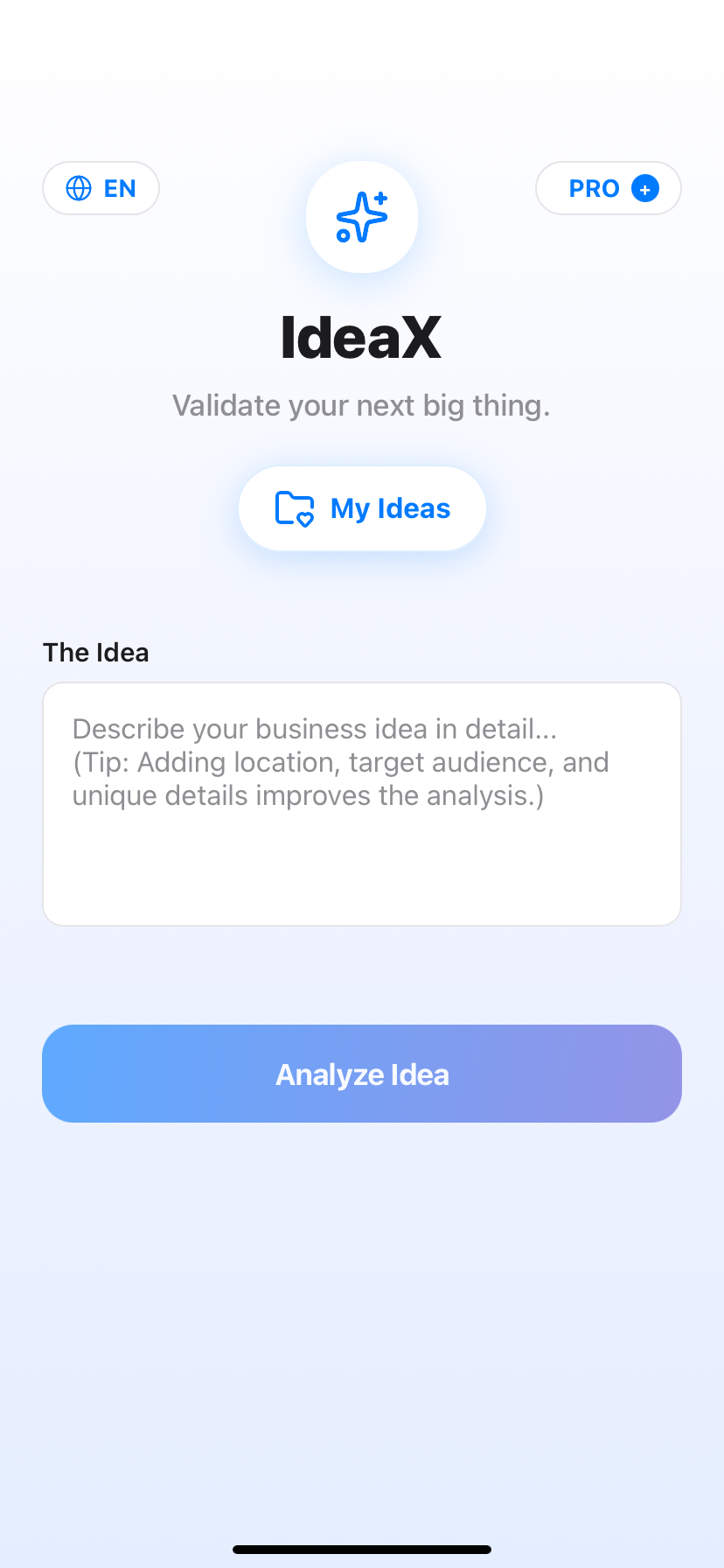
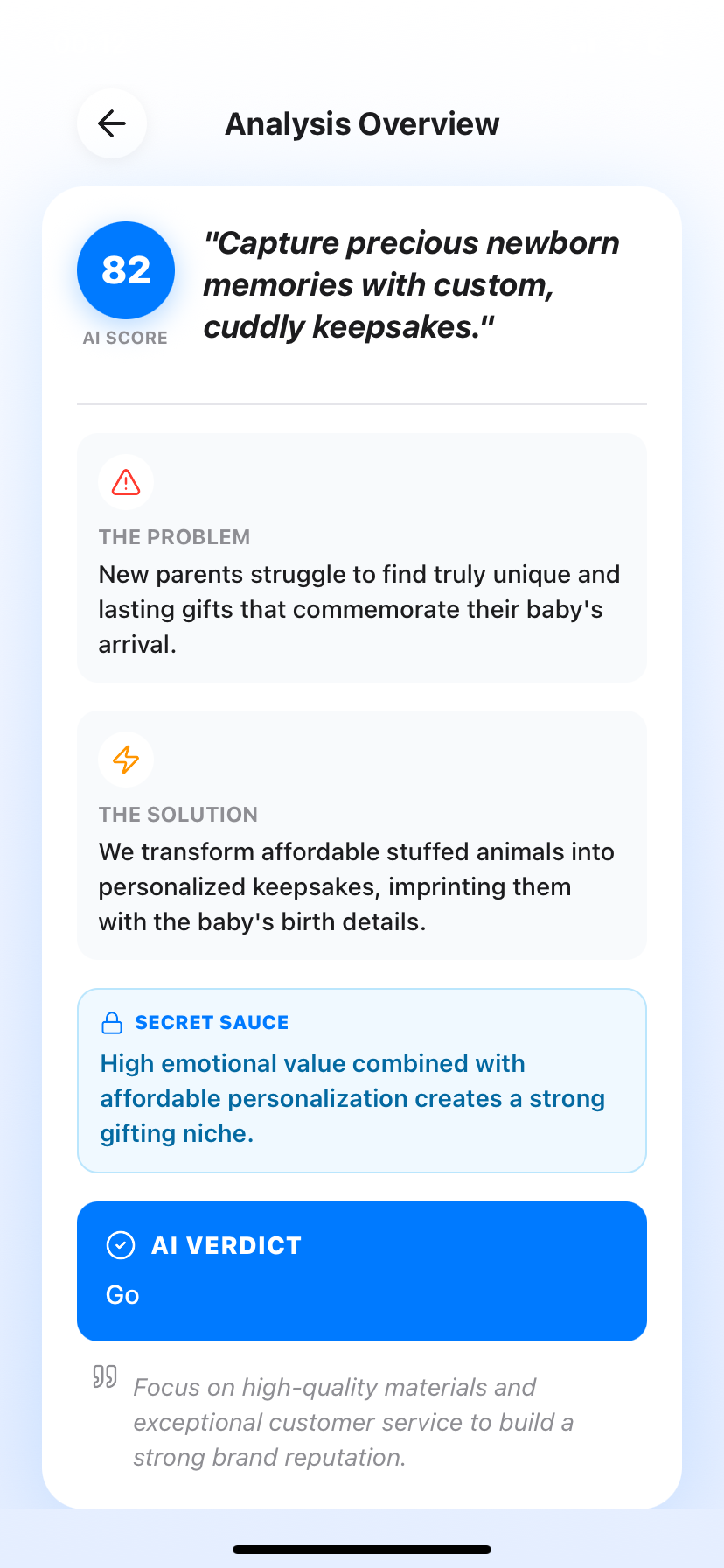
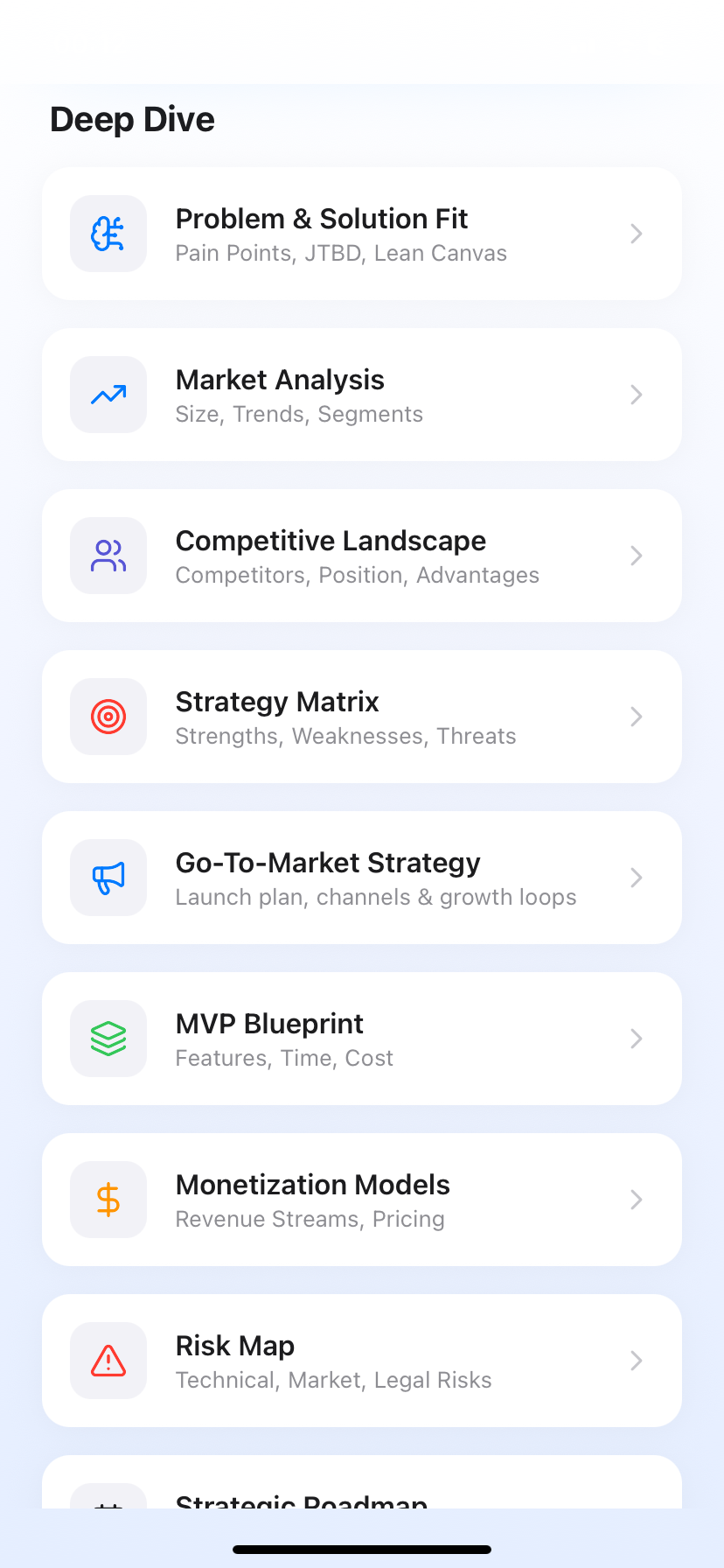

IdeaX: Business Idea Analysis
A structured space for evaluating what to build next.
Verify the gap before you build into it.
Spotting a gap is only the first step. Before investing 6 months of engineering into filling a market gap, you must verify the gap is commercially profitable — not just intellectually interesting. IdeaX stress-tests your hypothetical gap immediately by estimating the purchasing power of your target demographic, calculating the minimum viable TAM, identifying the 3 most credible competitor threats, and flagging whether the gap is being aggressively pursued by well-funded competitors who will close it before you can ship. Stop building on assumptions. Start building on data.
Frequently Asked Questions (FAQ)
What exactly is a 'market gap'?
A market gap is a point of high-friction economic inefficiency where a meaningful group of people have an urgent, costly problem but existing solutions are too expensive, too complex, geographically inaccessible, or structurally misaligned with their specific context. It represents demand without adequate supply.
How do I find problems worth solving if I have no industry experience?
Focus on complaints, not solutions. Spend 20 hours reading 2-star and 3-star reviews on G2, Capterra, and Amazon for software in any industry you find interesting. Look for recurring phrases like 'I wish this tool would...' or 'Is there anything that does...'. Patterns of complaints across multiple unrelated users indicate a market gap worth investigating.
Is a market gap enough to guarantee success?
No. You must verify the gap is paired with sufficient purchasing power. Many gaps exist precisely because the target audience cannot afford a real solution. A gap attached to a financially constrained demographic is not a business opportunity. Always calculate minimum viable TAM before committing to a build.
What is the 'unbundling' strategy for finding market gaps?
Unbundling means extracting one feature from a bloated, horizontal platform and rebuilding it as a focused best-in-class standalone product for a specific vertical. Craigslist was unbundled into Airbnb, Tinder, and Etsy. Look for massive overloaded platforms and ask: what would specialists pay for a tool that does one thing exceptionally well?
How do I know if a market gap is too small to build for?
Calculate minimum viable TAM: (number of potential customers) × (annual price). If the result exceeds $500K annually, the gap supports a viable solo or small-team business. A $2-3M TAM micro-niche is actually ideal for solo founders — large enough to sustain profitability, small enough that no well-funded competitor cares about dominating it.