SWOT vs TOWS Analysis: What's the Difference and When to Use Each
Every founder or business student learns SWOT analysis. Many of them dutifully fill out 2×2 matrices with Strengths, Weaknesses, Opportunities, and Threats — then put the document away and make the same decisions they would have made without any analysis at all. This is the SWOT trap: mistaking the completion of a diagnostic framework for the generation of an actual strategy. SWOT tells you where you are. It does not tell you what to do about it. TOWS — the underutilized extension of SWOT that crosses its four categories to generate specific strategic actions — is the framework that converts the SWOT diagnosis into an executable decision set. Used correctly in sequence, SWOT then TOWS transforms a 2-hour workshop into a complete strategic roadmap.

- The structural difference between SWOT (diagnostic) and TOWS (strategic action generator).
- The 4 TOWS strategy quadrants — SO, WO, ST, WT — with real startup examples.
- The correct filling sequence for an effective SWOT analysis.
- When to use SWOT alone, and when to always follow it with TOWS.
- The most common SWOT mistakes that produce documents instead of decisions.
SWOT Is a Diagnostic. TOWS Is the Treatment Plan.
A medical analogy makes the distinction immediately clear. A doctor runs diagnostic tests to identify what is wrong. The diagnosis is necessary but not sufficient — the patient also needs a treatment plan: specific interventions that address the diagnosed problems. SWOT is the diagnosis. TOWS is the treatment plan.
When you complete a SWOT analysis and walk away with four lists, you have a situational map. You know that your Strength is deep domain expertise in regulatory compliance, your Weakness is an underdeveloped sales motion, your Opportunity is a new government mandate creating demand for your category, and your Threat is a funded competitor entering the market. What you don't yet know is which of these factors to act on first, how, and in what combination. TOWS crosses these categories to generate that answer systematically.
The 4 TOWS Strategy Quadrants — Explained with Examples
🟢 SO — Strengths × Opportunities (Aggressive Growth)
Use your strongest assets to capture the most attractive external opportunities. This is your primary growth thesis.
Example: "Use our compliance expertise (S) to be first-to-market with a regulatory automation product for the new mandate (O)."
🔵 WO — Weaknesses × Opportunities (Turnaround)
Address your internal weaknesses specifically to access opportunities they are currently blocking.
Example: "Hire a dedicated outbound sales lead (W fix) to capture the expanded market created by the mandate (O) before competitors do."
🟡 ST — Strengths × Threats (Defensive)
Deploy your most relevant strengths specifically to neutralize or reduce the impact of the most dangerous external threats.
Example: "Publish proprietary regulatory research reports (S) to establish thought leadership before funded competitor enters (T)."
🔴 WT — Weaknesses × Threats (Damage Control)
Minimize the exposure of your weaknesses to specific threats. The most defensive quadrant — prevents existential risk.
Example: "Avoid entering the enterprise sales channel (W) where the funded competitor has direct relationships (T) until our sales motion is proven."
The Correct SWOT Filling Sequence
Most founders fill a SWOT matrix in the order it appears: Strengths → Weaknesses → Opportunities → Threats. This is the wrong sequence. It causes the Strengths and Weaknesses to be filled in isolation, without the anchoring context of the specific Opportunities and Threats that determine which Strengths actually matter and which Weaknesses are actually dangerous.
The 3 Most Common SWOT Mistakes
Most SWOT analyses fail to generate actionable strategic output because of three systematic errors:
- Vague entries that could describe any company. "Strong team," "growing market," "economic uncertainty." These entries carry zero strategic information because they don't distinguish your specific situation from your competitors'. Every entry must be specific enough to be falsifiable: "founding team has 12 years of combined B2B SaaS sales experience in healthcare compliance" — not "strong team."
- Confusing internal and external factors. Strengths and Weaknesses must be internal to the company (things you control). Opportunities and Threats must be external to the company (market forces you don't control but can respond to). A common error: listing "new government regulation" as a Threat when it is actually an external event — one that may be a Threat to you but an Opportunity relative to a competitor with less regulatory expertise.
- Stopping at the SWOT without running TOWS. The SWOT table is an input, not a deliverable. If the 2-hour SWOT workshop ends without a TOWS session that converts the four lists into specific strategic initiatives (each with an owner, a timeline, and a success metric), the exercise has produced a document instead of a decision.
When to Use SWOT vs TOWS vs Lean Canvas
For pre-revenue startups at concept stage: begin with a Lean Canvas to map the core business model hypotheses. SWOT is premature when you have no real Strengths or Weaknesses data — only assumptions. For post-launch startups doing quarterly strategic reviews: SWOT → TOWS is the optimal sequence to diagnose the current competitive position and generate the next quarter's strategic initiatives. For strategic decisions like new market entry, partnership evaluation, or competitive response: always run SWOT → TOWS before committing resources.
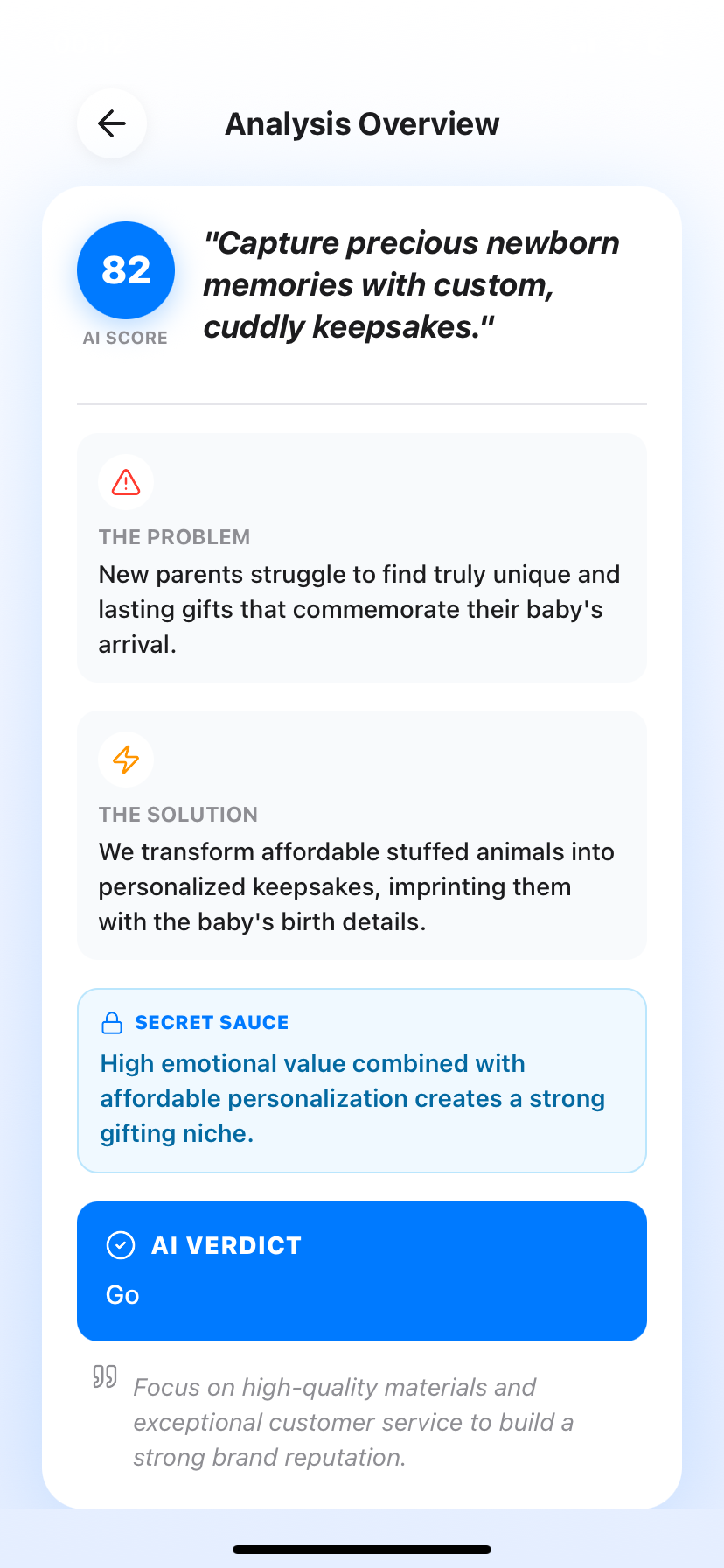
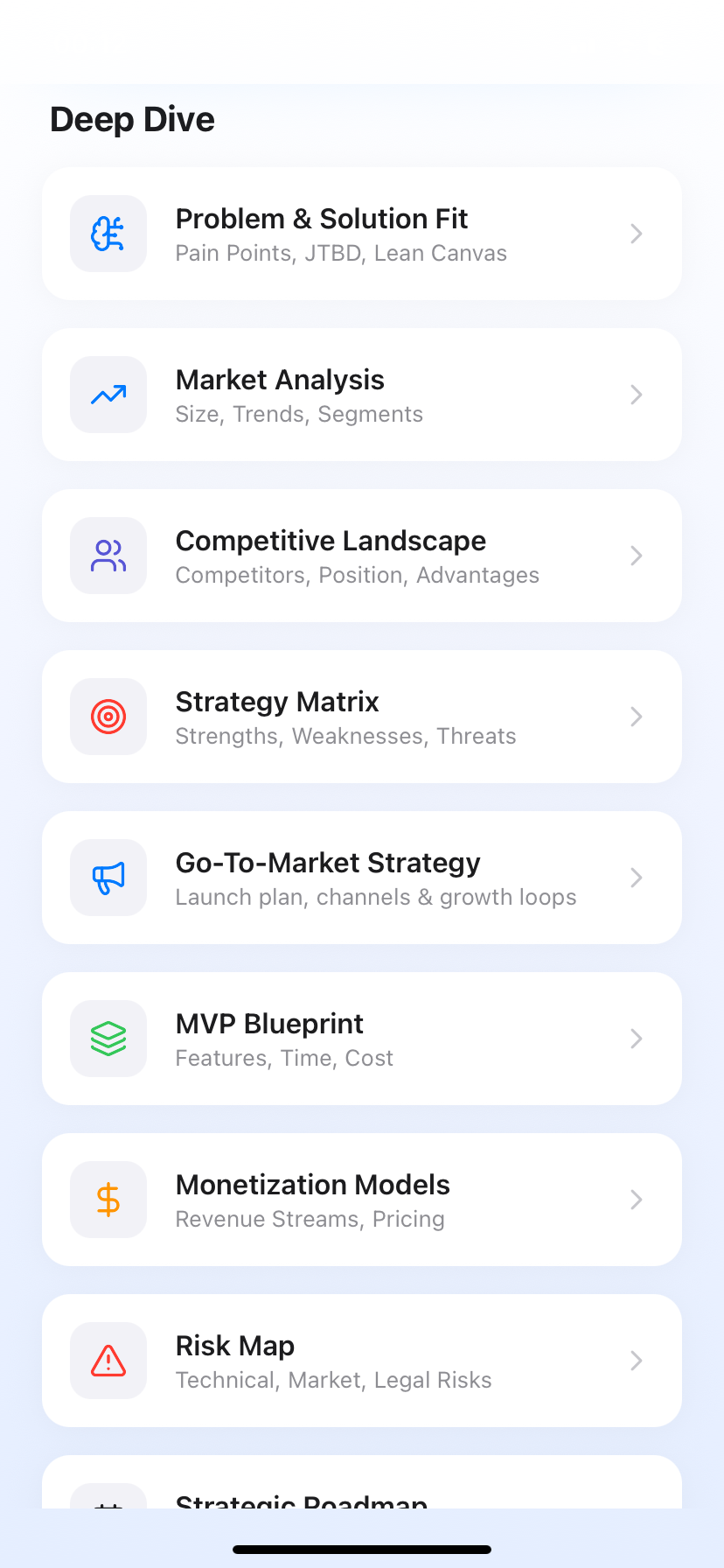

IdeaX: Business Idea Analysis
AI-powered adversarial analysis for startup concepts.
Don't start with SWOT. Start with a structural audit.
For pre-revenue startups, SWOT and TOWS operate on assumptions — not evidence. Before filling in any framework, verify that your concept has a viable structural foundation: does the TAM support a real business, are the unit economics profitable at realistic CAC, is there a defensible moat? IdeaX generates this structural audit in 10 minutes — giving you evidence-based inputs to fill into your SWOT and TOWS analyses, instead of optimism-based assumptions.
Frequently Asked Questions (FAQ)
What is the key difference between SWOT and TOWS analysis?
SWOT is diagnostic — it categorizes existing information into Strengths, Weaknesses, Opportunities, and Threats. It tells you where you stand. TOWS is a strategy generator — it crosses the four SWOT categories to create four strategic action sets (SO, WO, ST, WT). TOWS tells you what to do about where you stand. Use both in sequence: SWOT first to map, TOWS second to act.
What are the 4 TOWS quadrants?
SO (Strengths × Opportunities): Aggressive growth strategies. WO (Weaknesses × Opportunities): Turnaround strategies that address weaknesses to access opportunities. ST (Strengths × Threats): Defensive strategies that deploy strengths to neutralize threats. WT (Weaknesses × Threats): Damage-control strategies that minimize weakness exposure to dangerous threats.
When should a startup use SWOT vs TOWS?
Use SWOT at the start of a strategic planning session. Always follow it with TOWS to convert the map into specific strategic initiatives. A SWOT analysis not followed by TOWS produces a document, not a decision. For early-stage startups, SO (growth thesis) and WT (existential risk mitigation) quadrants are usually most important.
What is the most common SWOT mistake?
Filling the matrix with vague entries like "strong team" and "growing market" — content so non-specific it generates no actionable insight and could describe virtually any company. Every entry must be specific and falsifiable: not "strong team" but "12 years of combined B2B SaaS sales experience in healthcare compliance" — a specific quantified asset creating a specific strategic advantage.
Is SWOT relevant for early-stage startups?
For pre-revenue startups, the Lean Canvas is more useful for initial business model design (SWOT operates on assumptions, not evidence, at this stage). SWOT→TOWS is most powerful as a quarterly iteration tool post-launch — to diagnose why growth is or isn't occurring, which competitive threats are emerging, and which strengths have proven more or less powerful than assumed.