
What Is a Value Proposition and Why Does It Matter?
If you cannot explicitly explain why a paying customer should hand you their hard-earned money instead of giving it to your largest competitor within five seconds, you will lose the sale. Your Value Proposition is mechanically the most consequential string of words your startup will ever write.
- The dangerous difference between "Features" and "Benefits".
- The strict 3-part anatomical formula for perfect landing page copy.
- Why marketing "cleverness" destroys conversion rates.
- How to A/B test your Value Proposition using paid traffic.
- Real-world examples of terrible vs highly profitable propositions.

The Five-Second War for Attention
When a potential customer lands on your pristine new website or opens your cold pitch email, they are not looking to read a novel. They are ruthlessly impatient, and they are silently asking three entirely selfish questions:
- "What exactly is this?"
- "What is in it for me?"
- "Why should I trust you over everyone else on Google?"
A Value Proposition is a clean, hyper-concise statement that answers all three of those critical questions simultaneously. It is not a catchy advertising slogan designed for a billboard ("I'm Lovin' It"), nor is it a dry, boring list of software specs in a technical manual. It is a contractual psychological promise of the tangible transformation the customer will experience if they hire your company.
Features Tell, Benefits Sell
The single most common mistake engineering-minded founders make is writing a "Feature Proposition" instead of a "Value Proposition." Engineers love the things they build, so they naturally describe the mechanics of the machine rather than the output of the machine.
❌ Feature Proposition (Bad)
"Our new email marketing software features multi-threaded chron-job automation sequences, a Vue.js frontend, and 256-bit AES database encryption."
Why it fails: The customer does not care about your database encryption; they care about closing sales.
✅ Benefit Proposition (Excellent)
"Automate your sales follow-ups and instantly recover 20% of your abandoned shopping carts while you sleep."
Why it works: The feature is automation; the value is making money while sleeping without lifting a finger.
The Anatomy of a Perfect Value Proposition
A high-converting, professional value proposition is typically structured in three interlocking UI parts, permanently and prominently displayed "above the fold" on your website (meaning the user doesn't have to scroll down to see it).
- 1. The Headline (The Hook): One incredibly short, punchy sentence describing the ultimate end benefit you are offering. It must grab them by the throat.
Example: "Painless Global Payroll for Modern Remote Teams." - 2. The Sub-Headline (The Mechanics): A 2-3 sentence paragraph directly below the headline explaining exactly how you deliver the promised benefit, and exactly who it is specifically for.
Example: "We combine automated tax compliance algorithms with direct deposit architecture so busy remote marketing agencies can pay global contractors in one click." - 3. The Bullet Points (The Proof): Three immediate, irrefutable, data-backed reasons why you are vastly superior to the existing market alternatives. (e.g., "Save $400 a month in wire fees", "Zero setup required").
- 4. The Hero Visual: A screenshot or diagram that visually proves the headline is true in less than a second.
Clarity Beats Cleverness Every Time
First-time founders desperately love trying to be clever. They want to sound like Apple. They write vague, metaphorical, poetic headlines like: "Synergizing the Paradigm of Tomorrow's Accounting Ecosystem."
This is absolute marketing poison for a startup.
If a visitor has to stop and think for even a fraction of a second to decipher what it is you actually do or sell, their brain will instantly burn calories, they will feel fatigue, and they will immediately hit the "Back" button on their browser. Do not be cute. Be brutally literal.
A literal headline like "We Help Dentists Get 10 New Patients a Month Using Google Ads" is infinitely more profitable than a mysterious, poetic slogan like "Pioneering the Future of Dental Smiles." Your absolute highest goal is instant, frictionless comprehension.
Testing Your Proposition in the Wild
A value proposition is not a static document carved into stone. It is a scientific hypothesis that must be rigorously tested against the open market.
During your initial idea validation phase, you should run aggressive A/B tests using cheap Facebook or Google Ads.
Direct 50% of your ad traffic to a landing page highlighting a time-saving value proposition ("Save 10 hours a week on accounting"). Direct the other 50% to a landing page highlighting a money-making value proposition ("Recover $500 a week in lost invoices"). Wait one week, and let the cold, hard conversion data decide which promise is actually compelling enough to efficiently extract the user's credit card.
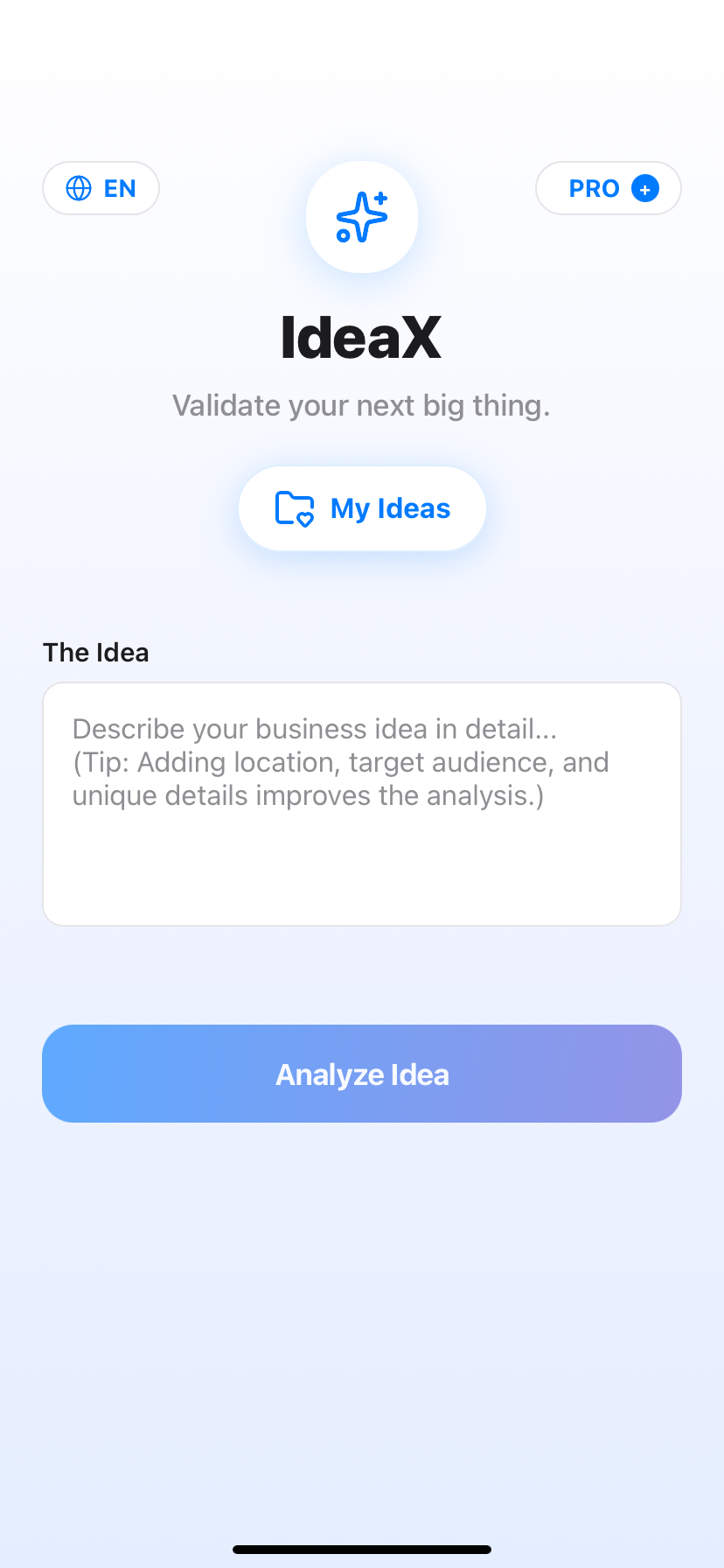
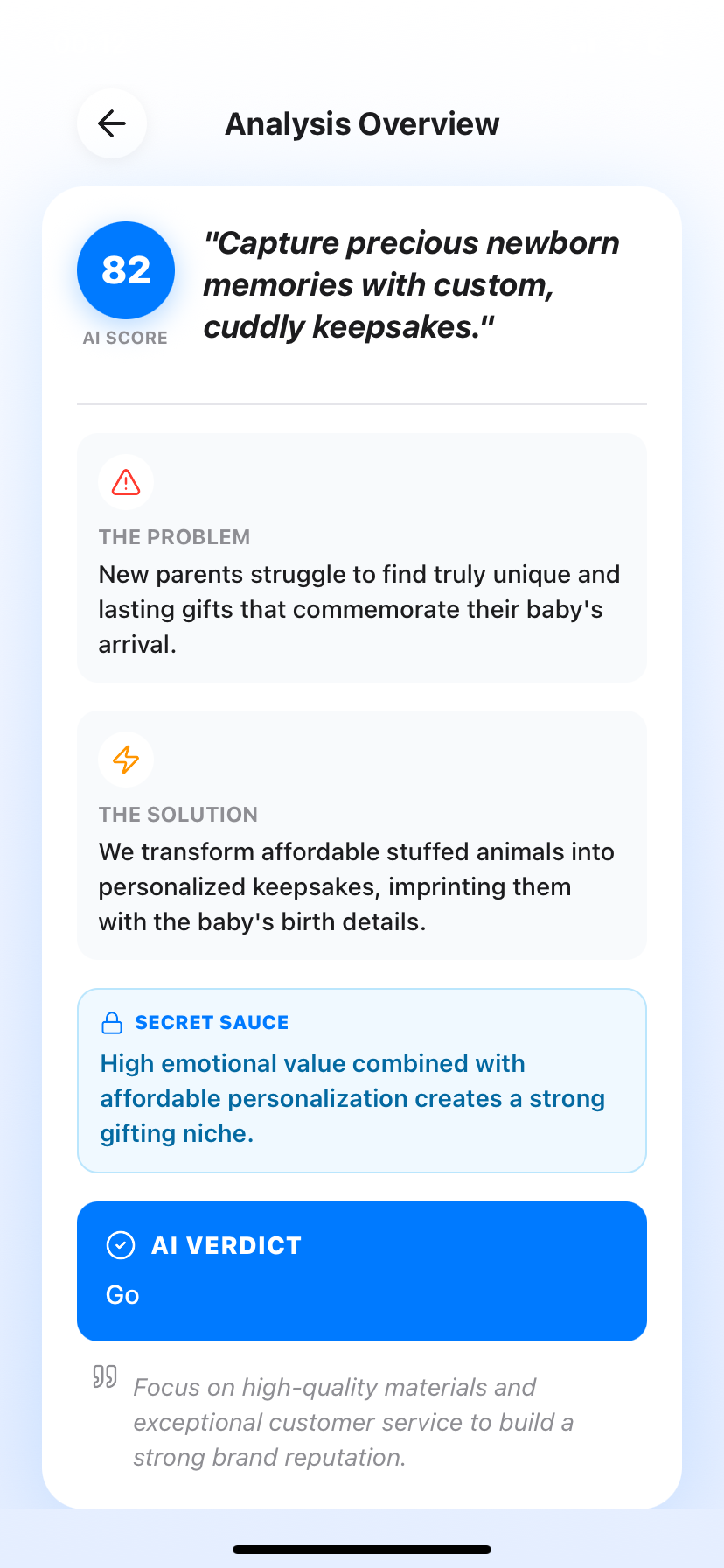
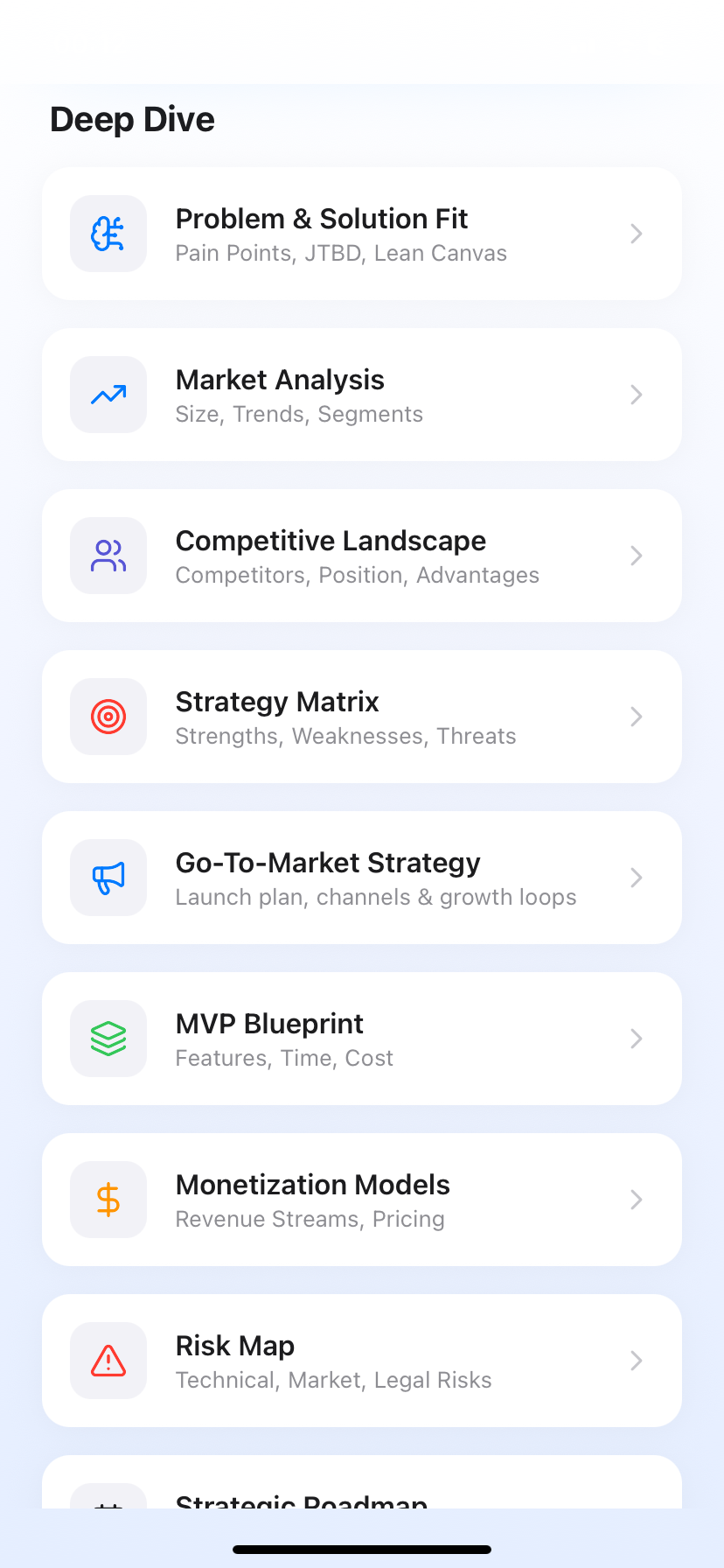

IdeaX: Business Idea Analysis
Your automated copywriting architect.
Refine your pitch with AI precision.
Struggling to articulate what makes your idea truly special? Staring at a blank landing page draft? IdeaX features a dynamic, algorithmic Value Proposition generator constraint-modeled against top-tier startup copywriting. By dissecting your core technical features, analyzing your exact target audience demographics, and identifying the structural weaknesses of your competitors, IdeaX instantly synthesizes razor-sharp, high-converting marketing propositions ready to deploy on your landing page today. Stop guessing at copy.
Frequently Asked Questions (FAQ)
Is a value proposition the exact same thing as a marketing slogan?
No. A slogan is a short, memorable, often vague marketing phrase (like Nike's 'Just Do It' or McDonald's 'I'm Lovin' It'). A value proposition is a literal, contractual promise of specific value to be delivered. It explicitly explains the mechanics of how you solve the customer's severe problem.
How long should a value proposition legitimately take to read?
It should be read and fully comprehended within exactly 5 seconds. Usually, it consists of a single bold headline, a 2-sentence sub-headline explaining the exact mechanics, and three bullet points highlighting the specific, measurable benefits.
Can a complex B2B business have multiple value propositions?
Yes, if you have multiple distinct target audiences or buyer personas. However, your primary home page should always feature one overarching, unifying value proposition to avoid confusing the massive majority of your unsegmented top-of-funnel traffic.
What is the difference between a feature and a benefit?
A feature is a technical fact about your product (e.g., '1TB of cloud storage'). A benefit is the emotional or financial result of that feature (e.g., 'Never lose a family photo again, even if your laptop is destroyed'). Good value propositions sell benefits, not features.
Where should my value proposition be located on my website?
It must be located 'above the fold' on your homepage and all landing pages. This means the user must see the headline, sub-headline, and Call-to-Action button the exact millisecond the page loads, without having to scroll down even one pixel.