
Espresso-Based Coffee Drinks Guide: Every Drink Explained
Telve: Coffee Recipes & Fortunes
Discover unique recipes and daily cup readings in one app.
Every coffee drink on a café menu starts with espresso — a concentrated 25-30 second extraction of finely ground coffee under 9 bars of pressure. From that 30ml base, baristas build every variation you see: from the naked ristretto to the towering iced mocha with whipped cream. Understanding what separates each drink isn't about memorizing menus — it's about understanding the espresso-to-milk ratio, foam type, and additions that define the character of each cup. This guide covers all 12 foundational espresso-based drinks with ratios, taste profiles, calories, and caffeine data.
Ristretto · Espresso · Lungo · Americano · Macchiato · Cortado · Flat White · Cappuccino · Latte · Mocha · Affogato · Cold Brew Espresso
The Espresso Foundation
Every drink in this guide starts from the same place: espresso. A standard single shot is 30ml extracted from 9g of ground coffee in 25-30 seconds. A double shot (the default in most cafés) uses 18g of coffee and produces 60ml. The grind size, tamp pressure, water temperature (93°C ideal), and extraction time all affect whether the shot is sweet and balanced, sour (under-extracted), or bitter (over-extracted).
Once the shot is pulled correctly, everything else is about what you add to it — water, milk, foam, chocolate, or nothing at all.
The Complete Espresso Drink Comparison Table
| Drink | Volume | Espresso | Milk | Caffeine | Calories | Taste Intensity |
|---|---|---|---|---|---|---|
| Ristretto | 15–20ml | Single short | None | ~50–60mg | ~5 kcal | ⭐⭐⭐⭐⭐ Max |
| Espresso | 30ml | Single shot | None | ~60–75mg | ~5 kcal | ⭐⭐⭐⭐⭐ |
| Lungo | 60–90ml | Single long | None | ~80–95mg | ~5 kcal | ⭐⭐⭐⭐ |
| Americano | 240ml | Double shot | Hot water | ~120–128mg | ~15 kcal | ⭐⭐⭐⭐ |
| Macchiato | 40ml | Double shot | ~10ml (dollop) | ~120mg | ~15 kcal | ⭐⭐⭐⭐⭐ |
| Cortado | 120ml | Double shot | 60ml warm milk | ~120mg | ~50 kcal | ⭐⭐⭐⭐ |
| Flat White | 160–180ml | Double ristretto | ~120ml microfoam | ~100–120mg | ~120 kcal | ⭐⭐⭐⭐ |
| Cappuccino | 180ml | Double shot | Equal thirds | ~120mg | ~120 kcal | ⭐⭐⭐ |
| Latte | 240–350ml | Double shot | ~180–240ml | ~120mg | ~190 kcal | ⭐⭐ |
| Mocha | 240ml | Double shot | ~160ml + choc | ~130–150mg | ~320 kcal | ⭐⭐ |
| Affogato | ~150ml | Double shot | Gelato scoop | ~120mg | ~200 kcal | ⭐⭐⭐ |
Pure Espresso Drinks (No Milk)
Ristretto — The Sweetest Shot
A ristretto ("restricted" in Italian) uses the same dose of coffee as an espresso but only half the water — producing 15-20ml of very concentrated, very sweet extraction. Because the short extraction time doesn't reach the bitter compounds later in the shot, a ristretto tastes sweeter and more aromatic than a full espresso. Many specialty cafés default to ristretto shots in lattes and flat whites for this reason. It's the coffee snob's choice — not because of pretension, but because the flavor is genuinely different.
Espresso — The Foundation
A double espresso is the reference point for all other drinks. Thirty milliliters per shot, 18g of coffee, 25-30 seconds extraction. The perfect shot has a thick, reddish-brown crema on top. It should taste balanced — slightly bitter, acidic, sweet, and intensely coffee-forward simultaneously. If it tastes sour, it's under-extracted. If it tastes burnt or overly bitter, it's over-extracted.
Lungo — The Long Pull
A lungo ("long" in Italian) uses the same amount of coffee grounds but twice the water volume, pulling 60-90ml over a longer extraction time. This produces more caffeine than an espresso (longer extraction = more caffeine dissolved) but also more bitter compounds. The taste is thinner and more bitter than espresso — often described as espresso with the bright notes removed and the bitter notes amplified. Prefer an Americano instead: espresso + hot water added after, which preserves the crema.
Americano — The Diluted Power
An Americano is a double espresso shot topped with 150-180ml of hot water. Legend says American soldiers in Italy during WWII diluted espresso to approximate the drip coffee they were used to. The result is a full-volume coffee with espresso character — bold, slightly acidic, with the crema visually broken but flavor-forward. It contains the same caffeine as the underlying espresso shots (~120-128mg per double) but in a much larger volume.
Milk-Based Espresso Drinks
Macchiato — The "Marked" Espresso
Macchiato means "stained" or "marked" in Italian. A traditional espresso macchiato is simply a double espresso shot with a small dollop of milk foam placed on top — just enough to visually mark the shot and take the sharp edge off the acidity. It's still primarily an espresso drink. Note: Starbucks' Caramel Macchiato bears almost no resemblance to this — it's essentially a vanilla latte with caramel drizzle, served in reverse order.
Cortado — The Balanced Middle
A cortado (from the Spanish "cortar," to cut) is a 1:1 ratio of espresso to warm milk — approximately 60ml espresso + 60ml milk. Unlike a cappuccino or latte where the milk is steamed into microfoam, cortado milk is just lightly warmed. The result balances the espresso's intensity without diluting it with foam air. It's served in a small glass — the visual ratio of dark espresso to pale milk is distinctive. Best for people who love the character of espresso but find the acidity sharp.
Flat White, Cappuccino & Latte — The Spectrum
These three drinks represent the milk-espresso spectrum. A flat white (160-180ml) is the smallest, with the highest coffee-to-milk ratio and a velvety, fully integrated microfoam. A cappuccino (180ml) is the classic third-and-third — equal steamed milk, milk foam, and espresso, with a pronounced foam cap. A latte (240-350ml) is the largest and mildest, dominated by steamed milk with a thin foam layer and the most diluted espresso character. See the full latte vs cappuccino vs flat white comparison for a complete breakdown.
🔑 Barista Pro Tips
- Always add hot water after the espresso for an Americano — never before. Pouring espresso into hot water destroys the crema instantly. Pouring water over espresso preserves the crema layer and keeps the aromatics more intact. The difference in taste is noticeable.
- For milk drinks, temperature determines texture more than technique. Milk at 60–65°C creates glossy, stable microfoam. Over 70°C, the proteins denature and the foam becomes grainy. Use a thermometer until you can judge by touch (hand is comfortable at ~65°C on the jug).
- Preheat your cup for any espresso drink. Pouring espresso into a cold cup drops the shot temperature by 5-8°C immediately, changing the flavor chemistry. Run hot water in your cup for 20 seconds before pulling the shot.
Telve: Master Your Daily Brew
Learn pro coffee recipes, track your caffeine, and explore fortunes.
⚠️ Common Ordering Mistakes
A traditional macchiato is 40ml. If you order one at a specialty café expecting a Starbucks caramel macchiato, you'll receive a tiny, bitter espresso drink. Specify what you mean — or order a latte with caramel syrup.
Longer extraction = more caffeine but also more bitter compounds. If you want a stronger coffee taste without bitterness, order an extra shot added to your drink instead of switching to lungo.
An Americano with 2 espresso shots contains 120-128mg caffeine — the same as a latte. It's not weaker, just distributed in more water. The taste is different (less milk, more espresso character), not less intense in caffeine terms.
Which Espresso Drink Should You Choose?
| If you want… | Order this |
|---|---|
| Maximum coffee intensity in minimum volume | Ristretto |
| Pure espresso experience, balanced | Espresso (double) |
| Black coffee, large volume, drip-like | Americano |
| Espresso with the sharpness cut without diluting | Cortado |
| Strong coffee taste with silky milk texture | Flat White |
| Balanced milk foam experience, the café classic | Cappuccino |
| Mild, creamy, gentle coffee flavor | Latte |
| Chocolate + coffee, dessert-like | Mocha |
Espresso vs Regular Coffee: 5 Key Differences
One of the most frequently Googled coffee questions: "Is espresso stronger than regular coffee?" The answer is complicated by what "stronger" means. Here are the 5 actual differences:
| Property | ☕ Espresso (double) | ☕ Drip Coffee (8oz) |
|---|---|---|
| Volume | 60ml | 240ml |
| Caffeine per drink | 120–128mg | 120–200mg |
| Caffeine per ml | ~2.0–2.1mg/ml (very concentrated) | ~0.5–0.8mg/ml |
| Brew pressure | 9 bar | Gravity (0 bar) |
| Brew time | 25–30 seconds | 3–5 minutes |
| Acidity | Lower (pressure extraction reduces acidity) | Higher (longer extraction pulls more acids) |
The key takeaway: espresso is more concentrated per milliliter but not necessarily higher in total caffeine per serving. A large drip coffee can contain more caffeine than a double espresso if the coffee is strong enough. Espresso's perceived "strength" comes from its concentration and the immediacy of the caffeine delivery — a 60ml shot hits quickly because there's no large volume of water to slow absorption.
Cold Espresso Drinks: Iced Americano, Espresso Shakerato & Cold Brew Espresso
The espresso drink universe extends into cold territory with three distinct options — each producing a very different experience despite using espresso as the base:
- Iced Americano: A double espresso shot poured over ice, topped with cold water. It's the fastest cold coffee — no steaming, no milk needed. The hot espresso over ice creates a temperature contrast that brings out bright, acidic notes. Total caffeine: ~120-128mg. Calories: ~15. The most common cold order for black coffee drinkers.
- Espresso Shakerato: An Italian specialty — double espresso, ice, and a small amount of simple syrup shaken vigorously in a cocktail shaker until a thick, cold foam forms. Strained into a chilled coupe glass. The shaking emulsifies the espresso crema into a silky foam layer. It's essentially a cold espresso cocktail without alcohol. Increasingly appearing on specialty café menus internationally.
- Cold Brew Espresso (Espresso over Cold Brew): Some specialty cafés combine cold brew coffee (slow 12-18 hour cold extraction) with an espresso shot — sometimes called a "Black Eye" or "Red Eye" depending on the region. Very high caffeine (~250-300mg total). Intensely coffee-forward. For drinkers who need maximum caffeine in minimum volume.
- Iced Flat White / Iced Latte / Iced Cappuccino: Milk-based espresso drinks over ice. See our full iced coffee guide and cold coffee types guide for technique details.
How to Order Coffee at a Specialty Café (Without Embarrassment)
Specialty café menus can intimidate first-timers — but the vocabulary is entirely logical once you understand the espresso foundation. A practical ordering guide:
Decaf Espresso: Does It Actually Work?
A genuine question from caffeine-sensitive coffee lovers: can you make a real espresso-based drink (with crema, with body, with the right flavor) using decaf beans? The answer is yes — with one caveat.
Decaffeination removes 97-99% of the caffeine but preserves most of the coffee's flavor compounds. A well-roasted, properly decaffeinated espresso bean (Swiss Water Process decaf is the gold standard for flavor preservation) produces: genuine crema, appropriate body, and most of the original roast's flavor notes. What it lacks slightly: some of the bright acidity and the exact aromatic complexity of the caffeinated original.
For decaf espresso-based drinks: cappuccinos, lattes, and flat whites work excellently with quality decaf — the milk softens any flavor loss. A decaf americano or straight decaf espresso is where the comparison shows most, as there's nothing to compensate for the minor flavor difference. If you're caffeine-sensitive and want a proper café experience after 2pm, a decaf oat milk latte from a quality decaf roast is a very satisfying option.
Telve: Coffee Recipes
Make every drink in this guide at home.
Every espresso drink. Step-by-step. At home.
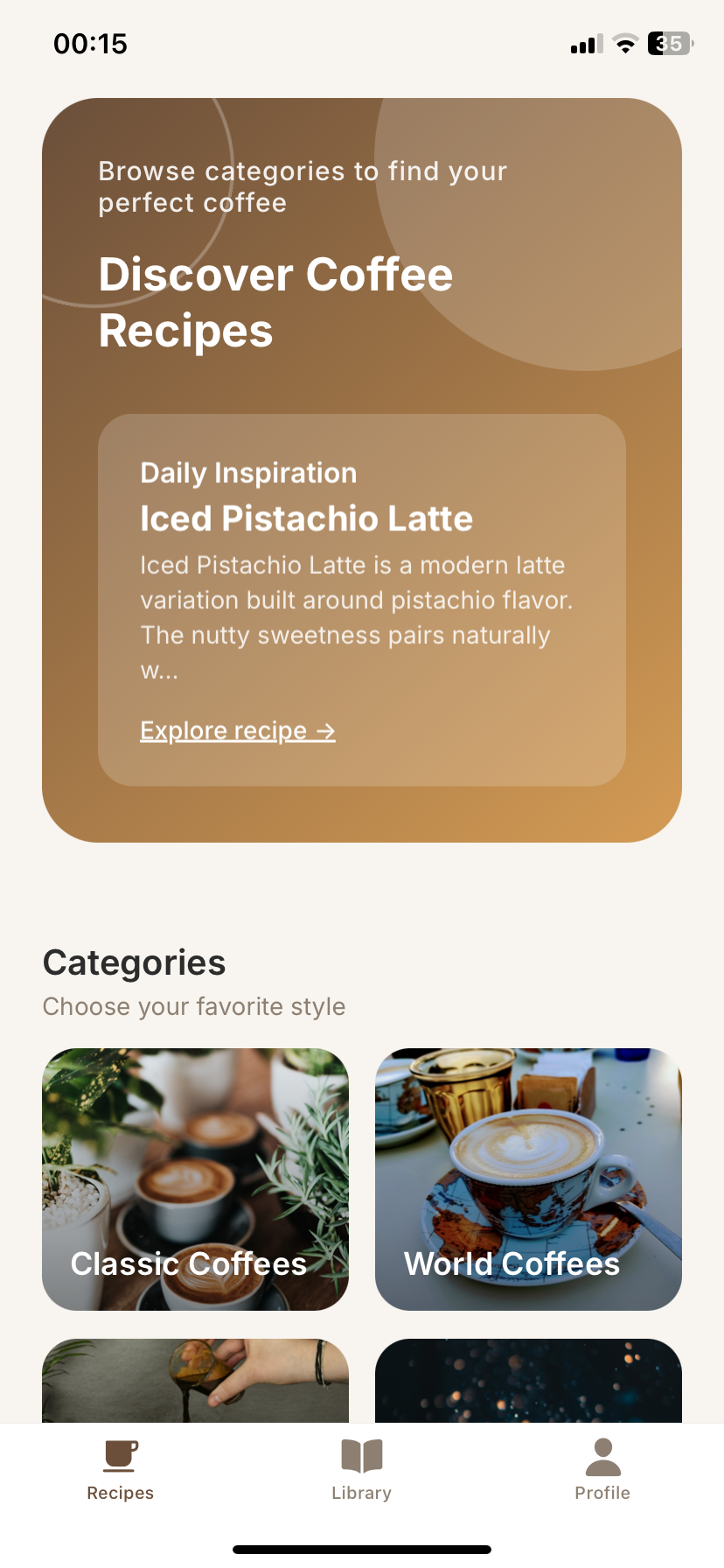
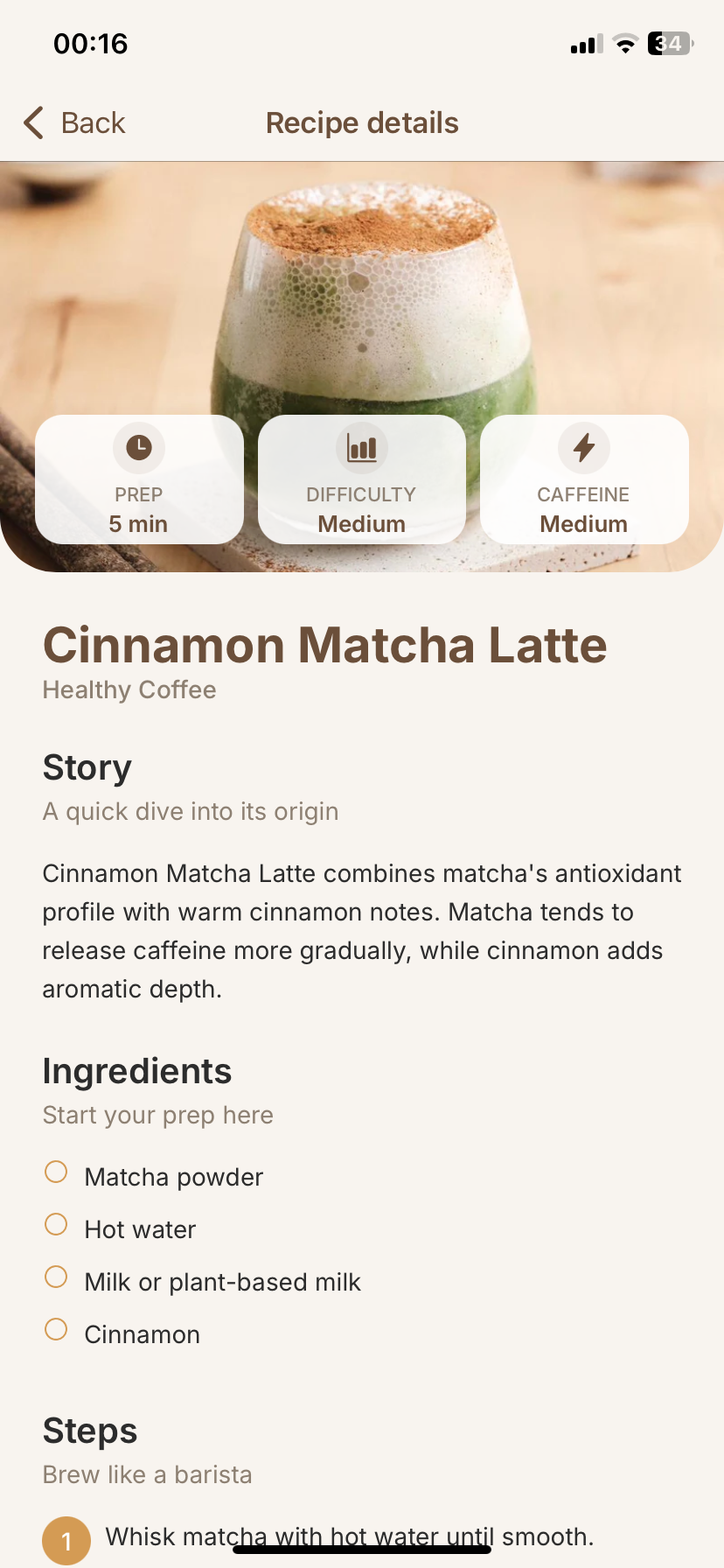
Telve gives you café-quality recipes for every espresso drink in this guide — ristretto, cortado, flat white, cappuccino, latte, mocha and more. With precise ratios, temperatures, and step-by-step instructions. Plus caffeine tracking so you always know how much you've had.
Frequently Asked Questions
What are the most popular espresso-based drinks?
Americano, latte, cappuccino, flat white, mocha, and macchiato are the most ordered globally. All start from the same espresso base — the difference is water, milk volume, foam texture, and additions like chocolate.
What's the difference between ristretto and espresso?
Same amount of coffee grounds, half the water (15-20ml vs 30ml). Shorter extraction captures sweeter, more aromatic compounds before the bitter ones. Ristretto is sweeter and more concentrated; slightly less caffeine due to shorter extraction.
What's the difference between flat white and latte?
Flat white is smaller (160-180ml), uses a stronger coffee-to-milk ratio (double ristretto + less milk), and has a thinner, fully integrated microfoam. Latte (240-350ml) has more milk, gentler coffee character, and a thicker foam layer on top.
Which espresso drink has the most caffeine?
Per drink, a double espresso (or Americano, flat white, cappuccino, latte — all using a double shot) contains ~120-128mg caffeine. Drinks with extra shots go higher. Despite being more concentrated, ristretto has slightly less caffeine than espresso due to shorter extraction time.
What is a cortado and how is it different from a macchiato?
Cortado: 1:1 espresso to warm milk (~60ml + 60ml), served in a small glass. Macchiato: espresso "marked" with just a tablespoon of milk foam. The cortado is a balanced coffee-milk drink; the macchiato is essentially still a pure espresso experience with a tiny milk addition.
Related Coffee Guides
Espresso Drinks Explained in Depth
Deep dives into espresso extraction science, grind settings, and shot variables.
Latte vs Cappuccino vs Flat White
The three most confused espresso drinks compared across 8 dimensions.
Mocha vs Latte: Full Comparison
Taste, calories, caffeine, sugar, and when to order each.
Coffee Flavor Profile Guide
How roast levels, origin, and processing affect what you taste in every cup.