
Mocha vs Latte: Key Differences, Taste, Calories & Which to Order

Telve: Coffee Recipes & Fortunes
Discover unique recipes and daily cup readings in one app.
Standing at a café counter choosing between a mocha and a latte seems simple — until you realize most people couldn't explain the exact difference if asked. Both are espresso-based, both involve steamed milk, both are among the most ordered drinks worldwide. But the difference between the two determines your calorie intake, sugar level, taste experience, and the entire character of your coffee break. This guide breaks down every dimension of the mocha vs latte comparison — so you can order with confidence and make both perfectly at home.

- Full mocha vs latte comparison table (7 dimensions)
- Taste profile: what each drink actually tastes like
- Calories, caffeine & sugar breakdown
- When to choose mocha vs latte
- How to make both at home (step-by-step)
- Barista pro tips & common mistakes
- Milk & ingredient substitution guide
The One-Sentence Difference
A latte is espresso + steamed milk + light microfoam. A mocha is a latte with chocolate added. That's the core of it. Everything else — the calorie gap, the taste difference, the sweetness level — flows from that single ingredient: chocolate.
Mocha vs Latte: Full Comparison Table
| Dimension | ☕ Latte | 🍫 Mocha |
|---|---|---|
| Base | Espresso + steamed milk | Espresso + chocolate + steamed milk |
| Taste | Creamy, mild, slightly sweet | Rich, chocolatey, sweet |
| Calories (12 oz) | ~180–210 kcal | ~290–400 kcal |
| Caffeine | ~120–128 mg | ~130–150 mg |
| Sugar | ~9–12g (natural lactose only) | ~30–45g (syrup + lactose) |
| Milk ratio | ~75% milk | ~65% milk |
| Difficulty at home | ⭐⭐ Easy | ⭐⭐ Easy |
| Best for | Coffee lovers who want mild, clean flavor | Anyone who loves chocolate + coffee together |
Taste Profile: What Does Each Actually Taste Like?
The Latte
A well-made latte is primarily about milk. The espresso provides a rich, slightly bitter backbone, but the dominant flavor is the natural sweetness and creaminess of properly steamed whole milk. The foam is thin and silky — not airy or bubbly — which keeps the texture smooth throughout. Flavor notes you'll detect: a mild roast bitterness, caramel undertones from the milk protein reaction to heat, and a clean coffee finish. If you drink a latte without sugar, you're tasting the milk and the espresso interacting directly — no additives masking either.
The Mocha
A mocha is unmistakably sweet and rich. The chocolate syrup (or melted dark chocolate) fundamentally changes the drink's character: it softens the bitterness of espresso, adds a thick sweetness, and creates a flavor profile closer to a dessert drink than a coffee drink. Whether using milk chocolate or dark chocolate makes a significant difference: dark chocolate mochas retain more espresso bitterness and feel less cloying; milk chocolate mochas lean sweeter and richer. Whipped cream, a standard mocha addition at most cafés, adds extra fat and air that creates an indulgent mouthfeel.
Calories, Caffeine & Sugar: The Numbers
☕ Latte (12 oz, whole milk)
🍫 Mocha (12 oz, whole milk, syrup)
When to Choose a Mocha vs a Latte
Choose a latte when:
- You want to taste the espresso quality without masking flavors.
- You're watching sugar or calorie intake.
- You're drinking multiple coffees in a day.
- You appreciate the nuance of different espresso roast profiles.
Choose a mocha when:
- You want a dessert-adjacent coffee experience.
- You find plain espresso or lattes too bitter.
- You're transitioning from hot chocolate to coffee.
- You're having it as your one indulgent coffee of the day.
How to Make a Latte at Home
You need an espresso machine or a Moka pot for the base. The milk steaming is the key skill.
How to Make a Mocha at Home
Telve: Master Your Daily Brew
Learn pro coffee recipes, track your caffeine, and explore fortunes.
🔑 Barista Pro Tips
3 tips that separate café-quality from home-quality:
- For mocha: add chocolate before the espresso, not after. Pouring hot espresso directly onto the chocolate syrup or cocoa creates a hot emulsion that fully incorporates the chocolate. Adding chocolate to already-poured espresso can leave unmelted clumps at the bottom.
- For latte: milk temperature matters more than technique. Milk steamed above 70°C loses sweetness and develops a flat, cooked-milk taste. The 60–65°C range produces the natural sweetness that makes a latte taste balanced without added sugar.
- Use whole milk for both — it's not just about richness. Whole milk's fat content creates the stable microfoam structure that holds the drink's texture together. Skim milk makes froth that collapses in 60 seconds; whole milk holds for 3–5 minutes.
⚠️ Common Mistakes
Cause: Using cocoa powder without dissolving it first. Fix: Mix cocoa powder with a small amount of hot water or espresso into a paste before adding milk — exactly like making hot chocolate base.
Cause: Over-extracted espresso (grind too fine or extraction too long) OR milk steamed too hot. Fix: Target 25–30 second espresso extraction and milk at 63°C maximum.
Cause: Standard café mocha syrup portions are large (3–4 pumps). Fix: Use 1–1.5 tablespoons of high-quality dark chocolate syrup instead of 3 pumps of commercial mocha sauce. Or switch to unsweetened cocoa.
Ingredient Substitution Guide
| Original | Substitution | Impact |
|---|---|---|
| Whole milk | Oat milk | Slightly sweeter, lower fat, comparable foam quality |
| Whole milk | Almond milk | Nuttier flavor, thinner foam, lower calories |
| Chocolate syrup (mocha) | Unsweetened cocoa + sugar | More intense chocolate flavor, less sweet |
| Chocolate syrup (mocha) | Dark chocolate (melted) | Richest, most complex; higher quality result |
| Espresso machine | Moka pot (stovetop) | Slightly different extraction, still excellent base |
| Whipped cream (mocha) | Coconut cream (whipped) | Dairy-free option, complements chocolate well |
Variations Worth Trying
- Iced Mocha: Pour espresso-chocolate mix over ice, add cold milk. Top with cold foam instead of whipped cream. See our full iced coffee guide for technique.
- Iced Latte: Espresso over ice, fill with cold milk. No heating required — just quality cold milk and fresh espresso. See the complete iced latte guide.
- White Mocha: Replace dark chocolate syrup with white chocolate sauce. Sweeter and creamier — essentially a vanilla latte with white chocolate notes.
- Skinny Mocha: Use sugar-free chocolate syrup, skim milk, and skip the whipped cream. Cuts calories to ~120–140 kcal.
- Dirty Mocha: Add an extra espresso shot. Stronger coffee forward flavor that balances the chocolate sweetness. Popular for Monday mornings.
Iced Mocha vs Iced Latte — The Cold Version Comparison
The cold versions of these drinks follow the same logic as the hot — the key difference remains chocolate — but the experience changes significantly over ice. An iced latte is espresso poured over ice with cold milk. The milk doesn't need to be steamed; the cold temperature keeps it thin and refreshing. An iced mocha adds chocolate syrup to that same base, but the challenge is that chocolate syrup doesn't dissolve as easily in cold espresso as it does in hot. The solution: stir the chocolate into the hot espresso shot first, before adding ice and cold milk.
| Dimension | ❄️ Iced Latte | 🍫❄️ Iced Mocha |
|---|---|---|
| Calories (12 oz) | ~130–150 kcal | ~250–300 kcal |
| Sugar | ~9g (lactose only) | ~32–40g |
| Taste in cold form | Clean, refreshing coffee | Rich, dessert-like |
| Key tip at home | Use ice-cold milk + fresh espresso over big ice cubes | Mix chocolate into hot espresso before adding ice |
| Best served | Any time of day | As an afternoon treat or dessert substitute |
Pro tip for iced mocha at home: use chocolate sauce rather than syrup — sauces are thicker and coat the cup, adding richer flavor without requiring heat to dissolve. See the full iced coffee recipes guide and the dedicated iced latte guide for more technique details.
White Mocha vs Mocha — What's Actually Different?
A white mocha replaces the dark or milk chocolate syrup with white chocolate sauce. White chocolate contains no cocoa solids — it's entirely composed of cocoa butter, sugar, and milk powder. This means a white mocha has:
- No chocolate bitterness. The espresso's roast notes aren't balanced by cocoa bitterness — instead, the white chocolate adds a pure, creamy sweetness that some find cloying.
- More sugar, not less. White chocolate syrups are often sweeter than dark chocolate equivalents. A white mocha can contain 40-50g of sugar in a 12oz serving.
- Vanilla undertones. Most white chocolate sauces contain vanilla flavoring, giving the drink a vanilla-latte-adjacent taste rather than a traditional chocolate coffee flavor.
- Higher calories. Due to the higher sugar and fat content of white chocolate: approximately 360-420 calories for a 12oz white mocha vs. 290-320 for a standard mocha.
The verdict: a white mocha is not a "light" version of a mocha — it's sweeter, higher in calories, and has a completely different flavor profile. Choose it if you love very sweet, creamy drinks with vanilla undertones. Choose a standard mocha if you want the coffee-chocolate interplay.
Mocha vs Hot Chocolate — They're Not the Same Drink
A mocha and a hot chocolate look almost identical in the cup and share a key ingredient, but they are fundamentally different drinks. The confusion is understandable — both are warm, chocolate-flavored, and often topped with whipped cream. Here's the structural difference:
- Hot chocolate is milk + dissolved chocolate/cocoa with no coffee content. It's a chocolate beverage. Caffeine content comes only from the cocoa itself — typically 5-10mg per cup, negligible compared to coffee.
- Mocha is an espresso drink that happens to contain chocolate. The espresso (120-150mg caffeine) is the primary ingredient. The chocolate is a flavoring agent that softens the espresso's bitterness — not the main event.
| Property | 🍫 Hot Chocolate | ☕🍫 Mocha |
|---|---|---|
| Primary ingredient | Milk + chocolate | Espresso + milk + chocolate |
| Caffeine | 5–10mg (cocoa only) | 130–150mg |
| Calories (12oz) | 250–350 kcal | 290–400 kcal |
| Good for | Non-coffee drinkers, kids, evenings | Coffee drinkers wanting a sweeter, richer option |
Practical rule: if you're buying a mocha for someone who "doesn't like coffee," check first whether they can handle caffeine — a mocha contains as much caffeine as any other espresso drink. If they're caffeine-sensitive, order a hot chocolate instead.
Starbucks Mocha vs Latte: What's Different at the Chain?
Ordering at Starbucks specifically adds some complexity because the chain's naming conventions and portion sizes deviate from café standards. Key differences to know:
- Starbucks Caffè Mocha uses "mocha sauce" — a proprietary blend of chocolate syrup and cocoa. A Grande (16oz) Caffè Mocha with whole milk and whipped cream: approximately 370 calories, 35g sugar, 175mg caffeine (the extra caffeine comes from the larger size requiring more espresso shots).
- Starbucks Caffè Latte is closer to the café standard. A Grande Caffè Latte with whole milk: approximately 190 calories, 17g sugar, 150mg caffeine. The calorie gap between their mocha and latte (370 vs 190) is primarily the whipped cream and mocha sauce.
- Iced Mocha vs Iced Latte at Starbucks: The Iced Caffè Mocha (Grande, whole milk, whipped cream) is approximately 350 calories. The Iced Caffè Latte (Grande, whole milk) is approximately 190 calories. Nearly identical calorie difference to the hot versions.
- To reduce mocha calories at Starbucks: Ask for "one pump mocha sauce" (standard is 3-4 pumps), skim or oat milk, and no whipped cream. This brings a Grande to approximately 160-200 calories.
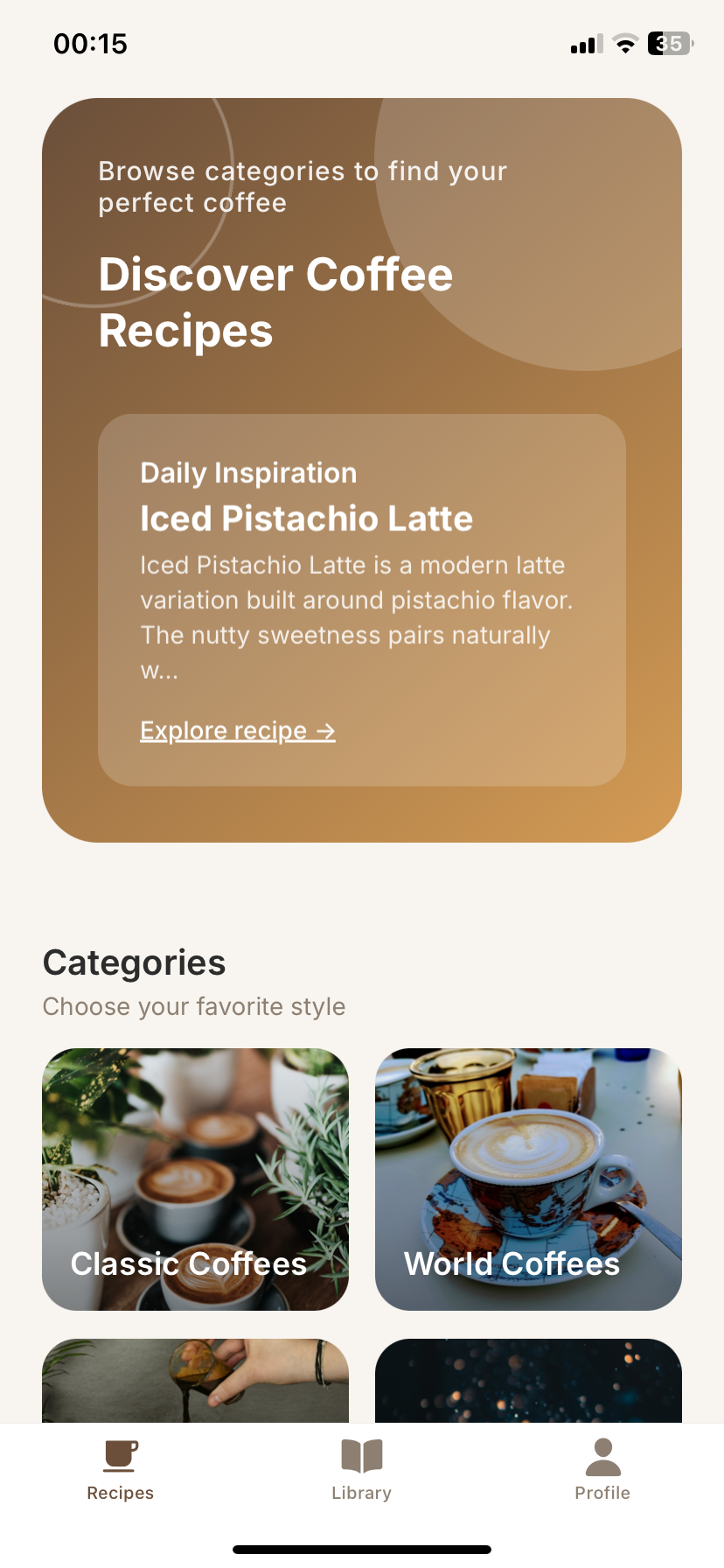
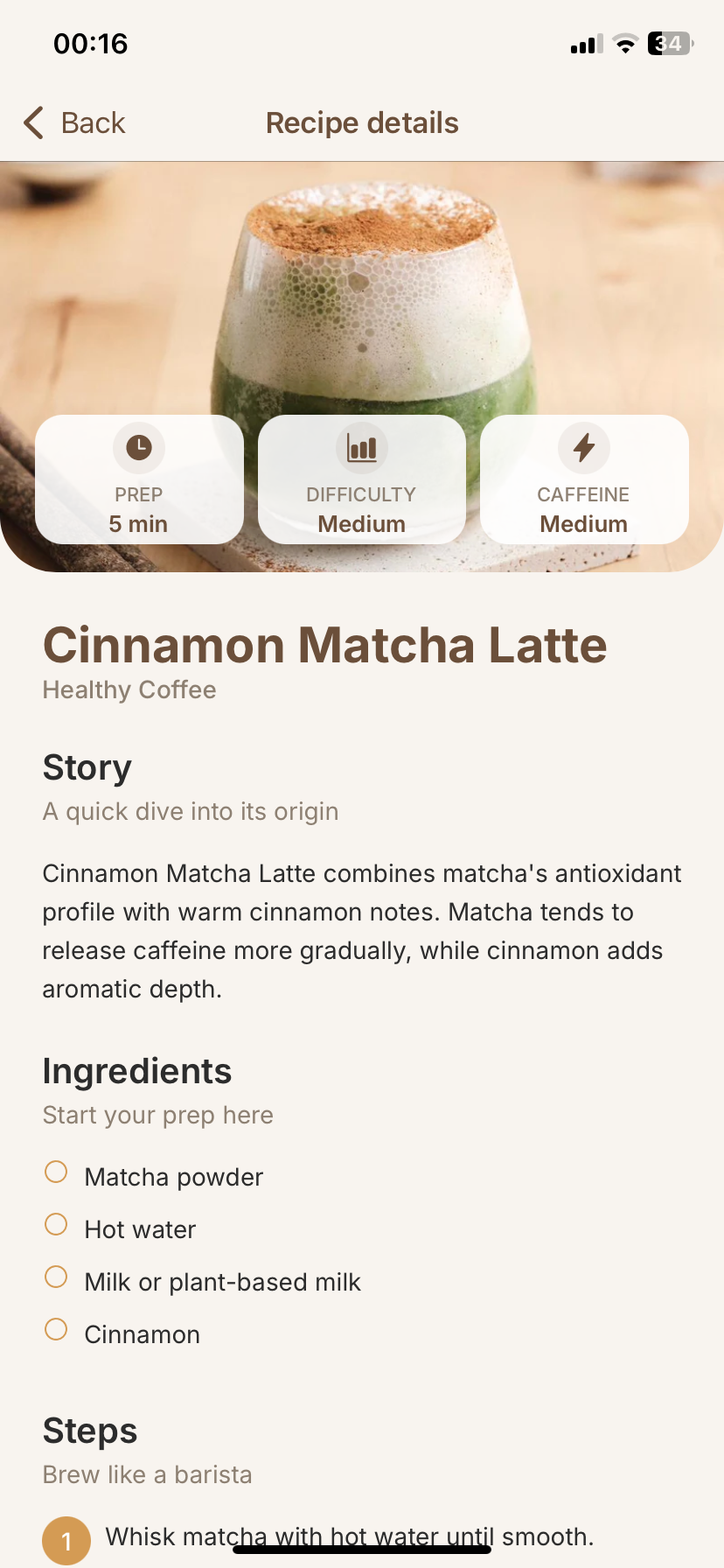
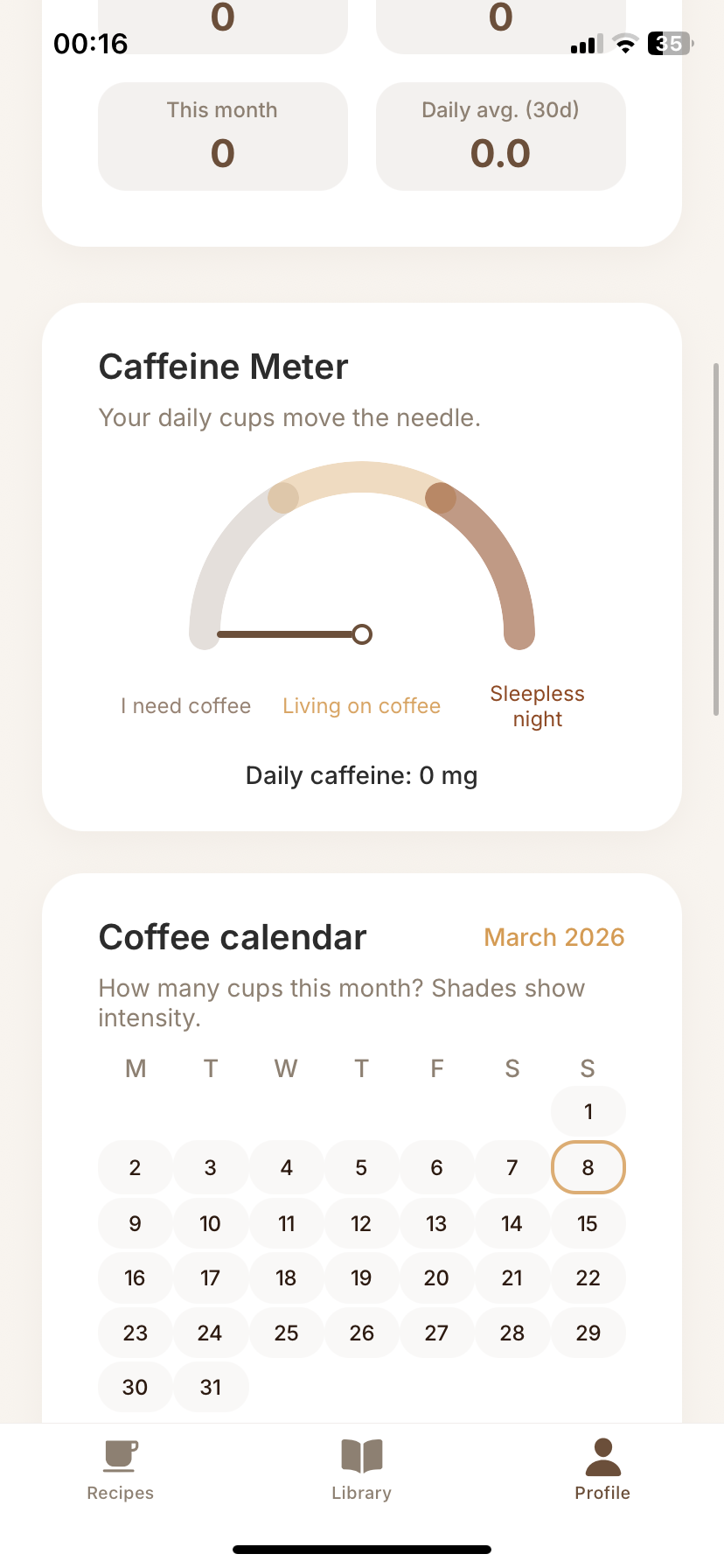
Telve: Coffee Recipes
Every coffee drink. Step-by-step. In your pocket.
Explore 200+ coffee recipes — free.
Can't decide between mocha and latte today? Telve has both — plus 200+ other café-quality recipes with step-by-step instructions, precise measurements, and caffeine tracking. Find your next favorite coffee drink and track how much caffeine you're actually consuming each day.
Frequently Asked Questions
What is the main difference between a mocha and a latte?
Chocolate. A latte is espresso + steamed milk. A mocha adds chocolate syrup or cocoa to that base, making it sweeter, richer, and about 100-150 calories heavier. Everything else follows from that single addition.
Which has more caffeine — mocha or latte?
Both are made with a double shot of espresso (~120-128mg caffeine). Dark chocolate adds ~12mg more per tablespoon of cocoa. A mocha has marginally more caffeine (~130-150mg total) but the difference is negligible in practice.
Which has more calories — mocha or latte?
A standard 12oz latte with whole milk is ~180-210 calories. The same size mocha with chocolate syrup reaches 290-400 calories. The gap widens significantly with whipped cream. For a lower-calorie mocha, use sugar-free chocolate syrup, skim milk, and skip the cream.
Can I make a mocha without an espresso machine?
Yes — use a Moka pot, AeroPress, or strong instant coffee as your espresso substitute. Mix chocolate into the hot coffee first, then add steamed or frothed milk (handheld frother or shaken jar + 30 seconds microwave). Very close to the café result.
Is a mocha sweeter than a latte?
Yes, noticeably. A plain latte has only natural lactose sugar (~10g). A mocha with standard syrup adds 20-30g of sugar on top. Ask for half the syrup or use unsweetened cocoa if you want the chocolate character without the sweetness spike.
Related Coffee Guides
Latte vs Cappuccino vs Flat White
The three most confused espresso drinks compared across 8 dimensions.
How to Make a Latte at Home
Step-by-step latte guide with milk steaming technique and latte art basics.
How to Make a Mocha at Home
The complete café mocha recipe — dark chocolate, espresso, and perfect foam.
Coffee Flavor Profile Guide
Understanding roast levels, origin notes, and how to identify what you taste.