
The Friction of the Blank Engine
Every entrepreneur knows the feeling of being paralyzed by research. You have a brilliant idea—let's say, a SaaS platform for freelance video editors to manage their invoicing. But before you write a single line of code, conventional startup wisdom dictates that you must conduct exhaustive market research, compile a dense Lean Canvas, size your Total Addressable Market (TAM), and map out a bulletproof strategy.
For a solo founder, this manual phase takes weeks. Worse, because it is administrative and tedious, many founders skip it entirely and start coding right away. This leads to the ultimate startup tragedy: building a beautiful product that perfectly solves an issue nobody will pay for.
Automating the Leap with AI
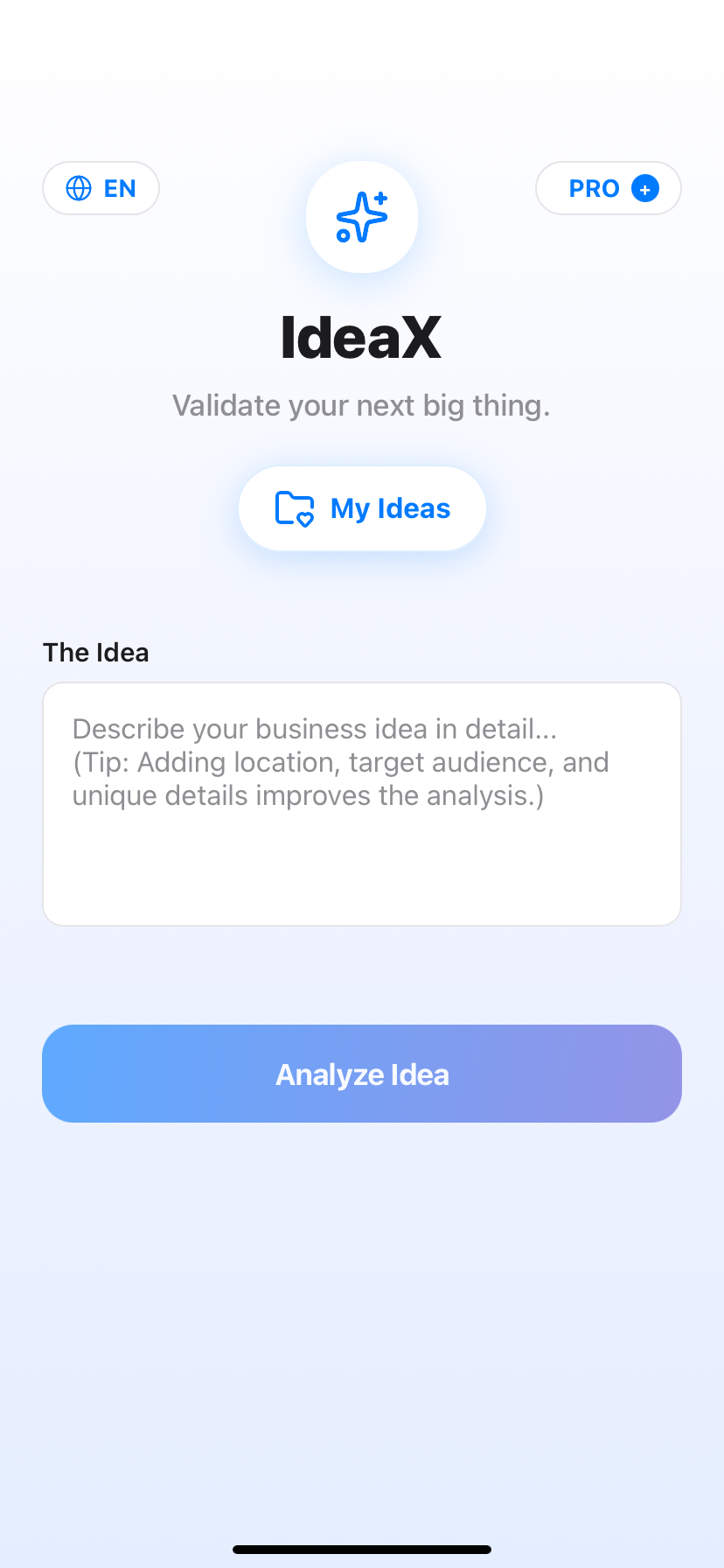
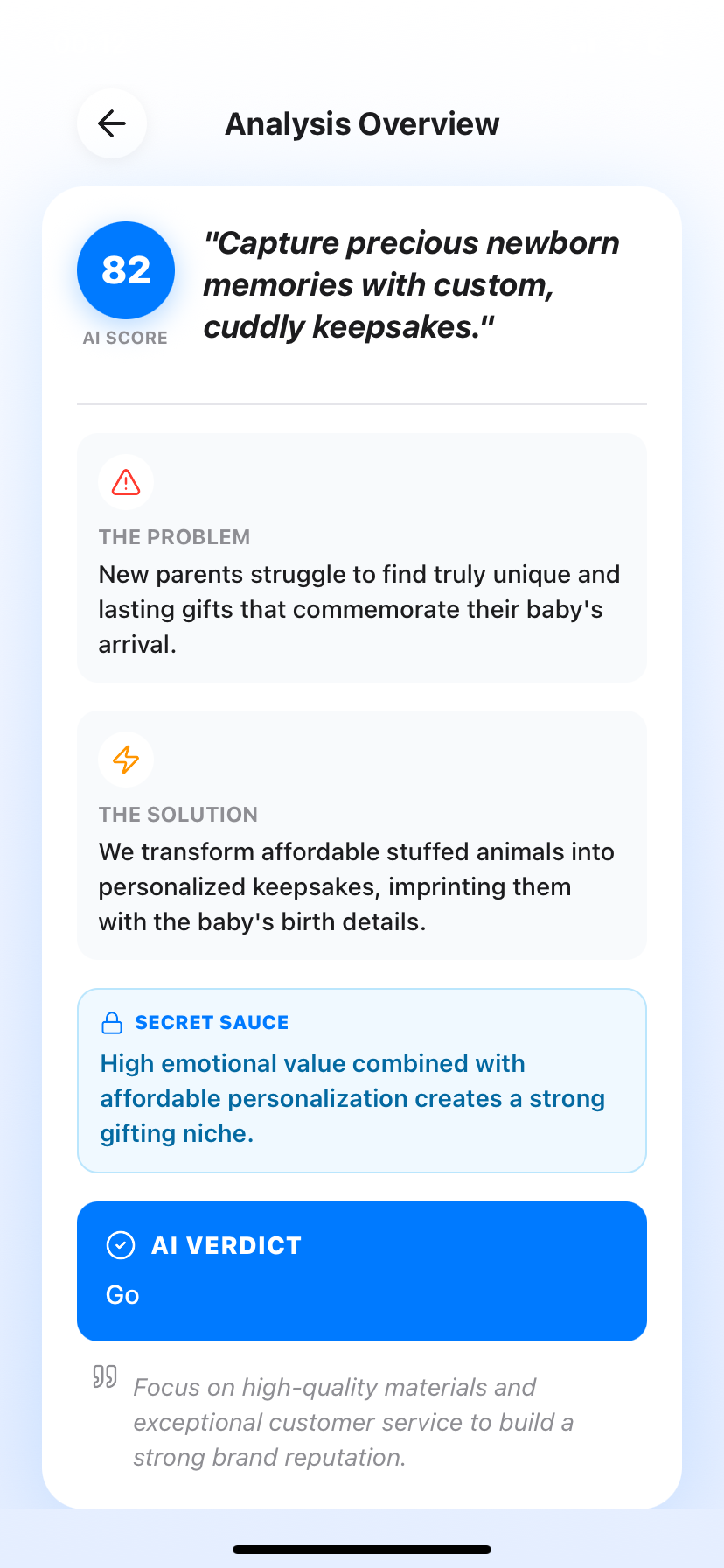
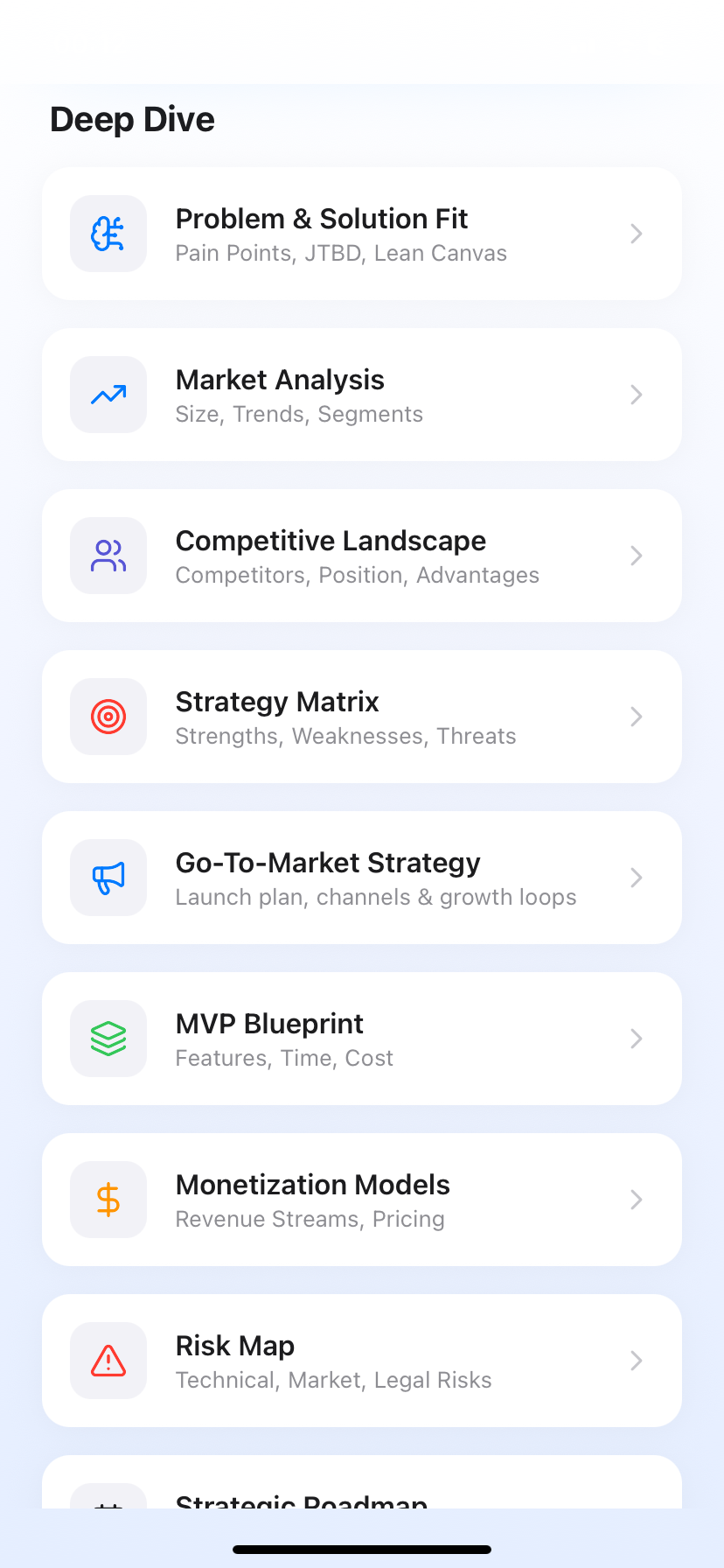
What if the entire strategic phase could be collapsed from three weeks down to ten minutes? By leveraging specialized AI validation tools, founders no longer have to stare at a blank screen. AI acts as a strategic co-founder, metabolizing your one-sentence idea and instantly structuring it into executable business physics.
Here is the modern, AI-augmented workflow for translating a raw idea into a rock-solid strategy:
Step 1: The AI Concept Expansion
When you feed a raw idea into an AI analysis tool, its first job is to expand it. You might input: *"I want to build a better CRM for real estate agents."* The AI will inherently challenge the vagueness of the word "better."
It will immediately map out the current incumbent features and suggest precise differentiation strategies. For example, the AI might output: *"Instead of a generic CRM, the market gap indicates that real estate teams are struggling specifically with automated WhatsApp follow-ups. Focus your MVP strategy exclusively on resolving WhatsApp integration friction."* You have just moved from a vague idea to a targeted product strategy.
Step 2: Generating the Financial Framework
An idea is not a strategy until the math works. The most difficult part of business planning is guessing your unit economics. If you plan to charge $10/month, but the AI calculates that the industry average Customer Acquisition Cost (CAC) for that specific demographic is $150, you are structurally bankrupt before you begin.
AI tools stress-test these assumptions. They will help you structure a pricing strategy that actually supports your intended marketing channels. If paid ads are too expensive, the AI strategy will pivot you toward a B2B enterprise model or a viral product-led growth model.
Step 3: Finding Your "Red Ocean" Vulnerabilities
A strategy is fundamentally a plan to win against competitors. You cannot build a strategy without knowing the enemy. AI automates competitor research, scanning the reviews and feature logs of the dominant players. It won't just list your competitors; it will provide a vulnerability report, essentially telling you: *"Here is exactly what the giant incumbent is neglecting, build your strategy around attacking this weak point."*
IdeaX: Let AI Write the Strategy
Input your idea and output a mathematically sound, competitor-aware business strategy.
The Death of the 40-Page Business Plan
Historically, founders spent months writing 40-page business plans for bank loans. In 2026, a static business plan is obsolete the second it is printed. The market moves too fast.
Using an AI tool allows your strategy to be dynamic. If a competitor releases a new feature on Tuesday, you can input that variable into your AI framework on Wednesday and instantly regenerate a counter-strategy. The goal is no longer to guess the future perfectly; the goal is to increase your "Iterative Velocity"—the speed at which you can evaluate data and pivot your strategy.
Conclusion: Save Energy for Execution
The human founder's true superpower is execution: picking up the phone, hiring the right engineers, closing the first 10 customers, and grinding through the emotional volatility of startup life. You should not be spending your cognitive battery manually building SWOT analysis tables in Excel. Let AI automate the structural planning phase so that 100% of your energy can be deployed into actually building the company.