
The Flaw in Manual Competitor Research
When a founder attempts manual competitor research, the workflow usually looks identical: Google a few broad keywords, find the top three incumbents, look at their pricing pages, and build an Excel matrix filled with checkmarks. The conclusion is almost inevitably the same: *"They are too expensive and their UX is bad. We will build a cheaper, better version."*
This is not competitive research. It is confirmation bias. The human tendency is to seek data that proves the vulnerability of the competitor rather than data that proves their strength. In reality, the incumbents have massive advantages in distribution, brand trust, and capital. If you don't objectively understand the defensive moats of your competitors, your startup will be crushed before it hits $10K MRR.
The AI Advantage: Objectivity at Scale
Artificial Intelligence doesn't suffer from founder ego. It evaluates market landscapes structurally. By using AI designed for business analysis, you can process millions of data points across the internet to generate a brutally honest benchmarking report in minutes. Here is how modern founders are utilizing AI for elite competitor research:
1. Uncovering Market Gaps via Sentiment Analysis
Your competitor's biggest weakness isn't what they put on their pricing page; it's what they fail to deliver to their users. Historically, finding this out meant scraping hundreds of G2, Capterra, or Reddit reviews. Today, AI can ingest this unstructured data and instantly return the top 3 categorical complaints.
If the AI reveals that 40% of negative reviews for the leading enterprise CRM mention *"impossible to integrate with legacy ERPs,"* you have just identified an actionable market gap that you can build your entire go-to-market strategy around.
Before automating the process, it helps to understand the manual logic behind finding market gaps from competitor reviews.
2. Dynamic Moat Analysis
Why hasn't someone beaten the incumbent yet? That is the most important question you can answer. AI tools can analyze historical market data to map out the "defensive moats" of top competitors. Are they surviving because of high switching costs, regulatory capture, or network effects?
By understanding the exact nature of the wall you are trying to climb over, you can adjust your strategy. If the AI tells you the competitor has an insurmountable network effect (like LinkedIn), building a direct clone is suicide. The AI forces you into a niche strategy to carve out a foothold.
3. Identifying Proxy Competitors
Founders often say: *"We have no competitors."* That is mathematically impossible. If a problem exists, people are currently solving it somehow. Often, the competitor isn't a direct SaaS tool; the competitor is a complex Excel spreadsheet, an intern, or a legacy workflow.
AI excels at identifying "proxy competitors" and indirect substitutes. It helps you understand who initially seems unrelated but is actively competing for the same slice of your prospect's budget.

IdeaX: The Ultimate Competitor Audit
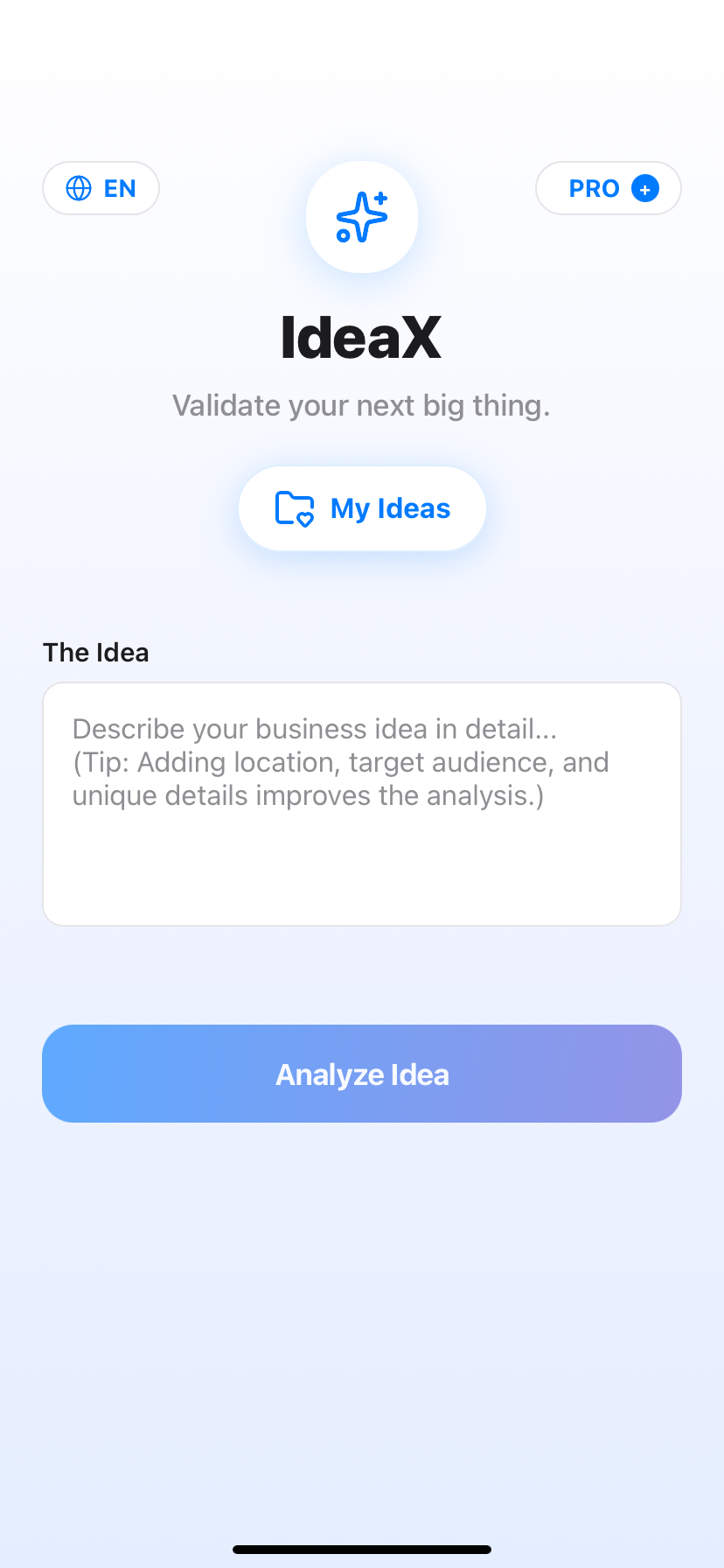
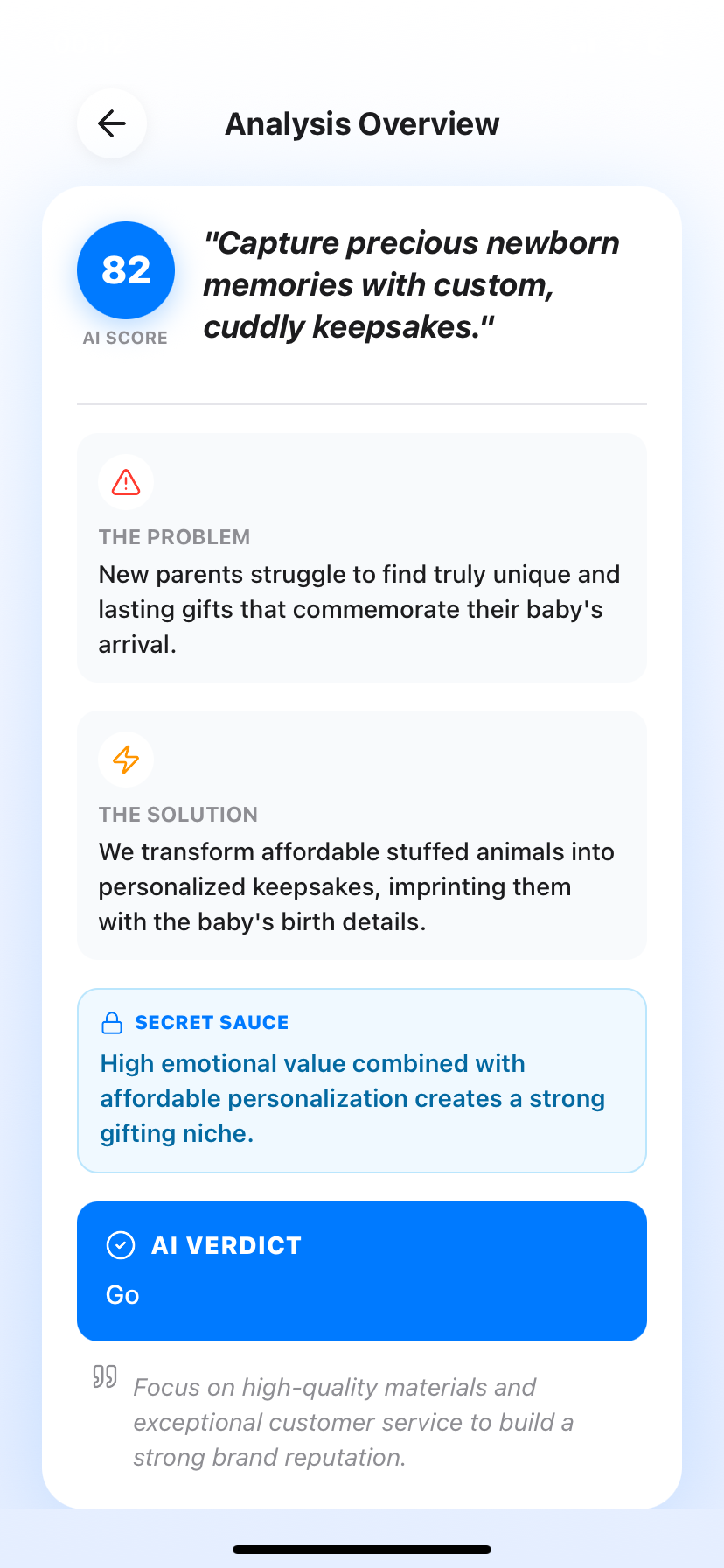
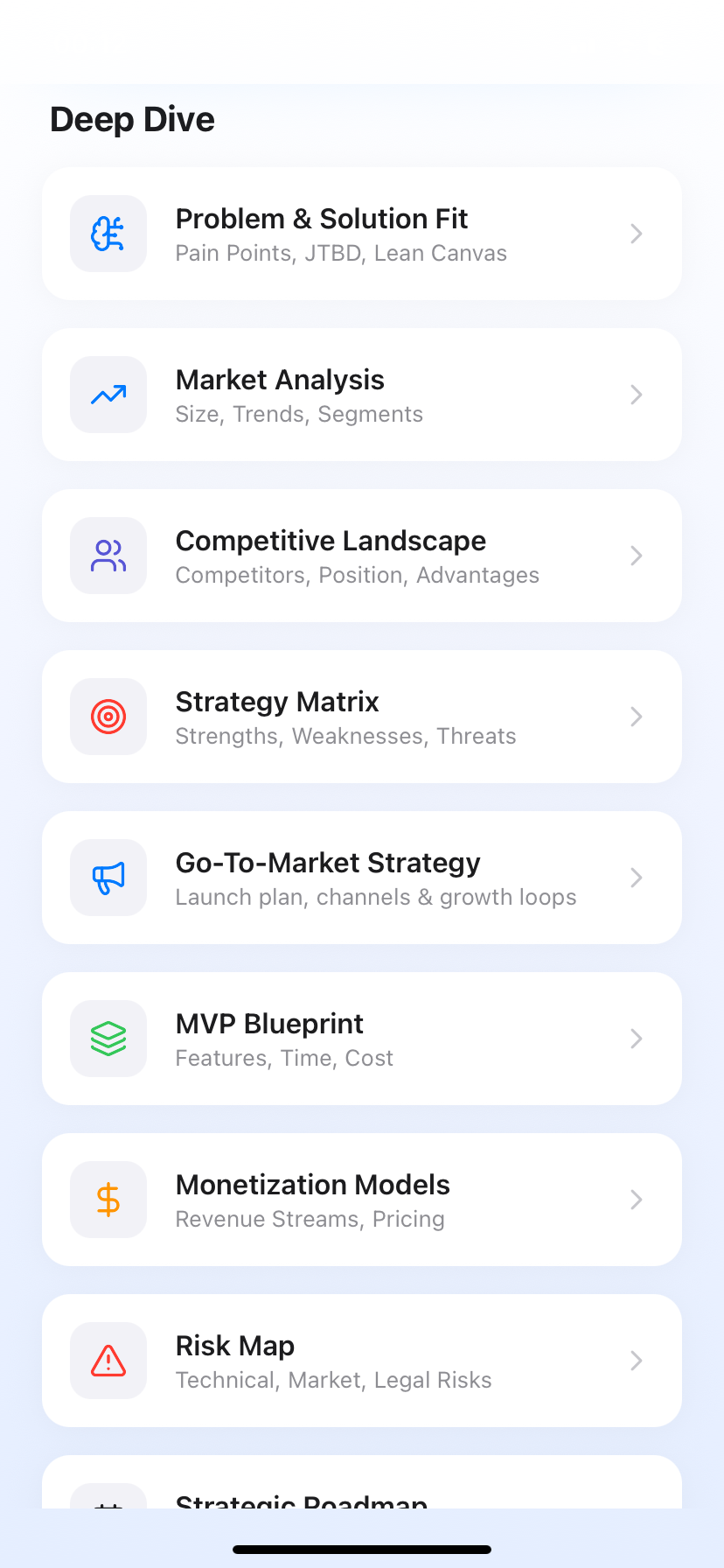
Input your startup idea and let IdeaX mathematically benchmark your features against invisible market threats.
The Shift from Documentation to Decision Making
The most profound impact of replacing manual competitor research with an AI tool like IdeaX is the speed at which you move from *documentation* to *decision making*.
If a comprehensive research sprint takes two weeks, by the time you've aggregated the data, you are too exhausted to act on it. By automating the data collection and structural mapping with AI (cutting the 2 weeks to 10 minutes), 100% of your cognitive energy is saved for the actual strategic problem: **How do we win?**
Conclusion: AI as a "Red Team"
The best military organizations employ "Red Teams"—groups of independent experts hired to rigorously attack their own defenses and expose weaknesses. In the startup world, AI should be your automated Red Team. Use it to ruthlessly attack your positioning against competitors before you burn precious runway writing code.