
How to Validate a Business Idea Before Launch
The single most common reason startups fail is not a lack of funding, and it is not poor engineering. It is building a product that absolutely nobody actually wants. Idea validation is the critical, scientific process of discovering if your market exists before you squander six months of development time and thousands of dollars on a deeply flawed hypothesis.
- The psychological traps that cause founders to skip validation.
- How to conduct brutal, ego-free customer interviews using "The Mom Test".
- Advanced quantitative frameworks including Search Volume Analysis.
- How to execute the "Painted Door" test to measure strict conversion rates.
- Famous historical case studies of Validation (Dropbox, Zappos).

The Psychology of the Unvalidated Founder
When inspiration strikes, the immediate instinct of most founders is to start building. The adrenaline rush of a new idea is intoxicating. Within 48 hours, the untrained founder buys a clever domain name, registers an LLC, hires a freelance logo designer on Fiverr, and immediately begins writing code or sourcing physical inventory from overseas.
This sequence of actions is the exact opposite of what you should do. Building in isolation is a recipe for catastrophic financial disaster.
The reality of modern entrepreneurship is harsh: your initial idea is almost certainly wrong in at least three fundamental ways. You have made catastrophic assumptions about who your target audience is, how much they are willing to pay, and what specific feature sets they actually care about.
Why Do We Actively Avoid Validation?
Validation is terrifying because it forces founders to confront the possibility that their "billion-dollar idea" might actually be completely useless. It is infinitely more comfortable to sit in a local coffee shop, wrapped in a safe bubble of confirmation bias, imagining a scenario where millions of users magically flock to the software on Launch Day.
This psychological fear of rejection is exactly why thousands of beautifully designed, flawlessly coded mobile apps sit rotting in the App Store with zero active users. If you skip validation, you are not engaging in calculated business building; you are merely buying a very expensive, very time-consuming lottery ticket.
Step 1: The Qualitative Phase (Customer Interviews)
Before you look at a single spreadsheet, you must look into the eyes of the people you claim to be helping. Qualitative validation is about empathy, understanding current workflows, and identifying raw, bleeding-neck pain points.
The "Mom Test" Framework
You cannot validate an idea by asking your friends, "Hey, would you use this app?" They love you. They do not want to crush your dreams. Therefore, they will lie to you. This phenomenon was famously coined "The Mom Test" by Rob Fitzpatrick.
To extract the truth, you must speak to complete strangers who fit your exact target demographic. More importantly, you must ask them about their past behavior, not their future promises. Humans are terrible at predicting their future actions, but they cannot lie about what they did yesterday.
❌ Bad Questions (Future-focused)
- "Would you pay $10 a month for an app that tracks your daily water intake?"
- "Do you think this logo looks professional?"
- "If I built a tool that automates email, would you use it?"
✅ Good Questions (Past-focused)
- "Tell me about the last time you tried to stay hydrated. What happened?"
- "How much time did you spend formatting emails yesterday?"
- "What hacky workaround are you currently using to solve this problem?"
If a prospective user has never actively tried to solve the problem before (by downloading a competitor app, using a messy Excel sheet, or hiring an assistant), it is highly unlikely they will suddenly transition into a paying customer to use your software. You are searching for people who are already frustrated and actively spending time or money seeking alternatives.
Step 2: The Quantitative Phase (Search intent)
Once you have interviewed 30 people and confirmed that a specific, painful problem exists, you must prove that the problem scales. Does this pain point exist for 500 people, or 50,000,000 people?
Analyzing Search Engine Volume
The internet provides an unprecedented advantage for modern founders: we can mathematically see exactly what the world is thinking about in real-time. By utilizing SEO tools like Ahrefs, SEMrush, or even Google Keyword Planner (which is free), you can evaluate the macro demand for your solution.
If you are building scheduling software specifically for remote plumbers, you need to know exactly how many plumbers search "plumbing schedule software" every month.
- High Volume / High Intent: "buy plumbing scheduling software" (1,000 searches/mo) — Massive validation. The market is screaming for a solution.
- High Volume / Low Intent: "how to become a plumber" (50,000 searches/mo) — Irrelevant to your software. Be careful not to confuse generic industry interest with purchasing intent.
- Zero Volume: "AI underwater plumbing blockchain app" (0 searches/mo) — Red flag. You will have to spend millions educating the market that your product even needs to exist.
For a deep dive into mathematically analyzing search volume and identifying blue-ocean opportunities, review our framework on How to Spot Market Gaps Before Building.
Step 3: The "Painted Door" Conversion Test
Interviews are great. Search volume is great. But neither of them involve a customer actually taking out their credit card. The ultimate validation is a transaction. How do you measure transactional intent before you have built the product? Enter the "Painted Door" test.
Executing the Smoke Test
A Painted Door (sometimes called a Smoke Test) is a landing page that looks and feels exactly like a completely finished, enterprise-grade product. The visual design is flawless, the value proposition is crystal clear, and it features a highly visible button that says "Buy Now for $19/mo" or "Start Free Trial."
However, the software behind the page does not exist.
When a user is convinced by your marketing copy and clicks that "Buy Now" button, a modal pops up. It politely informs them: "Thank you for your interest! We are currently in private beta and finalizing our software. Please leave your email to get 50% off when we launch next month."
The Math Behind the Door
The power of this methodology is that it allows you to calculate your precise Customer Acquisition Cost (CAC) before writing a backend database.
Imagine you spend $100 on highly targeted Facebook Ads driving traffic to your Painted Door.
• Scenario A: 1,000 people visit. Zero people click the pricing button. Result: You just saved 8 months of your life. The idea is dead. Pivot.
• Scenario B: 1,000 people visit. 150 people click the pricing button and leave their email. Result: Incredible validation. You have a 15% conversion rate and a waiting list of 150 leads ready to buy on day one. Start coding immediately.
Step 4: The Concierge MVP (Minimum Viable Product)
If people are willing to sign up for your Painted Door, the final step in the validation continuum is delivering the value. The fastest way to do this is the Concierge MVP. Instead of building complex server architectures, APIs, and AI integrations, you perform the core service manually behind the scenes.
You are effectively acting as a human algorithm.
Case Study: The Human AI
Imagine you want to build an AI-powered meal planning application that scans a user's blood biomarkers to generate a weekly grocery list. Building that software would cost $200,000 and take a year.
Your Concierge MVP works like this: You create a $10/month Stripe payment link and a Google Form. The user fills out the form with their dietary restrictions and uploads their blood test results as a PDF. You (the founder) sit at your kitchen table every Sunday night, manually read the PDF, manually write a grocery list in a Word Document, and email it to the user from a generic Gmail account.
To the user, the result is identical. They get a personalized meal plan.
If the user complains that the manual email delivery is too slow, excellent—you have validated the absolute necessity of building automated software to speed up delivery. If they cancel their subscription after one week because they don't actually like cooking the meals, you have successfully discovered a fatal churn issue for less than $50.
Historical Masterclasses in Validation
Do not take our word for it. The biggest technology companies of the modern era were built on the exact frameworks outlined above.
1. Dropbox (The Explainer Video)
In 2007, building the seamless file-syncing backend for Dropbox required an astronomical amount of engineering effort across Mac, Windows, and Linux operating systems. Drew Houston, the founder, knew it was too risky to build without proof of demand.
Instead of coding, he recorded a 3-minute video on his laptop showing a mock-up of how the software would work if it existed. He posted this video to a niche tech forum (Hacker News). Overnight, the Dropbox waiting list exploded from 5,000 to 75,000 people based entirely on a video of a non-existent product. That is ultimate validation.
2. Zappos (The "Wizard of Oz" test)
In 1999, Nick Swinmurn wanted to prove that people would buy shoes online (a crazy concept at the time). He didn't lease a warehouse. He didn't buy inventory. He simply walked into a local shoe store in San Francisco, took photos of the shoes, and uploaded them to a basic website.
When a customer clicked "Buy" and paid on the website, Nick walked back to the local store, bought the shoes with his own money at retail price, and mailed them to the customer from the local post office. He lost money on every transaction, but he successfully validated a billion-dollar behavioral shift without spending a dime on inventory.
The Rule of True Validation: Extracting Currency
The overarching theme of all of these methodologies is the concept of extracting currency. Real validation requires a sacrifice from the user.
Currency does not inherently have to be financial capital (money). It can be social capital (reputation, forcing them to share your link on their public Twitter feed), or data capital (forcing them to surrender their primary email address or phone number).
But if a potential customer has not given up something of tangible value to access your solution, you have absolutely zero validation. Verbal enthusiasm is a liability. It creates a false sense of security. Hard data, collected through rigorous friction testing, is the only asset a founder should trust.
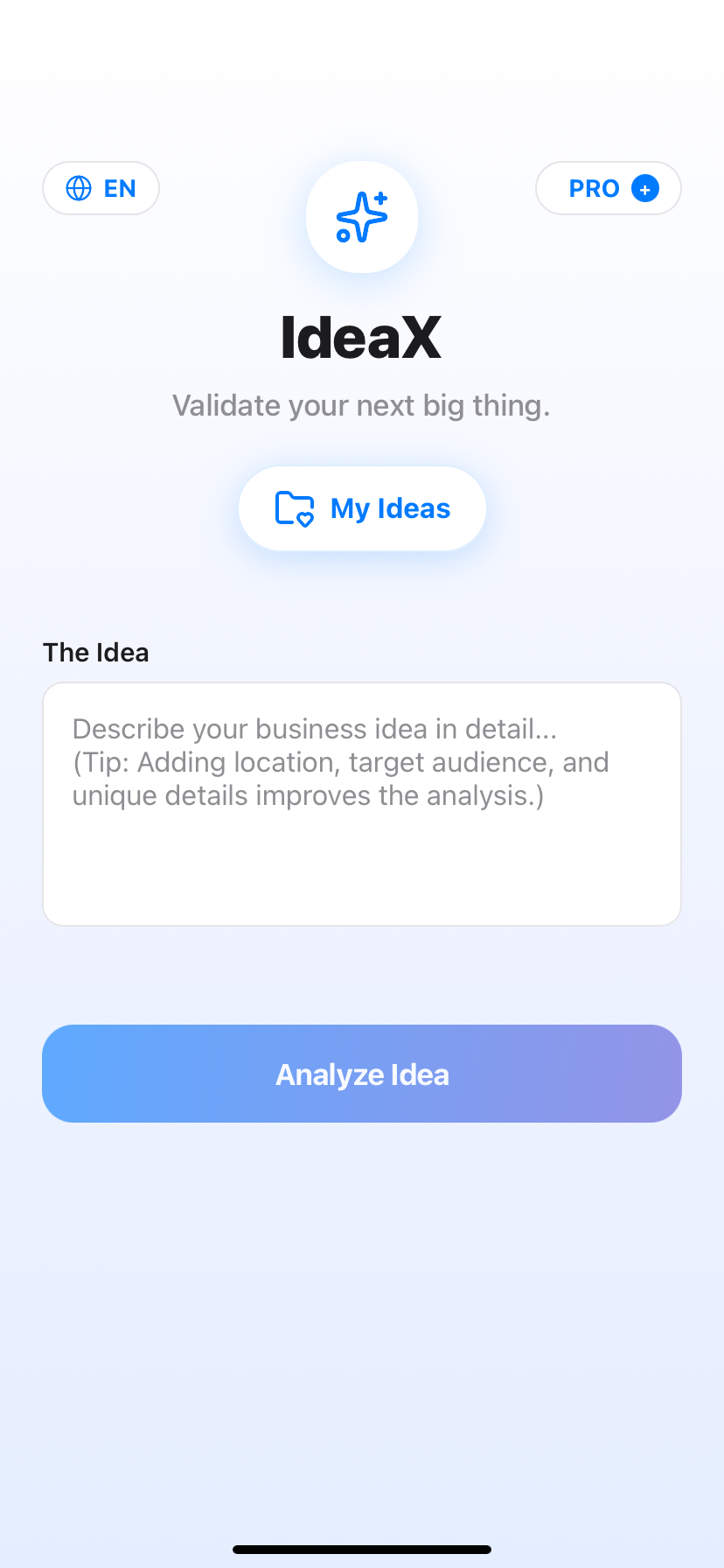
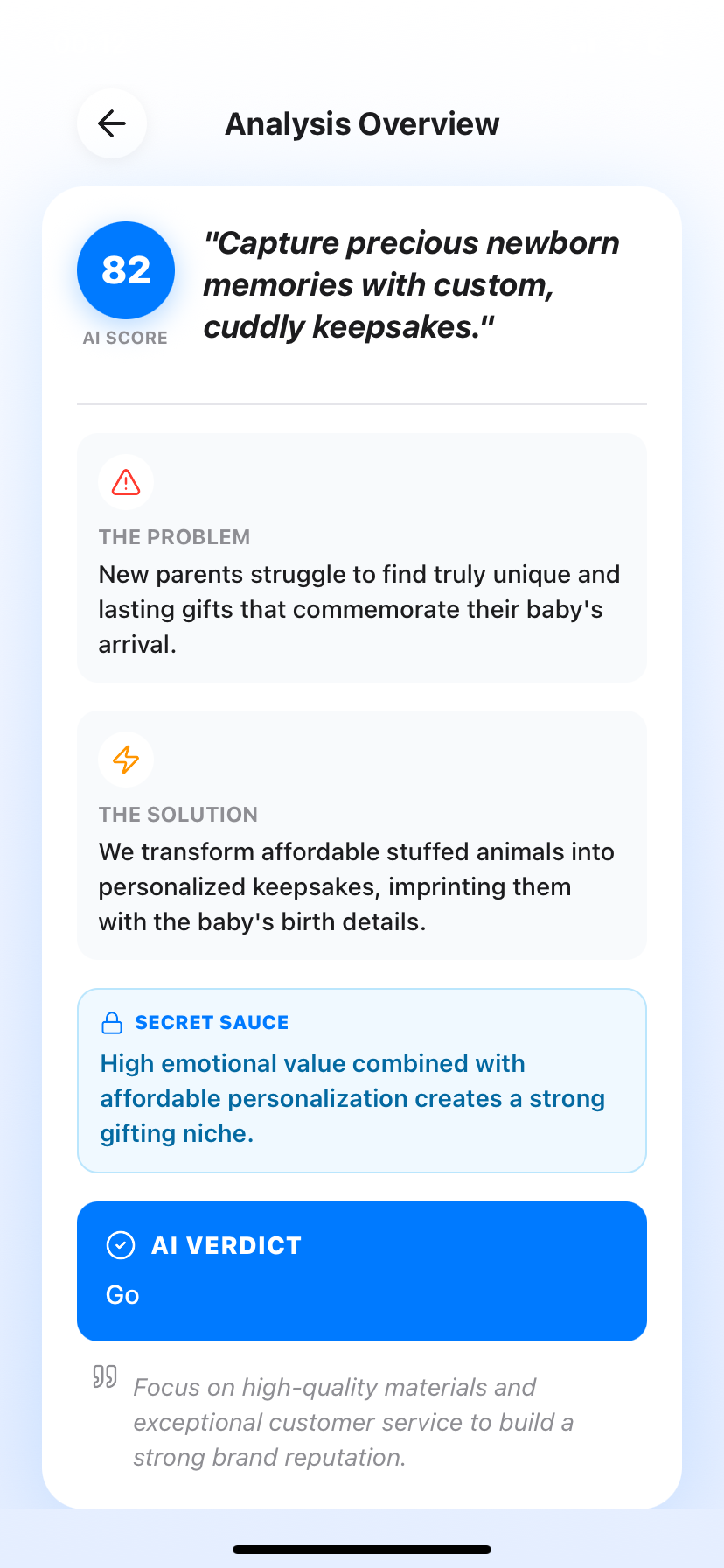
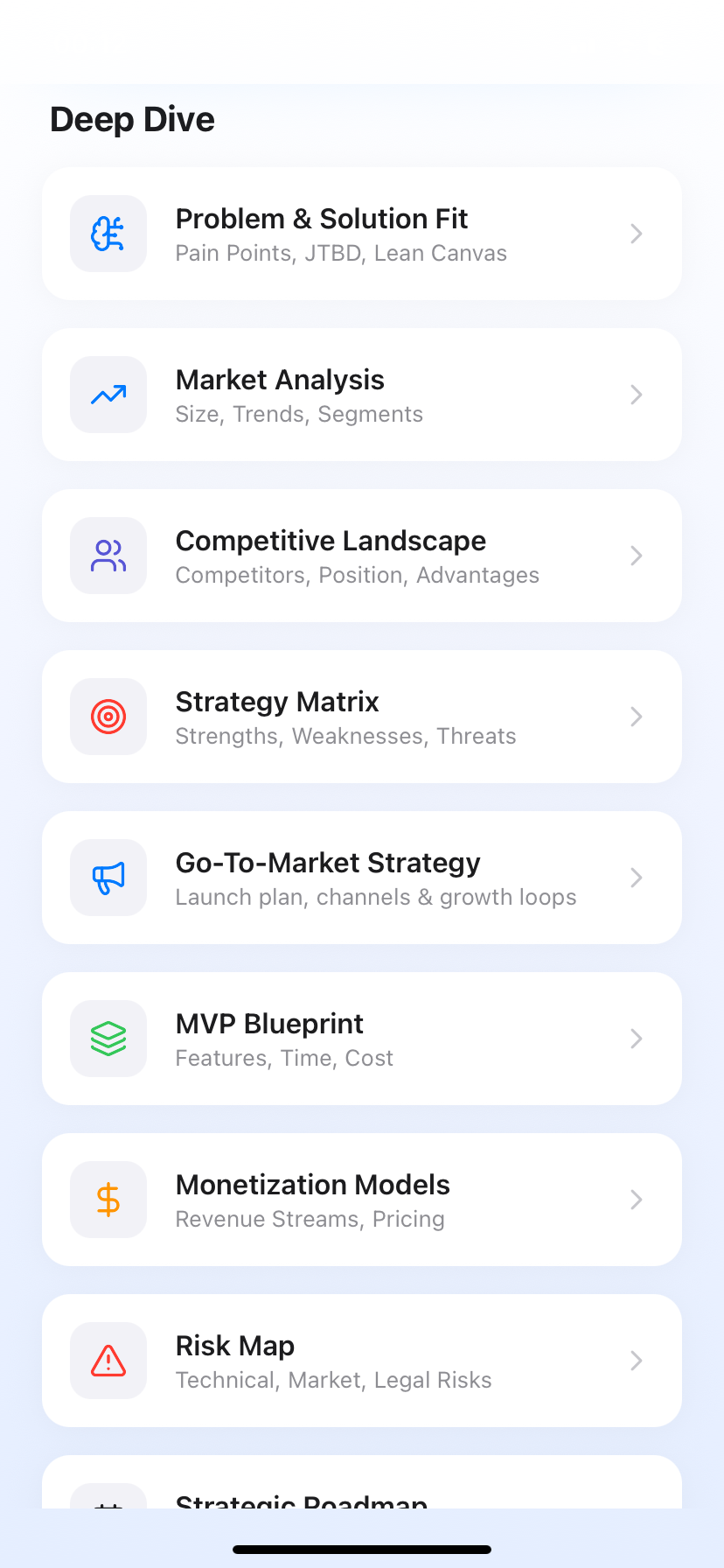

IdeaX: Business Idea Analysis
Your centralized validation engine.
Turn vague ideas into validated ventures.
Validation shouldn't be guesswork. Before you spend a month building a Painted Door test or setting up complex Zoom interviews, you must evaluate the core logic of your concept. IdeaX accelerates your validation phase by acting as a brutally honest, non-emotional algorithmic auditor. Type in your initial concept, and IdeaX immediately maps your competitor blindspots, highlights structural revenue flaws, and generates exact matrices (like SWOT and Lean Canvas) to verify viability. Stop building in the dark. Audit your ideas instantly.
Frequently Asked Questions (FAQ)
How long should business idea validation take?
Initial validation should not take more than 2 to 4 weeks. If you are spending months validating an idea in an isolated spreadsheet instead of actively talking to real customers, you are overthinking the process. Your goal is to gather data as fast as humanly possible.
How many customer interviews do I need to validate an idea?
Aim for at least 30 to 50 conversations with individuals in your exact target audience. Look for recurring patterns in their complaints, not just isolated opinions. If 8 out of 10 people mention the exact same baseline frustration without you leading the witness, you have identified a scalable pain point.
What is the biggest mistake founders make when validating?
The single biggest mistake is asking friends and family for their opinion. Because they care about you, they will unconsciously lie to protect your feelings. You must validate your idea by asking complete strangers to exchange severe currency (money, time, or highly personal data) for your proposed solution.
What is a Painted Door Test?
A Painted Door Test involves building a landing page that looks and functions like a finished product, complete with pricing tiers and a 'Buy' button. When the user clicks the button, they are informed the product is still in development and are asked for their email. It perfectly measures conversion intent without requiring you to build the backend software first.
Can I validate an idea without any budget?
Absolutely. You can run a Concierge MVP (doing the heavy lifting manually for a small group of users) or organically post your value proposition in niche Reddit communities or highly targeted Facebook groups to gauge interest. Zero-dollar validation simply requires you to spend raw time instead of marketing capital.