
How to Reduce Risk Before Launching a Startup
Pop culture portrays successful entrepreneurs as reckless gamblers — visionaries who bet their entire life savings on a moonshot and win through sheer force of will and charisma. The empirical reality is the exact opposite. The most successful founders in the world are obsessive, systematic risk managers. They methodically identify every potential cause of business failure before it occurs, and then aggressively "buy down" each risk category using structured, low-cost experiments before committing serious capital.

- Risk Type 1 — Market Risk: The most lethal and most preventable startup killer.
- Risk Type 2 — Technical Risk: When your product is impossible or impossibly expensive to build.
- Risk Type 3 — Financial Risk: Setting a hard Kill Threshold before you start spending.
- Risk Type 4 — Regulatory & Platform Dependency Risk: The overnight death threats.
- Risk Type 5 — Team Risk: Co-founder divorce and single points of failure.
The Risk Management Mindset
A gambling entrepreneur blindly dumps $30,000 into offshore development for an app they think people want, and discovers 14 months later that the market doesn't exist. A strategic operator runs a $50 Facebook ad test, discovers in 72 hours that zero people click the "Buy Now" button, and saves those 14 months for a better idea.
The fundamental difference is: one treats uncertainty as exciting magic, and the other treats uncertainty as a set of specific, measurable hypotheses that must be systematically tested and falsified before capital is committed. To reduce pre-launch risk, you must divide your startup's risk landscape into five distinct categories and crush each one individually with the cheapest possible experiment.
Risk Type 1: Market Risk — The Most Lethal Killer
Market Risk is the catastrophic possibility that you successfully build a perfectly engineered product — the code works, the design is beautiful, the infrastructure is scalable — and absolutely nobody cares enough to pay for it. It is the most common, most lethal, and most entirely preventable cause of startup death.
How to Quantitatively Eliminate Market Risk
You do not mitigate Market Risk by asking your mother, your friends, or your LinkedIn network if your idea is good. People who care about your feelings will lie to you with extraordinary consistency.
The only data that definitively eliminates Market Risk is a financial transaction. Run this experiment:
For B2B startups, the highest possible Market Risk mitigation is securing Letters of Intent (LOIs) — non-binding documents where prospective customers sign and state their intent to purchase once the software is built. Three signed LOIs from real businesses prove the market exists more definitively than any amount of survey data.
Risk Type 2: Technical Risk
Technical Risk is the danger that your product is either physically impossible to build with current technology, or that the development cost required to build it will entirely consume your capital before you generate a single dollar of revenue.
Unless you are working in deep tech (novel AI architectures, quantum computing, aerospace systems), your software idea almost certainly does not have genuine technical impossibility risk. The technology to build another project management dashboard, customer support SaaS, or marketplace absolutely exists.
The real technical risk for most startups is cost risk: a founder who hires a four-engineer team at $20,000 per month to build a product whose entire premise has never been market-validated. The mitigation is the no-code MVP approach — building the entire V1 using Bubble, Webflow, Glide, or Make.com, proving the business model generates revenue, and only then investing in a scalable custom development infrastructure.
Risk Type 3: Financial Risk — The Kill Threshold
If your startup fails, it should damage your professional ego significantly — not your family's mortgage or your retirement savings. The most important financial risk management tool available to a pre-revenue founder is establishing a formal, written Kill Threshold before committing a single dollar.
How to Define Your Kill Threshold
The Kill Threshold Agreement (write this down before day 1):
"I will invest a maximum of $____ (budget) and ____ days (timeline) on this idea."
"If this concept does not generate at least $____ in verified revenue by [specific date], I will kill the project without negotiation."
"At that point I will either pivot the core hypothesis or move to the next idea entirely."
Writing this agreement down and signing it — even if only with yourself — removes the emotional sunk-cost psychology that causes founders to burn through their life savings chasing an idea that has already been empirically invalidated. The Kill Threshold transforms an emotional, personal emotional investment into a rational, bounded financial experiment.
Risk Type 4: Regulatory and Platform Dependency Risk
Two of the most devastating and underestimated startup risk categories are regulatory exposure and platform dependency. Both can destroy an otherwise healthy business overnight with zero warning.
Platform Dependency Risk
If your entire customer acquisition strategy depends exclusively on one platform's algorithm (Instagram, Google Search, the Apple App Store), you are one policy update away from permanent distribution loss. Vine destroyed dozens of creator businesses in 2017 when Twitter shut it down with three weeks' notice.
Mitigation: always build direct communication channels with your customers (an email list, an SMS opt-in, a private Discord community) so that your customer relationship survives any single platform's policy changes. Never let a third party own your relationship with your audience.
Regulatory Risk
If you are building in fintech, health tech, edtech (for minors), or any category involving EU users, you must research GDPR compliance, financial services licensing requirements, and healthcare data regulations before writing any code. Regulatory risk can be entirely avoided by doing a 2-hour legal research session early — and it can be catastrophic if ignored until you have 10,000 users.
Risk Type 5: Team and Execution Risk
The highest-performing product in the world will fail if the team building it implodes. Team Risk encompasses co-founder conflict, key-person dependency, and motivation decay over extended execution periods.
The most critical structural safeguard against team risk is a co-founder vesting agreement implemented from day one. A standard 4-year vesting schedule with a 1-year cliff means: if your co-founder departs in month 11, they take zero equity with them. Without this structure, a departing co-founder can hold 30% of your company's equity without contributing to building it — making the company uninvestable and the cap table permanently damaged.
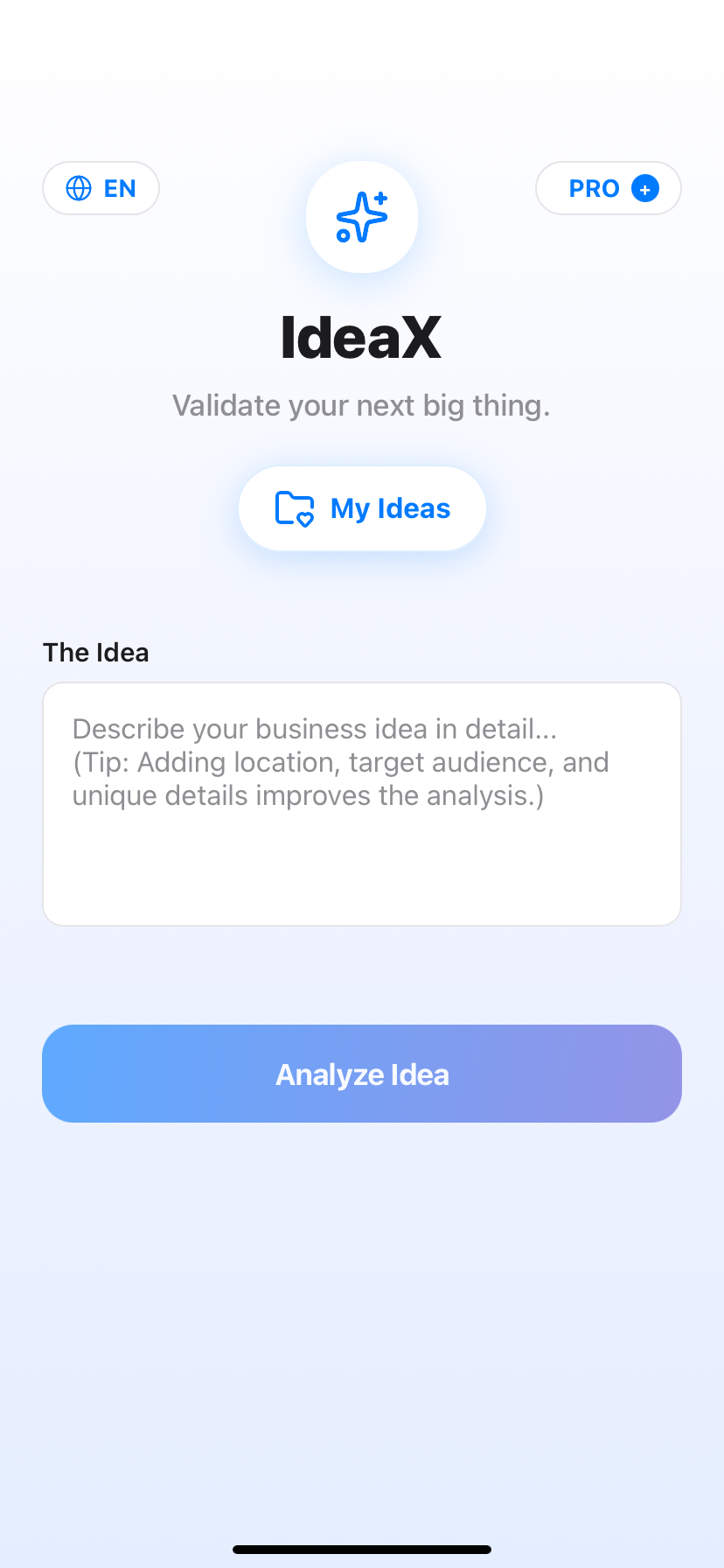
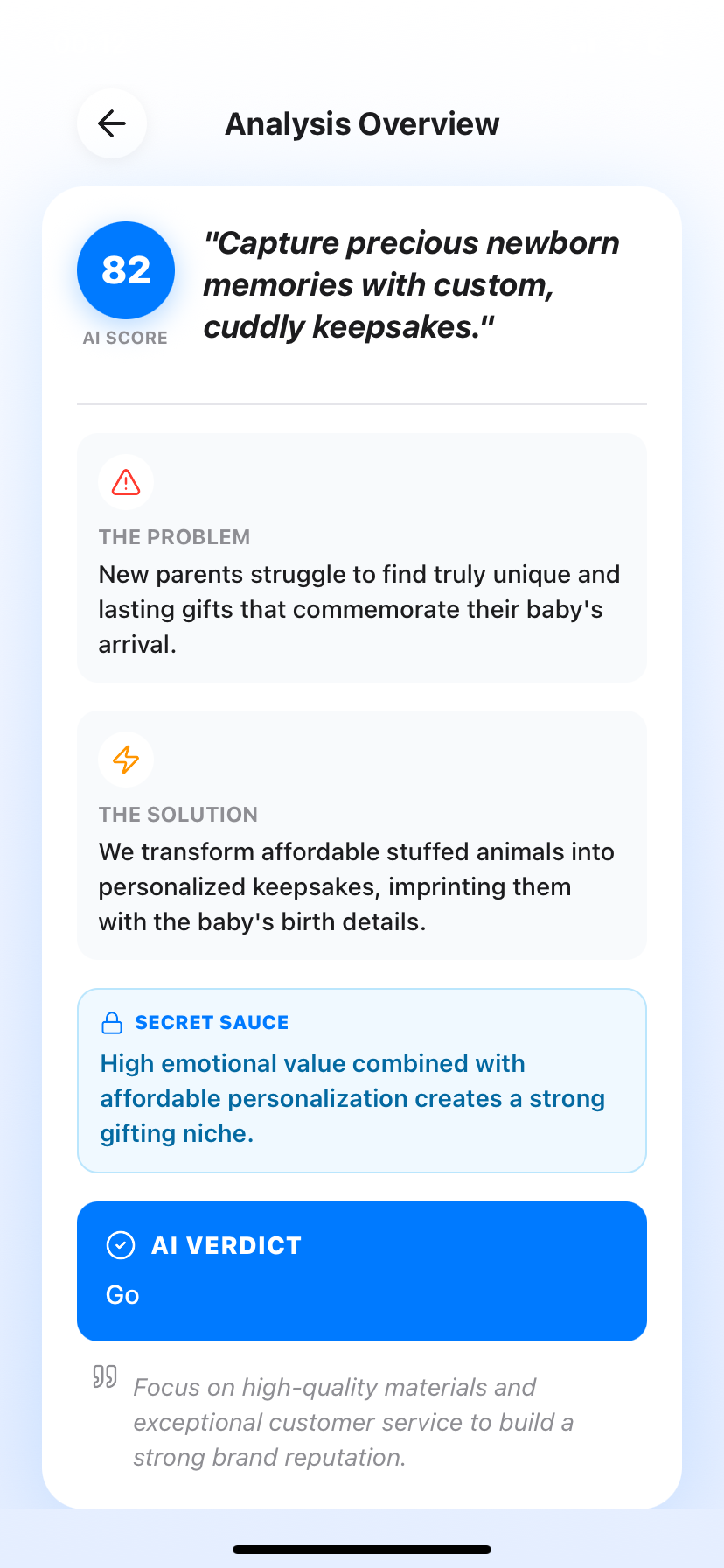
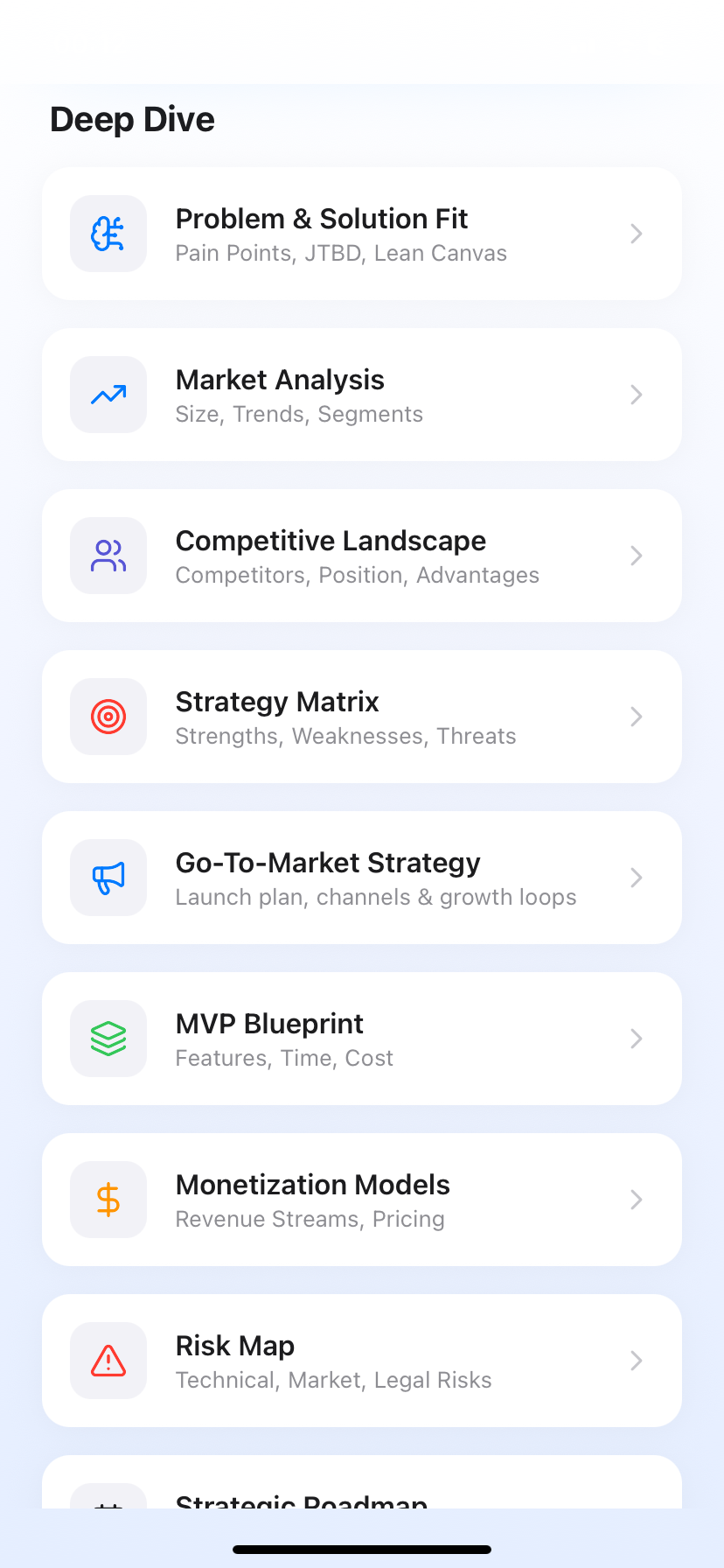

IdeaX: Business Idea Analysis
A structured space for evaluating what to build next.
Expose your blind spots before they become fatal.
The risk that kills you is always the one you didn't think of. When you process your startup concept through IdeaX, the AI acts as a merciless underwriter. The IdeaX Risk Matrix algorithmically scans your complete business model across all 5 risk categories — flagging hidden regulatory exposure, platform dependencies, distribution bottlenecks, and unit economics failures. It doesn't just identify the risks; it generates a prioritized Mitigation Checklist, telling you the exact order in which to address each threat before you invest capital.
Frequently Asked Questions (FAQ)
What is the biggest risk in starting a business?
Market Risk — the possibility that you build a perfectly engineered product and nobody pays for it. It is the most common, most lethal, and most preventable startup killer. It is entirely mitigated by running structured pre-launch validation experiments before committing development capital.
How do I mitigate financial risk without quitting my job?
Establish a firm Kill Threshold before you begin: a specific dollar amount and time duration. Keep your day job until revenue exceeds your personal expenses. Do not sign office leases or hire full-time employees until paying customers cover those costs.
What is a Letter of Intent (LOI) and how does it reduce risk?
An LOI is a non-binding document where a prospective B2B customer states their intent to purchase once the product is built. Securing 3-5 LOIs before writing any code mathematically proves market demand and reduces market risk from a fatal uncertainty to a managed execution challenge.
What is platform dependency risk?
It occurs when your business depends entirely on a third-party platform's API or distribution channel. If that platform changes its terms or shuts down, your business ceases overnight. Mitigate by building direct customer communication channels (email lists, SMS) that survive any platform's policy changes.
How do I measure if I have effectively reduced pre-launch risk?
Rate each of the 5 risk categories on a 1-10 severity scale, then rate your mitigation confidence on a 1-10 scale. Any category with severity above 7 and confidence below 5 is an unmitigated existential risk requiring immediate attention before launch investment.