
How to Find Market Gaps Using Competitor Reviews

IdeaX: Business Idea Analysis
Turn competitor weaknesses, customer pain, and market gaps into clearer startup decisions.
Competitor reviews are one of the fastest ways to find market gaps because they show where real customers are already frustrated with existing solutions. Instead of guessing what people might want, you can study what they complain about, what they keep tolerating, and which user segments feel ignored.

A useful market gap is not simply "people dislike a competitor." Every product has complaints. The real opportunity appears when the same complaint repeats across a specific customer type, affects a meaningful workflow, and points toward a focused solution the incumbent is unlikely to prioritize.
This guide focuses on review mining: a practical process for turning competitor reviews into startup ideas, positioning angles, MVP priorities, and validation tests. For the broader strategy, read how to spot market gaps before building a product.
If the strongest signals come from forums or community threads, combine this with Reddit market research for startup ideas to understand customer language, workarounds, and informal alternatives.
For a broader community-mining workflow, use how to find pain points in online communities.
If the gap will become an iOS app, translate review language into App Store keywords for the new app idea without using competitor names or misleading terms.
To find market gaps using competitor reviews, collect reviews from several competitors, filter for detailed 2-star to 4-star feedback, tag recurring complaints by customer segment and pain type, score each pattern by frequency and business impact, then validate the strongest gap with interviews, landing pages, or manual pilots.
Why Competitor Reviews Reveal Market Gaps
Competitor reviews are valuable because they sit between two types of weak research. Marketing pages tell you what competitors want the market to believe. Surveys often tell you what people think they might do. Reviews show what customers experienced after using the product in the real world.
The best reviews reveal:
- Which workflows break under real usage.
- Which customer segments feel underserved.
- Which features are confusing, missing, overpriced, or unreliable.
- Which alternatives customers compare against.
- Which problems are painful enough for people to write about publicly.
That does not mean every complaint is a startup idea. The goal is to identify repeated friction that an existing competitor either cannot fix, will not fix, or cannot fix without hurting its current positioning.
Step 1: Choose the Right Competitors to Mine
Start with three to seven competitors, not one. If you only study one product, you may confuse a single company's weakness with a market-wide gap. A better review set includes different types of alternatives.
| Competitor type | Why it matters | Example source |
|---|---|---|
| Market leader | Shows what customers tolerate because the product is established. | G2, Capterra, App Store, Play Store |
| Niche competitor | Shows what specialized users value more than broad users. | Industry directories, review sites, forums |
| Low-cost alternative | Reveals price-sensitive segments and missing premium needs. | Product review pages, app marketplaces |
| Status quo workaround | Shows why people still use spreadsheets, templates, agencies, or manual processes. | Reddit, YouTube comments, community threads |
If you are not sure who belongs in the set, start with a full competitor analysis for your startup idea.
Step 2: Filter for High-Signal Reviews
The highest-signal reviews are usually not the angriest ones. One-star reviews can be useful, but they often mix real pain with emotional outbursts, isolated bugs, or support incidents. Five-star reviews can reveal what customers love, but they rarely expose gaps.
Start with detailed 2-star, 3-star, and 4-star reviews. These users often liked enough about the product to try it seriously, but they can describe the trade-offs that prevented full satisfaction.
High-signal review filters
- The reviewer names their role, company size, workflow, or use case.
- The complaint mentions a specific feature, missing integration, price issue, or process failure.
- The reviewer compares the product to an alternative.
- The complaint includes a workaround, such as exporting to spreadsheets or using another tool.
- Multiple reviewers from the same segment describe the same frustration.
Skip vague complaints like "bad UX" until you can translate them into specific friction: too many clicks, unclear onboarding, slow reporting, missing mobile flow, confusing setup, or poor support response.
Step 3: Build a Simple Review Mining Sheet
Do not copy reviews into a document and hope patterns appear. Put them into a structured sheet so you can sort by segment, pain type, and opportunity.
Keep the exact customer language. The phrases customers use in reviews can become landing page copy, interview prompts, ad angles, and value proposition language later.
Step 4: Tag Complaints by Pattern, Not by Feature
Founders often make review mining too literal. A review says, "I wish the reporting dashboard was better," and the founder writes down "build better reporting." That may be right, but it may also miss the deeper pattern.
Tag complaints by the underlying job the customer is trying to complete:
- Speed gap: the product technically works but takes too long.
- Complexity gap: the product is powerful but too hard for a specific segment.
- Segment gap: the product serves enterprise teams but ignores freelancers, agencies, clinics, creators, or local businesses.
- Integration gap: the product does not connect to the tools customers already use.
- Pricing gap: the product is priced for one buyer type while another buyer type needs a lighter version.
- Trust gap: customers worry about reliability, support, data quality, or compliance.
This is where a market gap starts becoming a business idea. You are no longer collecting complaints. You are identifying which customer job is poorly served by the current market.
Analyze the Gap Before You Build
IdeaX helps evaluate customer segments, market demand, competitors, risks, and MVP priorities from a raw business idea.
Step 5: Score Each Market Gap
A pattern is not enough. You need to decide which gaps are worth investigating. Score each recurring complaint from 1 to 5 across five dimensions.
| Score factor | What to ask | Strong signal |
|---|---|---|
| Frequency | How often does this complaint repeat? | Appears across several competitors and review sources. |
| Pain intensity | Does it block work or just annoy users? | Users mention lost time, lost money, churn, or manual workarounds. |
| Segment clarity | Can you name the underserved customer? | A clear role, industry, team size, or use case repeats. |
| Willingness to pay | Would solving this create measurable value? | The problem affects revenue, cost, speed, compliance, or customer experience. |
| Incumbent neglect | Why has the competitor not fixed it? | Fixing it would distract from their main buyer, price tier, or product strategy. |
Prioritize gaps with a high total score and a clear customer segment. A smaller, more specific gap is usually better than a broad complaint that applies to everyone but motivates nobody.
Step 6: Convert Review Patterns Into Gap Statements
Once a pattern scores well, write it as a clear gap statement. This forces you to connect the customer, pain, current alternative, and opportunity.
Example: "Solo marketing consultants use enterprise SEO tools, but reviews repeatedly complain that reporting is too complex for client communication. The opportunity is a lightweight client reporting tool that turns campaign data into simple, branded updates."
Step 7: Validate the Gap Before Building
Review mining gives you a hypothesis, not proof. Before you build, validate whether the gap is painful enough, common enough, and monetizable enough.
- Interview 10-20 people who match the segment from the reviews.
- Ask what they currently use, what they dislike, and what they have tried instead.
- Show a simple landing page with the exact gap statement and track signups or calls.
- Offer a manual version of the solution before writing code.
- Test willingness to pay with a real price, not "would you use this?" questions.
Use market demand analysis to check whether the pain exists beyond review platforms, and use the business idea validation checklist before moving into development.
Example: Finding a Market Gap From Reviews
Imagine you are studying project management tools for small creative agencies. Across several review platforms, you notice a repeated pattern:
- Large tools feel too complex for client-facing work.
- Clients do not want to learn a new dashboard.
- Agency teams export updates into slides or email every week.
- Pricing jumps quickly when client seats are added.
The gap is not "build another project management app." The gap might be: "Small creative agencies need a client-friendly project status layer that sits on top of their existing tools without requiring clients to log in."
That is a much sharper opportunity. It has a clear segment, a painful workflow, an existing workaround, and a focused MVP path.
Common Mistakes When Mining Competitor Reviews
- Only reading negative reviews: Positive reviews show what customers value and what your product must preserve.
- Copying feature requests too literally: Customers describe symptoms. You still need to diagnose the underlying job.
- Ignoring segment differences: A complaint from an enterprise admin may not matter to a freelancer, and the reverse is also true.
- Assuming every gap is profitable: Some gaps exist because the customer segment cannot or will not pay enough.
- Building before validation: Reviews are research inputs, not a replacement for customer conversations.
Use Reviews to Shape Positioning, Not Just Product
Competitor reviews can also tell you how to position the idea. If users repeatedly say a product is "too complicated," your positioning might focus on speed and simplicity. If users complain about support, your wedge might be reliability and high-touch onboarding. If users complain that a tool is built for large teams, your wedge might be a version for solo operators or small agencies.
This connects directly to your value proposition. The strongest positioning often uses the customer's own words, but narrows them into a promise you can actually deliver.
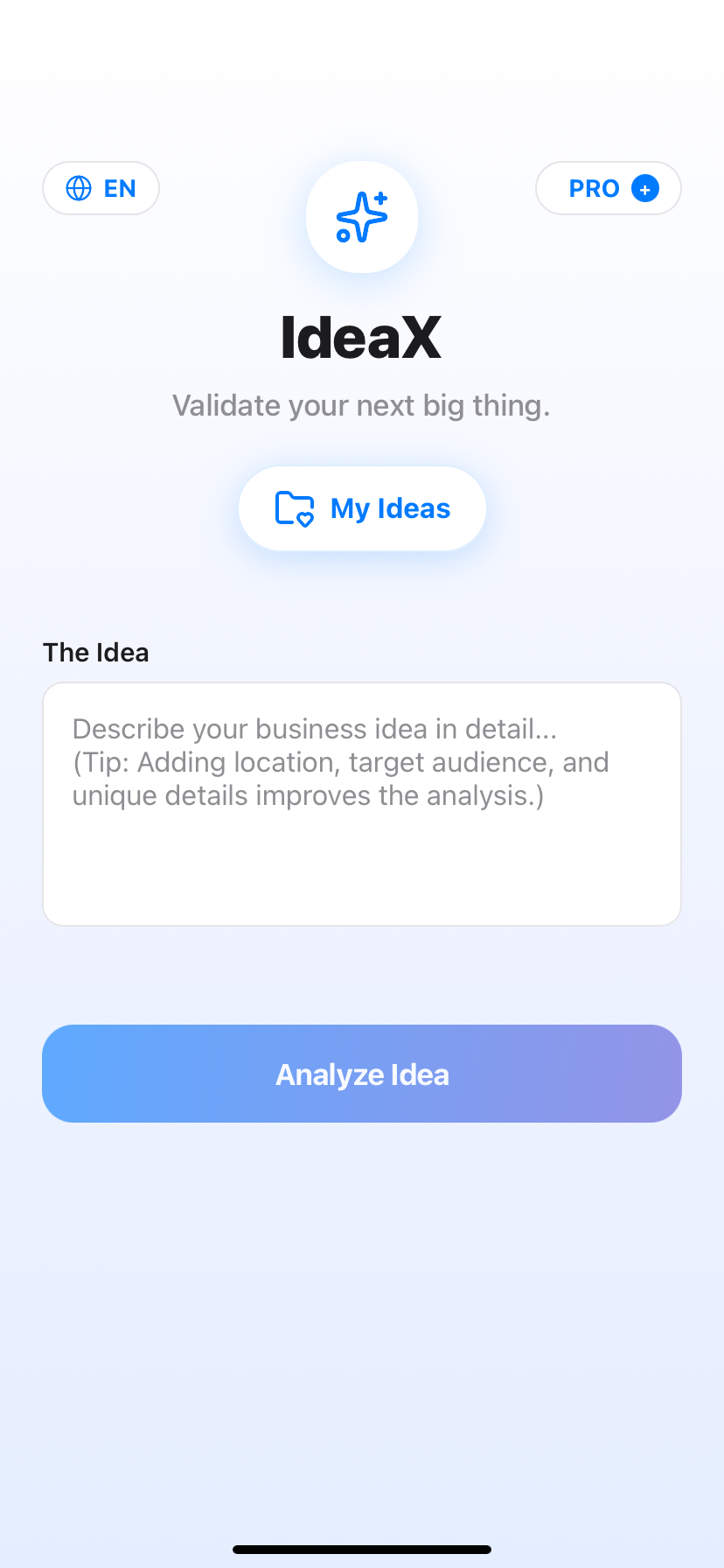
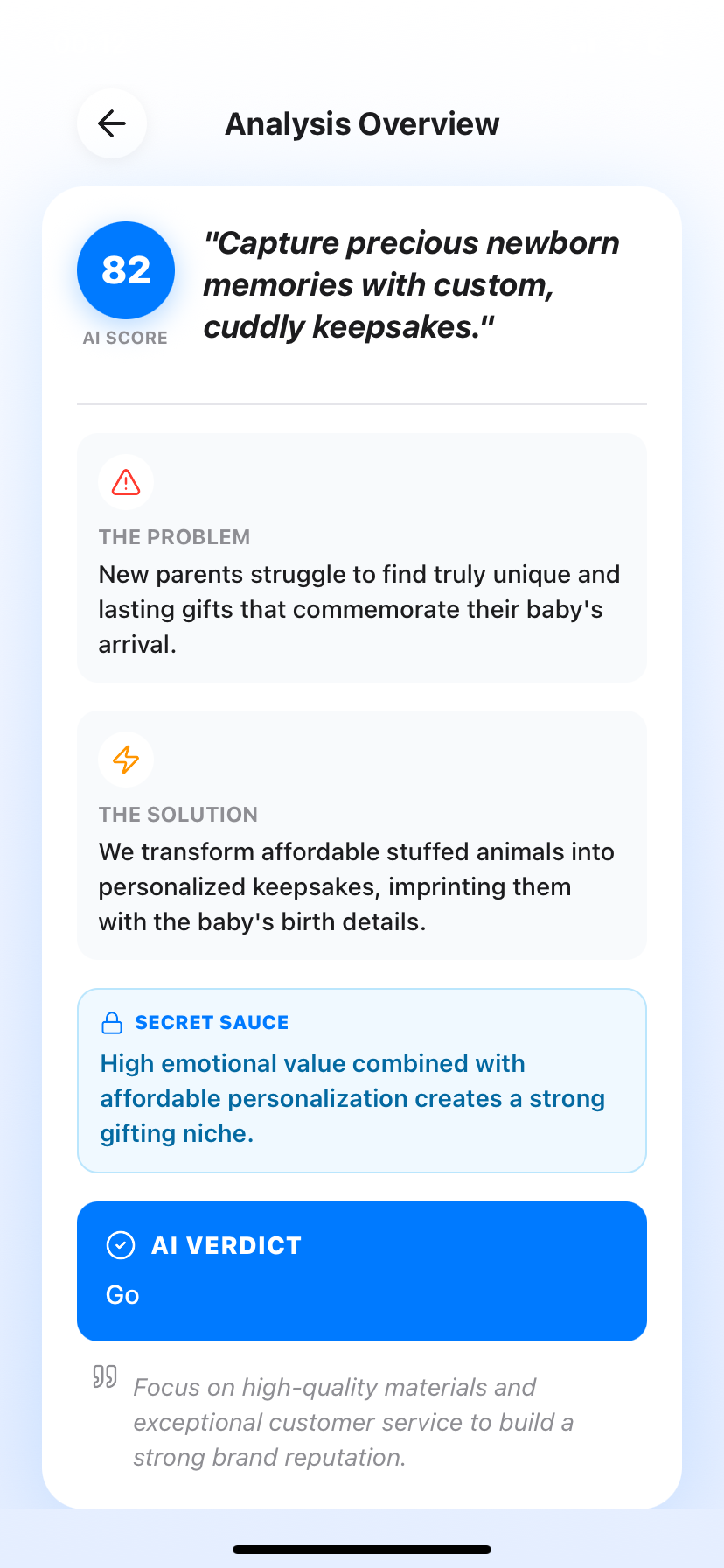
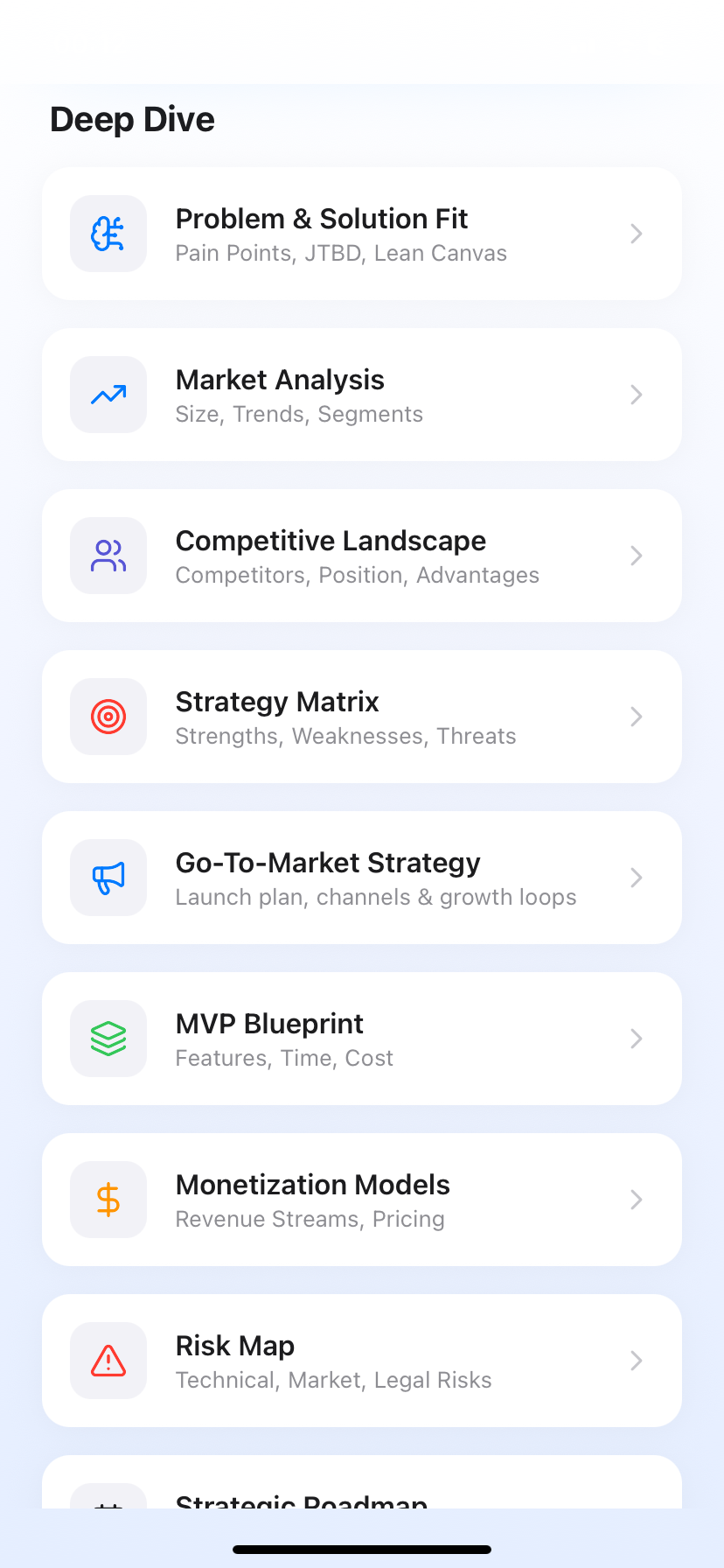
IdeaX: Business Idea Analysis
A structured way to evaluate what to build next.
Turn market gaps into better startup decisions.
IdeaX helps founders analyze market demand, competitor gaps, target audience, monetization logic, risks, and MVP priorities before development starts.
Frequently Asked Questions
Can competitor reviews really reveal market gaps?
Yes, if you look for repeated patterns across specific customer segments. A single complaint is weak evidence, but repeated complaints about the same workflow, price point, or missing capability can point to an underserved opportunity.
Which reviews are best for market gap research?
Detailed 2-star, 3-star, and 4-star reviews are often the most useful because they come from users who tried the product seriously and can explain what almost worked but did not fully solve their problem.
How many reviews should I analyze?
Start with 100-200 reviews across three to seven competitors. You do not need perfect coverage; you need enough data to see repeated patterns by segment and pain type.
What should I do after finding a gap?
Validate it with real customer conversations, willingness-to-pay tests, landing pages, or a manual pilot. Competitor reviews create a hypothesis; validation shows whether the opportunity is worth building.