The Go-to-Market Fallacy
If there is one thing that kills more software startups than bad code, it is bad distribution. Founders obsess over features, user interface, and clean architecture, leaving the "how do we sell it" question for the day after launch. When they finally launch, their GTM strategy is usually: *"We will run Google Ads and go viral on Twitter."*
This is not a GTM strategy; it is a wish. A true Go-to-Market strategy is a highly coordinated math problem that dictates exactly who your ideal customer is, what price point sustains the acquisition of that customer, and which specific channel you will use to bypass the noisy incumbents.
Integrating AI into the Distribution Problem
Structuring a correct GTM plan used to require hiring a $10,000/month VP of Marketing simply to build the spreadsheet models. Today, you can use specialized AI analysis tools to construct scalable, data-backed launch architectures in minutes.
1. Target Audience Micro-Segmentation
Founders tend to default to massive audiences: *"Our software is for all small businesses."* That is a disastrous way to launch. It is impossible to outspend giant incumbents in broad categories.
When you feed your concept into an AI validation tool, it forces micro-segmentation. Instead of "all small businesses," the AI synthesizes market data to find an underserved wedge: *"Your software is uniquely positioned for 5-person boutique law firms in urban centers."* Now, your GTM strategy is drastically simplified. You don't need a Superbowl ad; you just need to infiltrate the specific subreddits and LinkedIn groups where boutique lawyers congregate.
2. Pricing Physics and Channel Alignment
Pricing is a distribution mechanic, not just a profit margin. If your SaaS costs $5 a month, your LTV (Lifetime Value) is so low that you cannot afford to hire salespeople or pay $50 for a Facebook ad click. A $5 product *must* have organic, viral distribution integrated into the product itself (Product-Led Growth).
Conversely, if an AI analyzes your competitive layout and informs you that your most viable acquisition channel is Enterprise outbound sales, the AI will dictate that you literally *cannot* charge $5. You must charge $5,000 to cover the commission of the sales team. AI takes the emotion out of pricing and treats it as a mathematical necessity dictated by the channel.
3. Automating Competitor Strategy Audits
The fastest way to build a GTM strategy is to map what the dominant players are doing, and then attack the channel they are ignoring. By utilizing AI for competitor research, you can immediately scrape where competitor X gets their traffic.
If the AI reveals that the incumbent relies 90% on paid Search Engine Marketing, competing with them on Google Ads will bankrupt you. The winning GTM strategy, then, is to attack the 10% flank—perhaps by doubling down on short-form TikTok video SEO or aggressive cold-email outreach where the incumbent is entirely absent.

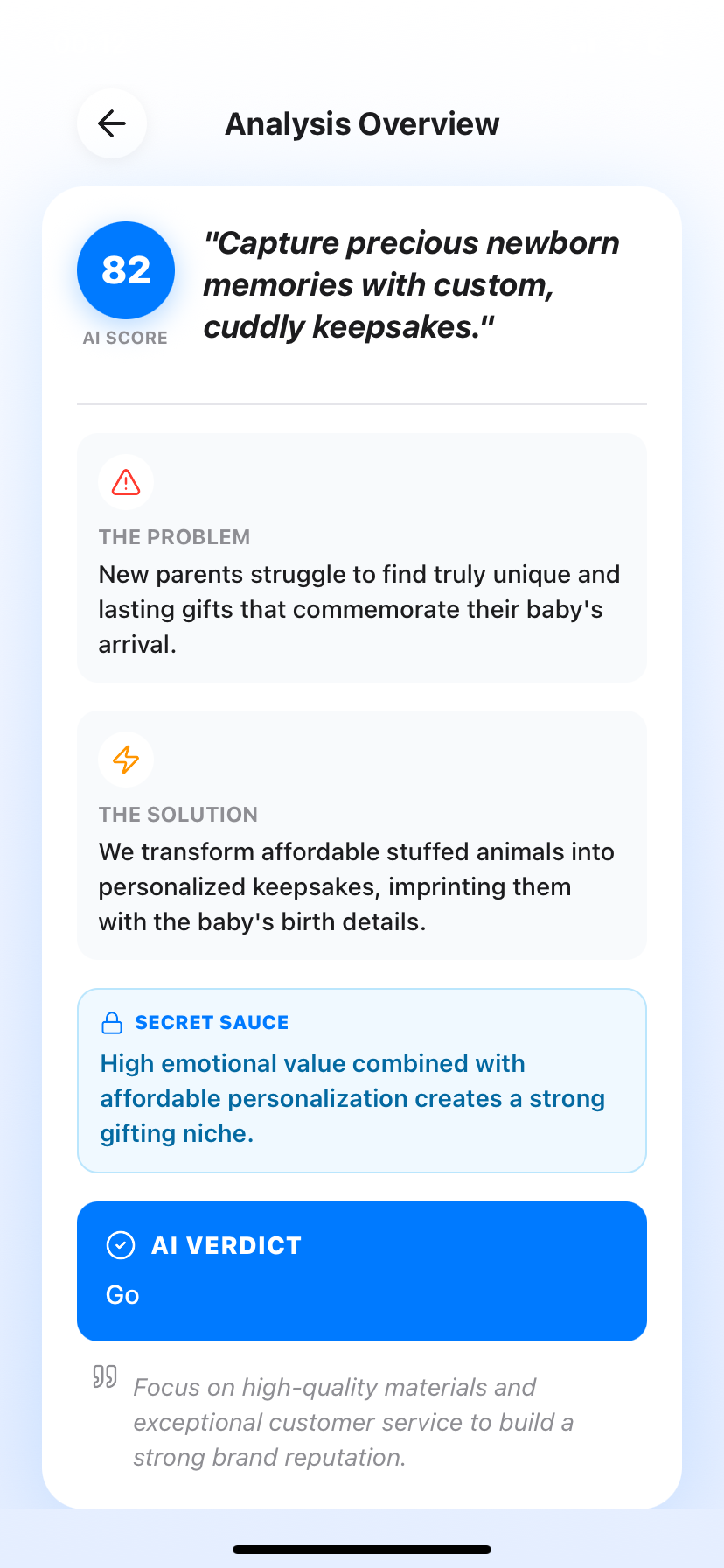
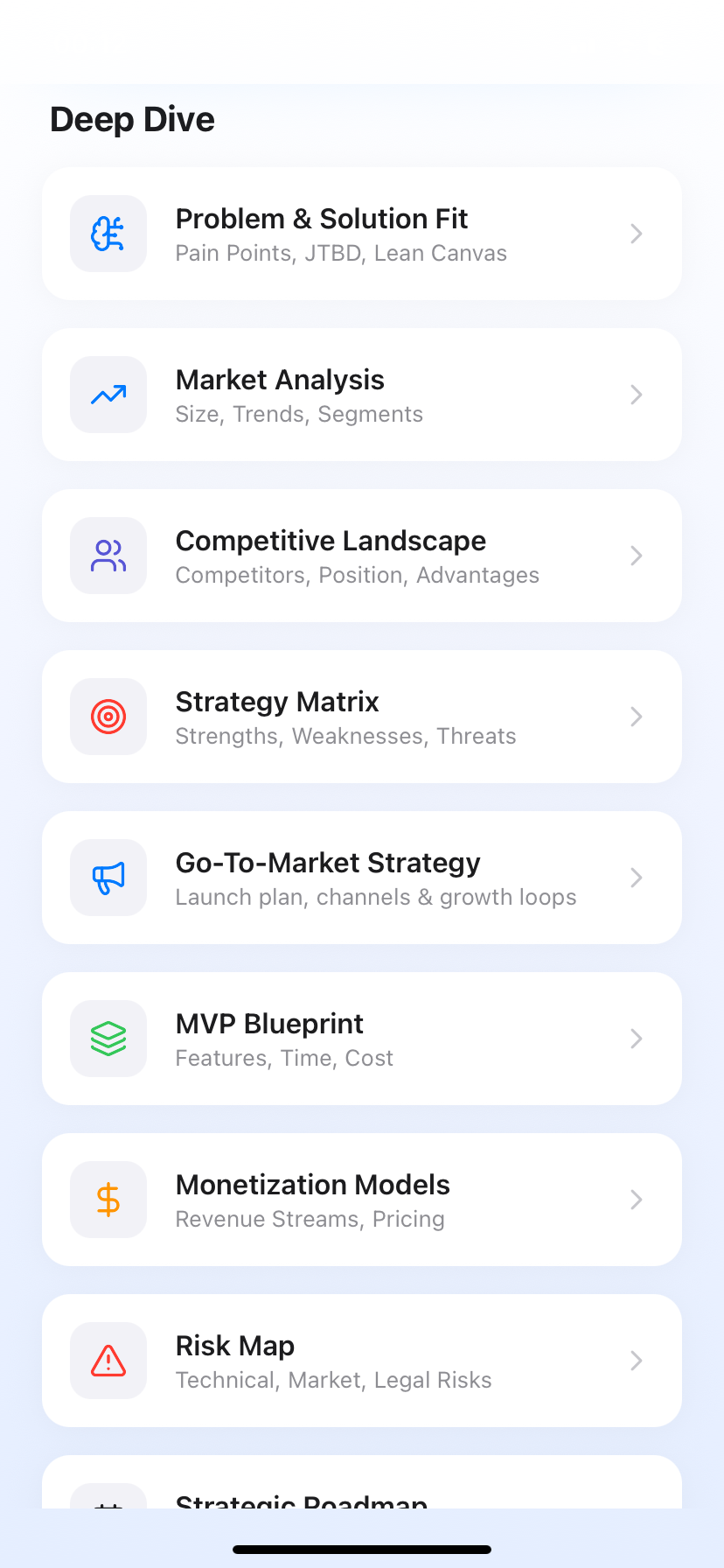
IdeaX: Fix Your Go-to-Market
Don't launch into a void. Let AI mathematically align your pricing with your distribution channels.
The Dynamic Pivot
The most powerful aspect of building your GTM strategy with AI is agility. The military phrase *"No plan survives first contact with the enemy"* is deeply true for startups. When your initial GTM strategy fails to convert users on day three, a manual 40-page business plan is useless.
With AI, you can input the new failure data immediately: *"Facebook Ads generated clicks but 0 conversions at a $90 CAC."* The AI will instantly recalculate the model, updating your Lean Canvas to suggest an immediate pivot toward a Freemium referral model or B2B direct partnerships.
Conclusion: AI Does Not Execute
While AI creates the perfect structural map for your GTM strategy, the founder must drive the car. AI will tell you that cold-calling enterprise logistics firms is mathematically your best channel, but the AI won't pick up the phone for you. You must use these tools to completely eliminate the administrative friction of *planning* so that 100% of your raw emotional energy is preserved for *executing* the plan.