
How to Test a Business Idea Without Spending Too Much Money
The canonical startup founding story is: founder has idea, founder spends $60,000 hiring a development agency to build the product, founder launches, nobody shows up, founder enters therapy. In 2026, this story is entirely preventable. The methodology for proving whether a market genuinely exists for your solution — before committing a single dollar to development — is mature, well-documented, and achievable in 72 hours for under $200. The techniques described in this guide are not theoretical hypotheticals; they are the exact validation approaches used by founders at Dropbox, Zappos, Buffer, and hundreds of successful Y Combinator companies.

- Tactic 1 — The Painted Door Test: Measure purchase intent before building.
- Tactic 2 — The Concierge MVP: Deliver the value manually before automating.
- Tactic 3 — The Wizard of Oz MVP: Look automated, operate manually.
- Tactic 4 — The Pre-Sale: Crowdfund demand before development begins.
- Tactic 5 — The Forum Signal Test: Zero-budget organic demand probing.
- Tactic 6 — The Domain Parking Bid Test: Measure search intent before audience creation.
The Core Principle: Separate Demand Validation from Technical Execution
The single most expensive mistake early founders make is conflating two fundamentally different questions: "Can we build this?" and "Do people want this enough to pay for it?" Building answers the first question. Validation answers the second. The critical insight: you must answer the second question before investing any resources in the first.
Every validation technique in this guide is designed to generate demand signal data from real humans using real money — or at minimum real behavioral intent — before a single line of production code is written. The signal you are looking for is simple: are qualified strangers willing to exchange money or genuine commitment for the solution you have described?
Tactic 1: The Painted Door Test
The Painted Door test is the gold standard of pre-code demand validation. Dropbox famously validated its concept with a 3-minute demo video that generated 70,000 waitlist signups overnight — before a single line of its cloud sync infrastructure was functional.
How to Execute the Painted Door Test
Tactic 2: The Concierge MVP
The Concierge MVP involves delivering your product's core value proposition manually, as a human-powered service, to a small set of paying beta customers — before attempting to automate or scale any element of the delivery. Food on the Table, an early YC company, validated its grocery delivery service by manually driving ICP families to grocery stores and personally shopping for them before building any software.
The technique: charge 5-10 early adopters your target price point, then manually deliver the expected product output yourself. If the customer derives sufficient value to re-purchase, want to tell others about it, and complain when service stops — you have validated both the demand and the core value delivery. Now you build the automation.
The Concierge approach answers a more valuable question than the Painted Door test: not only "do people want this?", but "does our proposed solution actually deliver sufficient value to create retention?"
Tactic 3: The Wizard of Oz MVP
The Wizard of Oz MVP is when the user-facing experience looks like a fully automated, AI-powered software system — but behind the curtain, a human is manually performing every task the software would theoretically automate. The user interacts with what appears to be a sophisticated product; the founder manually delivers the output. Zappos' founder photographed shoes in local shoe stores and posted them online — if someone bought a pair, he drove to the store himself to buy and ship them. The "store" looked fully operational. The "inventory system" was the founder's car.
For modern SaaS products, this means: the user submits data through a clean frontend form, believes an AI analyzes it and generates output, and receives a formatted report via email — but in reality, the founder opened the submission in a Google Doc, manually performed the analysis, and emailed the output. This technique is specifically powerful for proving that customers value the output of a proposed AI feature enough to pay for it, before investing in AI model training or expensive API integration.
Tactic 4: The Pre-Sale
If your product requires longer build time than a weekend prototype, the Pre-Sale converts demand validation into upfront development capital: sell lifetime access or early-bird pricing to a defined first cohort before any code is written. This is the exact model Kickstarter, Indiegogo, and thousands of successful bootstrapped SaaS products have used to prove demand and fund their own development simultaneously.
The ethical constraint: be transparent about the timeline, do not charge cards until delivery is achievable, and offer unconditional refunds to anyone who requests one before delivery. The commercial signal: if strangers who don't know you personally pay real money for a product that doesn't yet exist, the market demand signal is stronger than any survey or focus group data you could generate.
Tactic 5: The Forum Signal Test
Before spending $100 on ads, run a zero-budget demand signal test in the forums where your exact ICP congregates. Post a problem-focused question — not a product pitch — on the most relevant subreddit, LinkedIn group, Slack workspace, or Discord server. Describe the pain point your product addresses and ask whether others experience it. The engagement quality of the responses is raw demand intelligence.
Validation Budget Guide: What Each Method Costs
| Tactic | Total Budget | Time Required | Signal Strength |
|---|---|---|---|
| Painted Door (Paid) | $100-200 | 4-6 hours + 72hr data | Very Strong |
| Pre-Sale | $30-80 | 8-12 hours + 2 weeks | Strongest |
| Concierge MVP | $0 (time only) | 2-4 weeks manual work | Strong + Retention |
| Wizard of Oz MVP | $30-80 | 1-2 weeks | Strong |
| Forum Signal Test | $0 | 1 hour + 48hr wait | Moderate (Qualitative) |
| Painted Door (Free waitlist) | $30-80 ads only | 4-6 hours + 48hr data | Moderate (Intent only) |
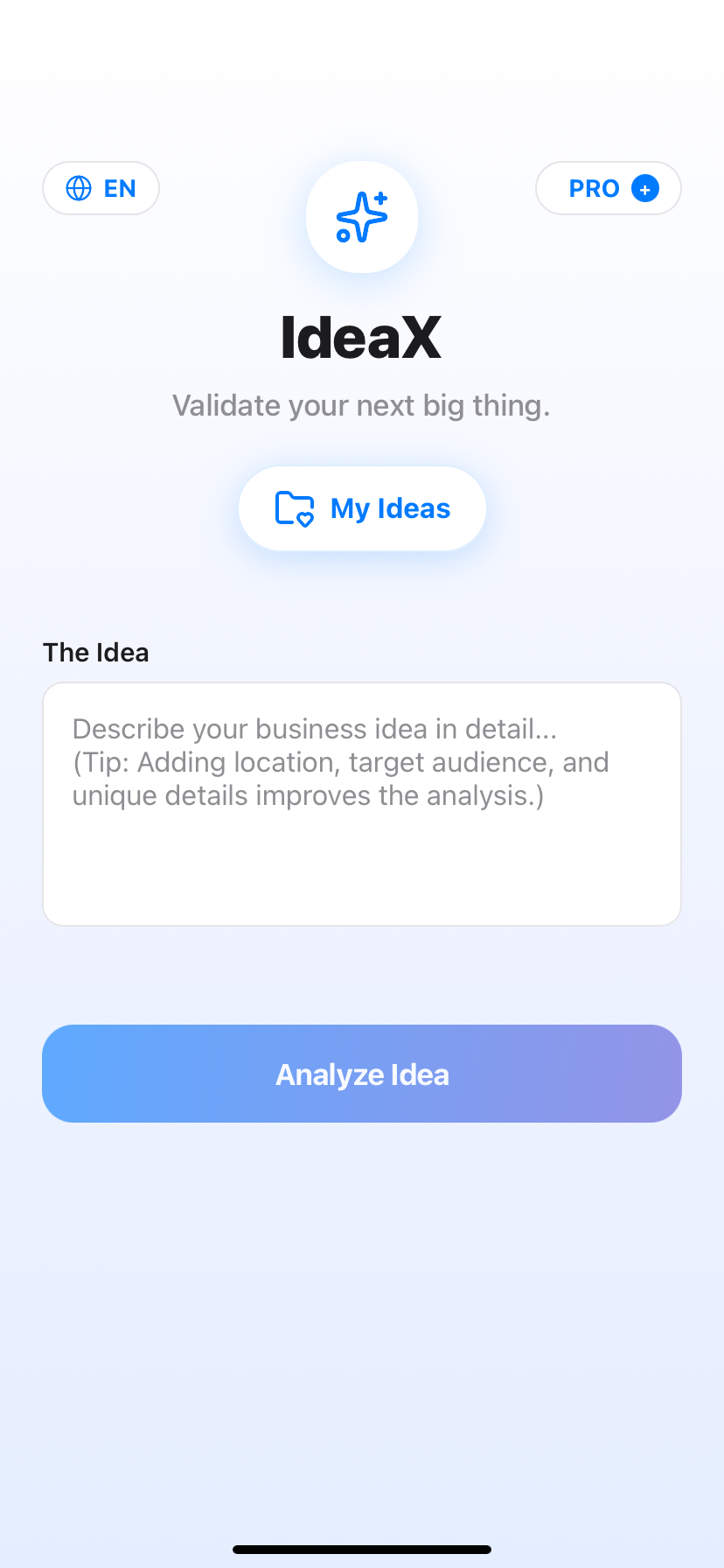
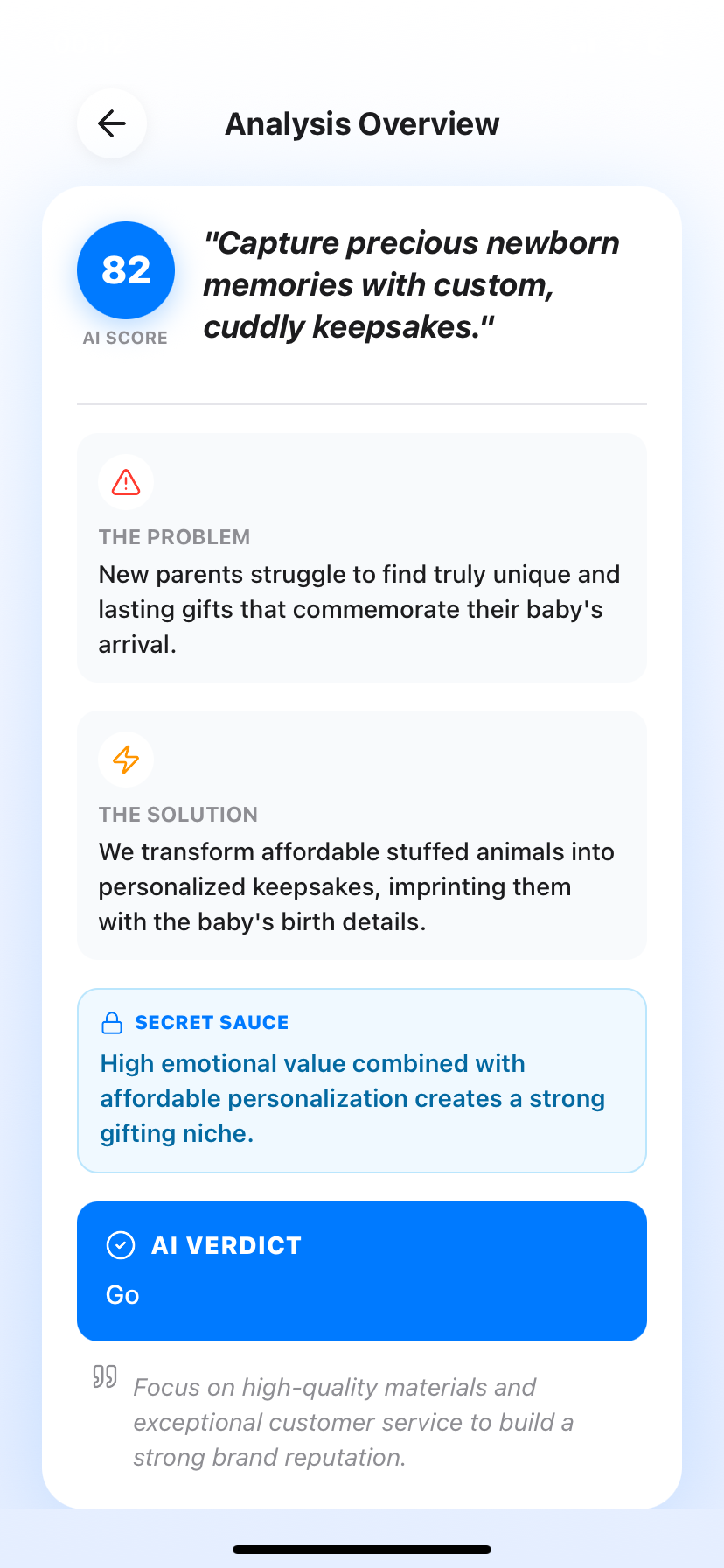
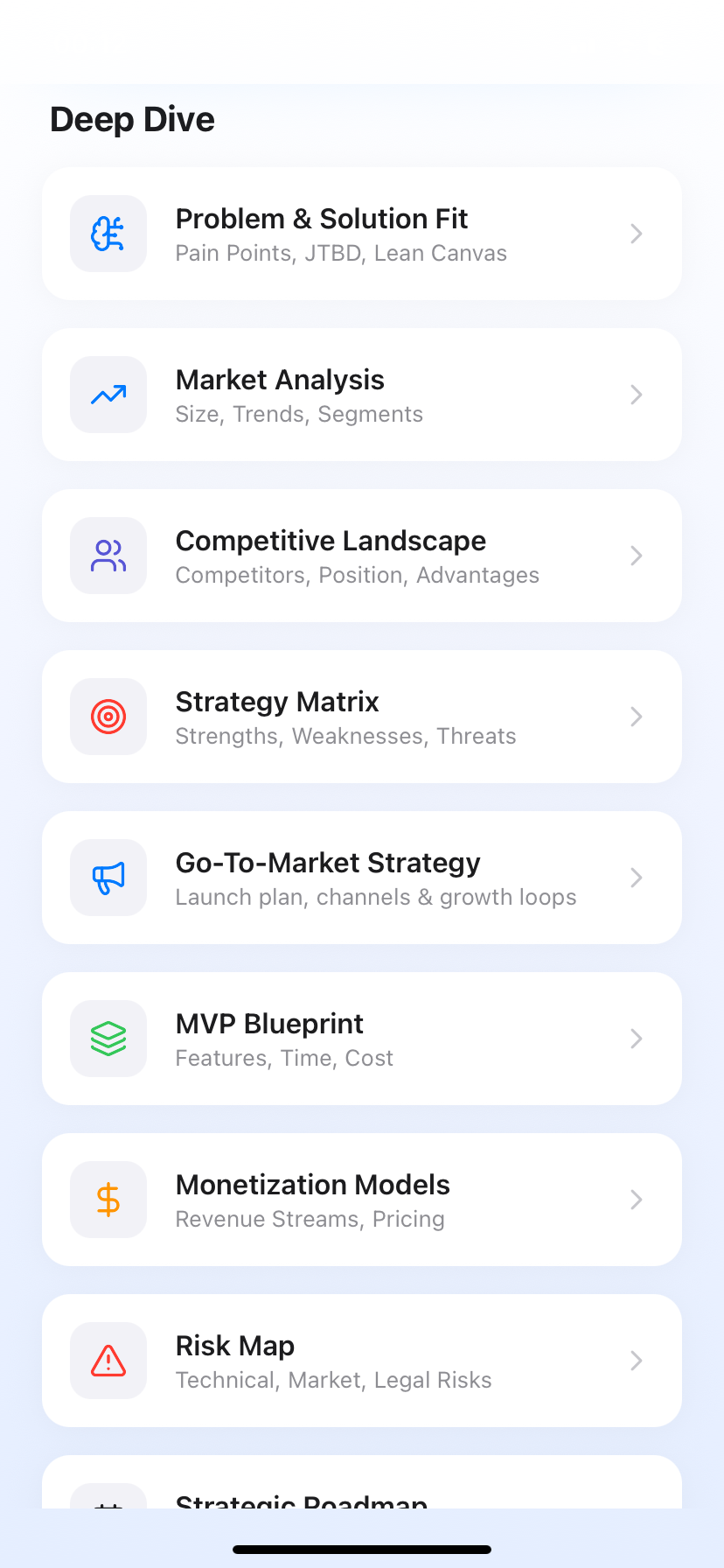

IdeaX: Business Idea Analysis
A structured space for evaluating what to build next.
Audit your idea before your first experiment.
Before running a Painted Door test, the smartest founders run a structural audit first — because a flawed positioning statement or wrong ICP assumption will produce false-negative validation data even when real demand exists. IdeaX analyzes your concept through the full venture evaluation framework: it identifies the most commercially powerful pain point angle for your landing page, flags the target audience segment with the highest LTV potential, and generates the exact messaging that will maximize your Painted Door conversion rate before you spend $100 on ads.
Frequently Asked Questions (FAQ)
Do I need to hire a developer to test a business idea?
No. The goal of validation is to prove people will pay money for your proposed solution — not to test your technical architecture. You can validate virtually any SaaS concept using a Carrd landing page, a Stripe payment link, and your own manual fulfillment (Concierge MVP). Code is not required until demand is proven.
What is the Painted Door test?
Building a professional landing page with your full solution description, a real price point, and a 'Buy Now' or 'Get Early Access' button. Drive 300-500 targeted visitors using $80-120 of ads. If 3-5% of qualified strangers convert, demand is validated. Total budget: $100-200. Time: 4-6 hours.
What is the Wizard of Oz MVP?
When the user-facing experience looks like a fully automated software product, but behind the scenes, a human manually performs every task. The user believes an AI analyzed their data — but you did it manually in a Google Doc. This proves customers value the output enough to pay for it before you invest in automation.
What conversion rate proves valid demand?
If 3-5%+ of cold, qualified traffic converts via your 'Buy Now' button, demand is commercially validated. Below 1% with 300+ qualified visitors indicates a messaging problem, wrong audience targeting, or no market demand at this price point. Retest with a different ICP or price before pivoting.
Is pre-selling a product that doesn't exist yet ethical?
Yes, provided you are transparent. Kickstarter and Indiegogo are entirely built on pre-selling non-existent products. The ethical standard: immediately communicate delivery timelines, don't charge cards until you can deliver, and offer unconditional refunds to anyone who requests one before delivery.