
What Makes a Good Business Idea?
Every single day, millions of people worldwide come up with what they believe to be "brilliant" trillion-dollar ideas in the shower. Yet, statistical reality dictates that 99% of these ideas will never generate a single dollar of net revenue. What is the fundamental, mathematical difference between a mildly interesting thought and a commercially explosive business concept?
- The dangerous myth of "Originality" in the startup ecosystem.
- The difference between "Vitamins" and "Painkillers."
- How to calculate Unfair Distribution Advantages.
- The critical necessity of Founder-Market Fit.
- Gross margins and the core economics of digital scalability.

The Myth of Absolute Originality
It is incredibly easy to assume that the quality of an idea is directly tied to its uniqueness. Society tends to romanticize visionary founders who supposedly pull entirely unheard-of innovations out of thin air in a garage.
The brutal reality of modern entrepreneurship is profoundly less glamorous. A "good" business idea is very rarely a world-first invention. It is simply an idea that possesses a highly specific set of structural and economic traits.
If you evaluate the landscape of successful B2B SaaS (Software as a Service) companies, bootstrapped marketing agencies, and high-growth consumer utilities, you will notice they all share the exact same underlying DNA. Google was not the first search engine. Facebook was not the first social network. Slack was not the first corporate chat protocol. They were simply vastly superior executions of proven business models. Let's break down the non-negotiable criteria of a concept that is actually worth committing years of your life to building.
1. It Solves an "Urgent, Hair-on-Fire" Problem
Venture capitalists frequently use the "Hair-on-Fire" analogy to judge the quality of a startup pitch.
Imagine a man standing in front of you with his actual hair on fire. If you approach him and try to sell him a fire extinguisher for $500, he is not going to haggle on the price. He is not going to ask you to outline the specific chemical composition of the extinguisher. He is not going to ask to compare your product against a competitor's feature matrix on a landing page. He will simply throw his wallet at you because his pain is urgent, blinding, and immediate.
Vitamins vs. Painkillers
If you want to build a highly profitable business with low marketing friction, you must sell Painkillers, not Vitamins.
💊 Vitamins (Poor Ideas)
Vitamins offer nice-to-have, preventative benefits. Example: A beautifully designed app that reminds you to drink water or meditate. The user knows they should use it, but when their credit card declines, it is the very first subscription they cancel because the absence of the app causes zero immediate pain.
🚑 Painkillers (Great Ideas)
Painkillers stop the bleeding immediately. Example: Tax compliance software that automatically prevents a freelancer from being audited by the IRS. The user gladly pays $50 a month because the alternative (getting audited and fined thousands of dollars) is an active, terrifying threat.
Good business ideas solve hair-on-fire problems. Furthermore, the problem must be frequent (happening to the user at least once a week) and severe (costing the user significant money, time, or social status). If your idea solves a mild inconvenience that only happens once a year during a family vacation, you do not have a venture-scale business; you have a fun weekend hobby project.
2. You Have an "Unfair Distribution Advantage"
Building a spectacular product does not guarantee any level of success. Distribution guarantees success.
The internet is infinitely large. Every day, 10,000 new software tools are launched. If nobody knows your tool exists, it will die in absolute silence. Therefore, a genuinely good business idea has a baked-in Go-To-Market (GTM) strategy from day zero.
When evaluating your concept, you must aggressively ask yourself: "How will the exact tenth person, the hundredth person, and the ten-thousandth person find out about this?" If your answer is generic, such as "We will run Facebook ads and post on Twitter," you are in deep trouble. You will be out-spent by venture-backed competitors with million-dollar ad budgets.
Examples of Unfair Distribution:
- Built-in Audience: You already operate an email newsletter with 25,000 highly engaged subscribers exactly within the niche you are targeting. Your Customer Acquisition Cost (CAC) is effectively zero.
- Viral Product Mechanics (Network Effects): The product inherently forces users to invite other users to extract value. (e.g., Calendly. Every time a user sends a Calendly link to book a meeting, they are inadvertently exposing the software to a new potential customer).
- Extreme SEO Competence: You have identified massive search volume gaps for long-tail keywords ("best inventory software for left-handed dentists") that massive corporations have ignored, giving you a monopoly on free organic Google traffic.
3. High Margins and Inherent Scalability
A high-end legal consulting agency can be incredibly lucrative, generating millions in revenue. However, it is not inherently scalable because the "inventory" is human time. To make twice as much money, you must hire twice as many lawyers. Your profit margins are linearly capped by human labor costs.
A software product (SaaS) or digital media asset is coveted by venture capitalists specifically because it possesses economies of scale. The cost to write the code for the first user might be $50,000. But the cost to duplicate that code and serve the 10,000th user is essentially $0.001 in AWS server fees.
When evaluating if an idea is "good," ask yourself about the Gross Margin. Can you deliver the product digitally without relying on expensive physical shipping, heavy manufacturing chains, or manual human labor? Look for ideas that possess near 90% software margins. If you are starting a service business, a "good" idea must have a clear path to productization—the ability to turn a messy, labor-intensive service into a streamlined, high-margin subscription.
4. Personal "Founder-Market Fit"
A fantastic idea for Elon Musk might be a colossally terrible idea for you. 'Founder-Market Fit' is the critical intersection dictates that the person building the business must possess deep, intrinsic knowledge, or an obsessive passion for the specific industry they are entering.
Building a startup is grueling. It requires spending 60 to 80 hours a week staring at the exact same problem space for 5 to 10 years.
If you decide to build software for dentists solely because your macro-analysis shows that 'dentists have a lot of disposable income', but you personally find dental operations incredibly boring and hate talking to dentists, you will inevitably quit when you hit the first major roadblock. A competitor who genuinely loves the dental industry will effortlessly crush you. A genuinely good business idea aligns perfectly with your personal strengths, your pre-existing network, and your authentic interests. It doesn't just make mathematical sense; it makes personal sense.
5. It Rides a Macroeconomic or Technical Wave
Finally, it is paramount to evaluate the macroeconomic and technical trends surrounding your concept. It is exponentially difficult to build a massive business in a shrinking industry. If you tried to invent a "better, more efficient DVD player" in 2010, the sheer quality of your product wouldn't matter; the market tide was violently receding toward streaming.
Conversely, mediocre execution can sometimes result in massive financial success if the company simply rides a massive, swelling wave. Launching an AI text-generation wrapper in early 2023 was highly lucrative for many novice developers not because they were geniuses, but because the global market demand for the "AI wave" was deafening. A good idea swims with the current of technological adoption, not against it.
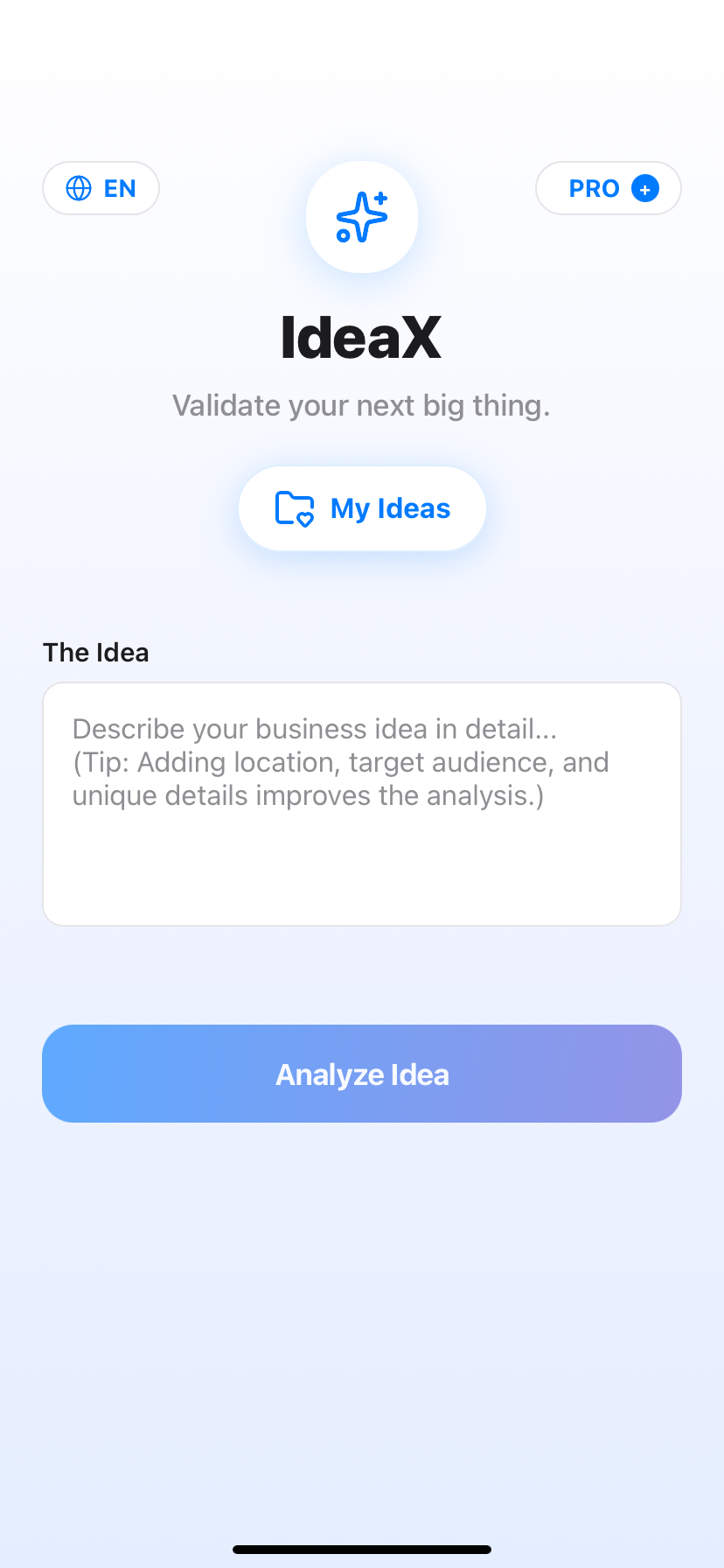

IdeaX: Business Idea Analysis
A structured space for evaluating what to build next.
Is your idea truly 'good'?
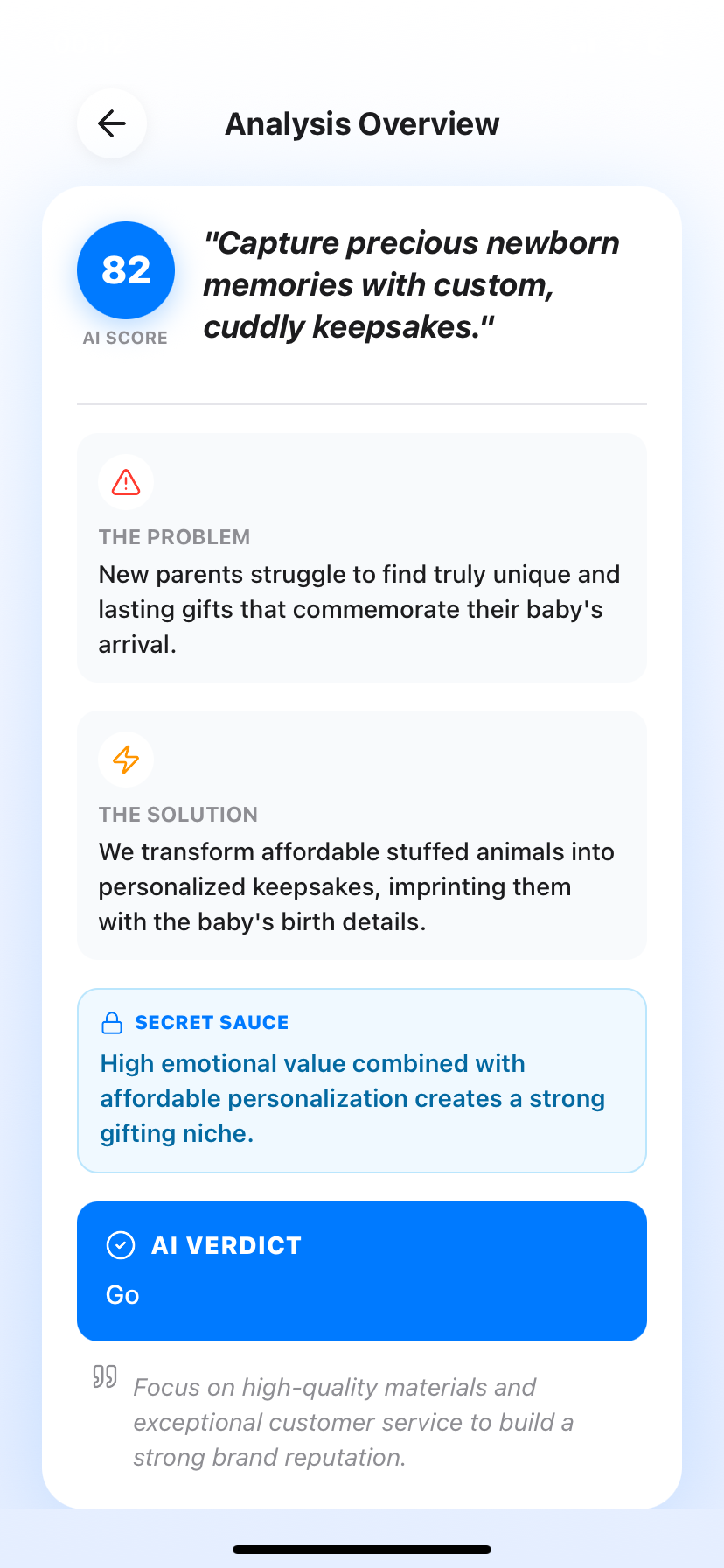
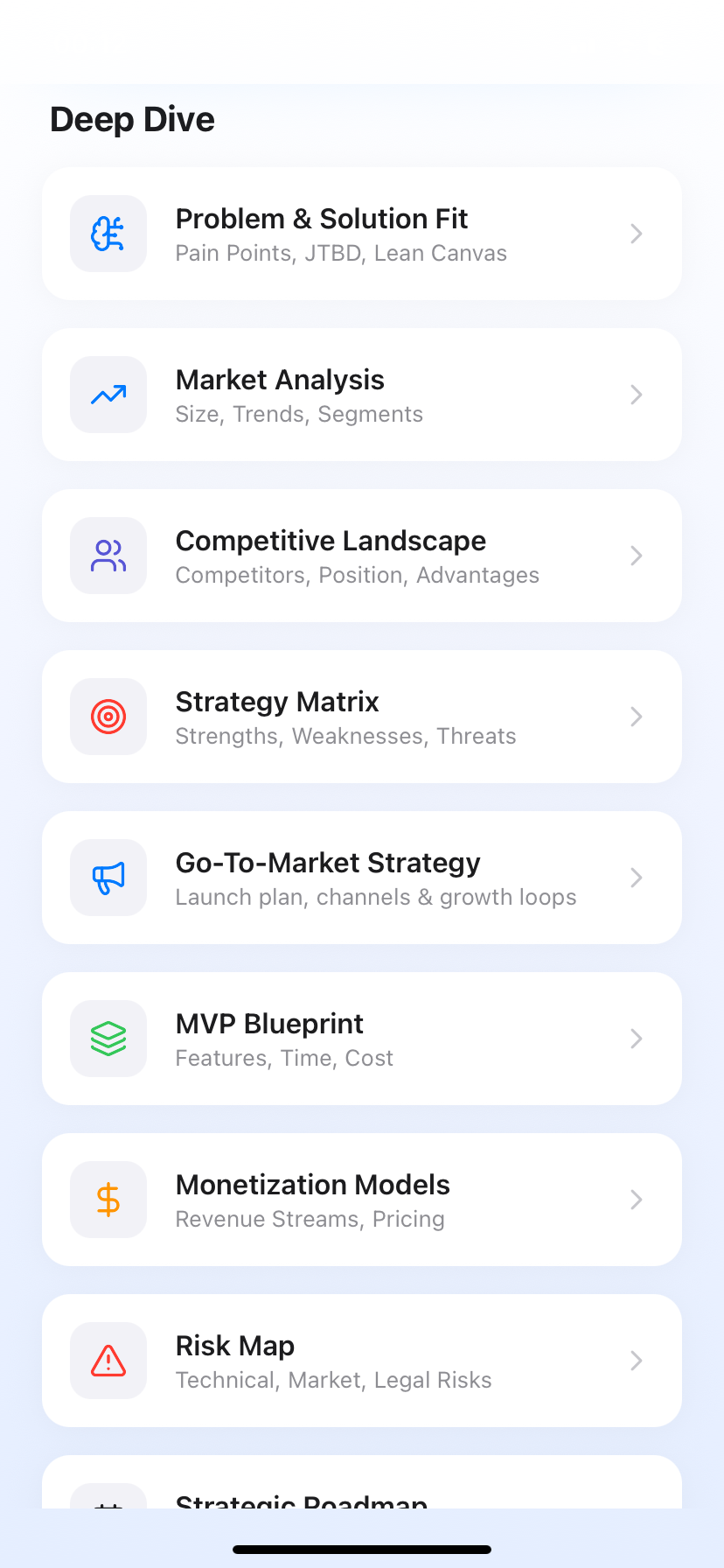
Stop asking your friends and family for their opinions—they will lie to protect your feelings. Instead, subject your concept to rigorous, algorithmic auditing. IdeaX mathematically scores the true quality of your business idea by analyzing its scalability vectors, market urgency (Painkillers vs Vitamins), and your specific founder-market fit. Instantly discover the hidden structural flaws in your logic before you commit thousands of dollars to building.
Frequently Asked Questions (FAQ)
Are original ideas better than unoriginal ones for a startup?
Execution matters exponentially more than originality. Many billion-dollar companies (like Google, Facebook, or Slack) were not the first in their respective markets. They simply executed a proven idea with a better user experience or stronger distribution strategy than the incumbents.
How do I know if my business idea is a vitamin or a painkiller?
Painkillers solve immediate, urgent, bleeding-neck pain (like tax compliance software for freelancers). Vitamins offer nice-to-have benefits but lack urgency (like a beautiful habit-tracking app). The easiest way to tell is if users are desperately, actively typing queries into Google looking for a solution right now. If they are, it's a painkiller.
Is a massive addressable market always necessary for a good idea?
Not if you are a solo founder or a strapped team. Niche markets can be highly profitable because large corporations ignore them due to their "small" size. A deeply specific B2B niche (like scheduling software for marine biologists) is often much safer than trying to build the next massive, highly saturated social media network.
What is Founder-Market Fit?
Founder-Market Fit means the founder possesses deep, intrinsic knowledge, an unfair network, or a passionate obsession with the specific industry they are entering. If a person hates marketing but tries to build an SEO SaaS tool solely for money, they lack Founder-Market Fit and will inevitably burn out.
How important are profit margins when evaluating an idea?
Critically important. A "good" idea on paper becomes a terrible business if the cost of delivering the product eats 90% of the revenue. Software businesses are coveted specifically because their gross margins (the cost to replicate the product for one more user) are often near 90%, allowing for massive economic scalability.