
MVP Roadmap Template for a New App

IdeaX: Business Idea Analysis
Clarify your app idea, target user, MVP scope, roadmap, risks, revenue assumptions, and validation plan before you build.
An MVP roadmap for a new app turns a broad product idea into a focused sequence of validation, scope, build, beta, and launch steps. It keeps the first version small enough to ship, but structured enough to answer the questions that decide whether the app deserves more investment.
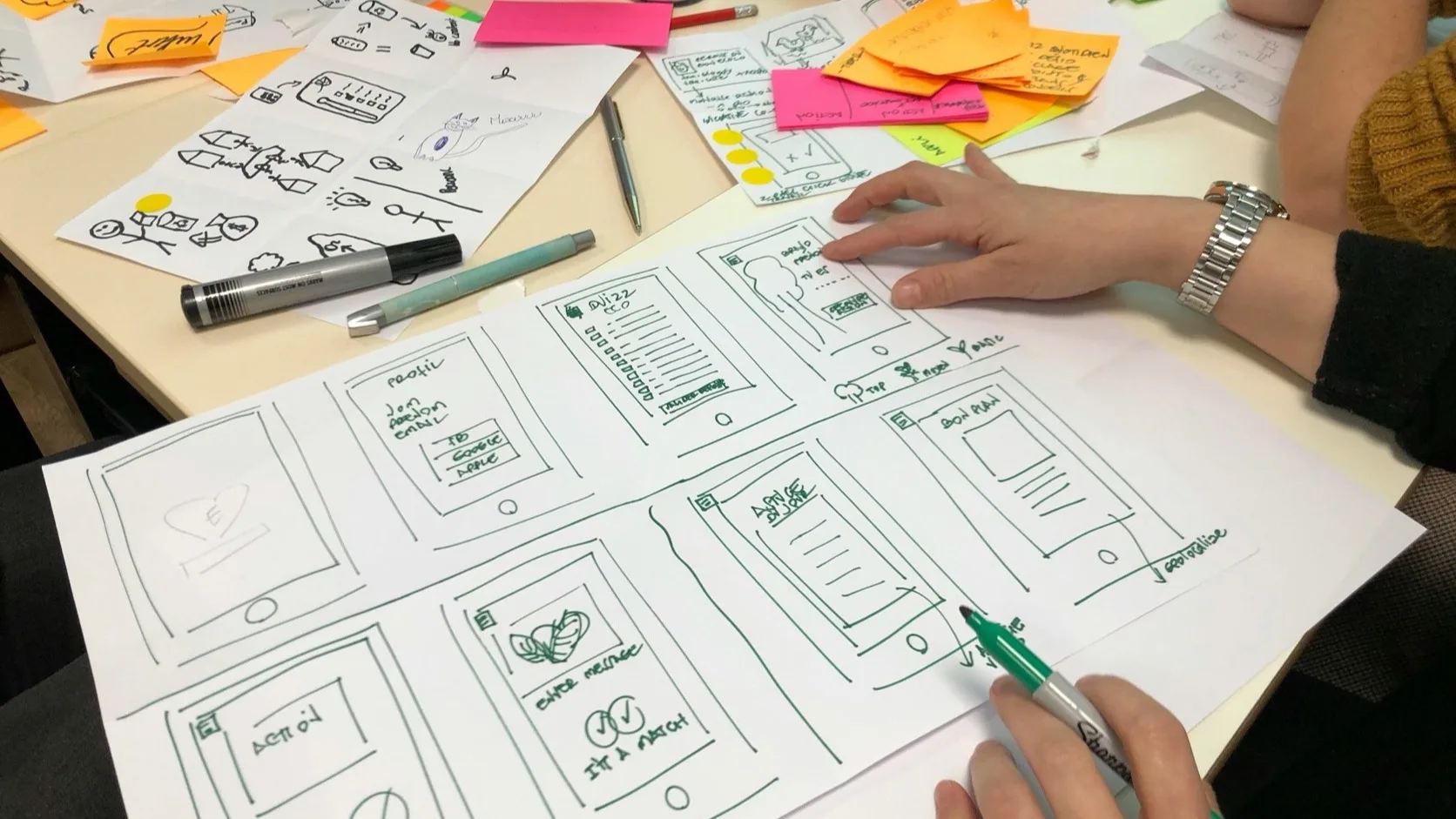
Many founders call everything a roadmap: feature lists, design ideas, developer tasks, marketing plans, and future dreams. A useful MVP roadmap is narrower. It explains what you will validate first, what you will build first, what you will delay, how users will reach the first value moment, and what evidence will decide the next version.
Use this template after you have a rough app idea and before you commit to a full build. It pairs well with a product requirements document for an app idea, MVP feature prioritization, and build vs buy vs no-code MVP decisions.
A strong MVP roadmap for a new app includes the validation goal, target user, MVP hypothesis, must-have features, no-code or manual shortcuts, 6-week build timeline, beta plan, launch criteria, analytics events, success metrics, and a post-launch decision rule. The roadmap should guide learning, not document every future feature.
What Is an MVP Roadmap?
An MVP roadmap is a short plan that shows how a new app will move from idea to first validated release. It is not a long-term product roadmap. It is the plan for the first learning cycle.
A good MVP roadmap answers:
- What user and problem are we focusing on?
- What must the first version prove?
- Which features are required for the first value moment?
- Which tasks can be no-code, bought, or manual?
- When will beta users try it?
- What metrics decide whether we continue, change direction, or stop?
The roadmap should be specific enough to guide work, but not so detailed that it becomes a fake certainty exercise.
MVP Roadmap vs PRD vs Product Roadmap
These planning tools work together, but they are different.
| Tool | Purpose | Time horizon |
|---|---|---|
| MVP roadmap | Plan the path from idea to first validated release. | 2 to 8 weeks. |
| PRD | Define requirements, user stories, acceptance criteria, and scope. | First version. |
| Product roadmap | Prioritize future product directions after learning from users. | Months or quarters. |
| Project plan | Assign tasks, deadlines, owners, and delivery details. | Sprint or delivery cycle. |
If your PRD explains what the app should do, the MVP roadmap explains how you will reach the first useful release and learn from it.
Before You Build the Roadmap
Do not start the roadmap with features. Start with the decision the MVP should make possible. Before writing the timeline, define:
- Target user: the specific audience for version one.
- Core problem: the painful situation the app addresses.
- MVP hypothesis: what must be true for the app to deserve more investment.
- First value moment: the earliest point where the user gets a meaningful result.
- Success metric: the behavior that proves the MVP is working.
If the problem is still unclear, run customer discovery. If demand is unproven, use a landing page validation test or a pre-launch waitlist before building the app roadmap around assumptions.
The 6-Week MVP Roadmap Template
Six weeks is not a magic number. It is a useful constraint. It forces you to choose the smallest app version that can reach beta users and generate evidence.
| Week | Focus | Output |
|---|---|---|
| Week 1 | Validate scope and write the MVP brief. | User, problem, hypothesis, non-goals, success metric. |
| Week 2 | Create the PRD and core user flow. | User stories, acceptance criteria, happy path, analytics events. |
| Week 3 | Build or no-code the first workflow. | Working core flow, manual backend, bought tools, or prototype. |
| Week 4 | Run private beta with a small user group. | 3 to 20 users, bug list, onboarding notes, first usage data. |
| Week 5 | Improve activation and retention signals. | Fewer drop-offs, clearer onboarding, better value delivery. |
| Week 6 | Launch to a focused first channel. | Launch assets, metrics review, continue/pivot/stop decision. |
Week 1: Validate Scope
The first week is not for building screens. It is for cutting the roadmap down to the learning goal.
Write a one-page MVP brief:
- Target user segment.
- Problem statement.
- Current workaround.
- MVP hypothesis.
- First value moment.
- Primary success metric.
- Out-of-scope features.
Example: "For first-time app founders, the MVP helps turn one raw app idea into a clear risk and feature priority summary. Success means at least 40% of qualified users complete one analysis and 20% return to refine or analyze another idea."
Week 2: Turn Scope Into Requirements
Week 2 translates the brief into buildable requirements. Create a lean PRD, not a massive document.
- Core user flow.
- User stories.
- Acceptance criteria.
- Analytics events.
- Edge cases.
- Manual, no-code, bought, and custom-built parts.
For the full structure, use how to create a product requirements document for an app idea. The roadmap and PRD should agree: the PRD defines the first version, and the roadmap schedules how to reach it.
Plan the MVP Before You Build Too Much
IdeaX helps founders turn an app idea into clearer MVP priorities, risk assumptions, revenue logic, validation steps, and build direction.
Week 3: Build the Core Workflow
Week 3 is where founders often overbuild. The roadmap should protect the core workflow from extra features.
Ask one implementation question for each part:
- Can we buy this with an existing tool?
- Can we no-code this for the first test?
- Can we manually operate this behind the scenes?
- Does this need custom code because it is the core value?
Use build vs buy vs no-code to choose the fastest implementation path. If value delivery is still uncertain, a concierge MVP or Wizard of Oz MVP may be a better Week 3 output than a full coded app.
Week 4: Run a Private Beta
Week 4 should expose the MVP to real target users. A beta is not a soft launch for compliments. It is a controlled test of the first value moment.
- Recruit 3 to 20 qualified users.
- Watch where they drop off.
- Ask for specific feedback after they reach the output.
- Track activation and completion.
- Separate bugs from value problems.
- Ask whether they would use it again or pay for continued access.
If you do not have beta users yet, use how to get your first 100 users for a new app and how to build a waitlist for an app idea.
Week 5: Improve Activation
Week 5 is not for adding a pile of features. It is for improving the path to value.
Look at the beta evidence:
- Where did users hesitate?
- What did they misunderstand?
- Which feature did they ignore?
- Which output did they ask for again?
- Which part created trust or confusion?
- What blocked payment, sharing, or repeat use?
Use these answers to improve onboarding, copy, first-run experience, pricing explanation, or the core output. If a feature request does not improve activation or learning, keep it out of this roadmap.
Week 6: Launch to One Focused Channel
The MVP launch should be focused. Do not launch to every channel at once. Choose one channel that reaches your exact early user.
- App Store or Google Play beta audience.
- A founder community or niche forum.
- Targeted content or SEO page.
- Direct outreach to a small segment.
- Existing waitlist or newsletter.
- Small paid test if the economics can support it.
Connect this to a go-to-market plan for a new app idea. If paid acquisition is part of the plan, estimate CAC before launching the app so the roadmap does not assume traffic is free.
If App Store or Google Play search will be part of launch, add an ASO checklist for a new app launch to the roadmap before release week.
MVP Roadmap Template You Can Reuse
Copy this structure into your planning doc and keep each section short.
Example MVP Roadmap for a New App
Imagine a founder wants to build an app that helps first-time founders evaluate startup ideas before writing code.
Target user: solo founders and indie app builders with multiple app ideas.
Core problem: they jump between ideas without a structured way to compare risk, demand, monetization, and MVP scope.
MVP hypothesis: founders will submit one idea and value a structured risk and priority report enough to save it, share it, or run another analysis.
Must-have features: idea input, structured analysis, risk summary, MVP priorities, save or copy output.
No-code/manual shortcuts: manual review for early reports, simple delivery page, payment link or waitlist form.
Success metric: 40% complete one analysis, 20% return within 7 days, and at least 10 qualified users ask for deeper or paid access.
This roadmap keeps the app narrow. It does not include team workspaces, pitch deck generation, advanced exports, community features, or integrations until users prove the core analysis is valuable.
Roadmap Metrics to Track
The roadmap should include metrics before launch, not after. Choose a small set.
- Activation: percentage of users who reach the first value moment.
- Completion: percentage who finish the core workflow.
- Retention: percentage who return or repeat the core action.
- Paid intent: pricing clicks, trial starts, deposit requests, paid beta interest, or subscriptions.
- Acquisition: qualified signup cost, waitlist source, first channel conversion, or CAC estimate.
- Quality: support issues, confusion points, specific feedback, or satisfaction rating.
Use app idea validation metrics to choose the right signals. For a subscription app, connect the roadmap to subscription app pricing strategy and unit economics.
What Should Not Be in the MVP Roadmap?
A roadmap is powerful because it says no. Leave these out unless they directly test the MVP hypothesis:
- Advanced dashboards.
- Team collaboration.
- Custom branding.
- Referral systems.
- Multiple pricing tiers.
- Complex admin panels.
- Large automation systems.
- Multiple target audiences.
- Every feature a competitor has.
Put these in a "later" list. A later list protects the roadmap without pretending the ideas are bad.
Common MVP Roadmap Mistakes
- Roadmap starts with features: the timeline should start with the user, problem, and hypothesis.
- No beta milestone: the first user test gets delayed until too much is built.
- No metrics: the app launches without a decision rule.
- Too many audiences: the roadmap tries to satisfy everyone and reaches nobody clearly.
- No non-goals: scope grows quietly each week.
- Launch is treated as the finish line: the roadmap should include learning and next decision after launch.
Before locking the roadmap, pressure-test it with how to stress-test a business idea before launch. A roadmap built on weak demand, unclear pricing, or broad audience assumptions will create busy work.
MVP Roadmap Checklist
- Is the target user specific?
- Is the problem painful and already observable?
- Does the roadmap name one MVP hypothesis?
- Does it define the first value moment?
- Are must-have features limited to the core workflow?
- Are no-code, bought, and manual shortcuts identified?
- Is there a beta milestone before public launch?
- Are activation, retention, paid intent, and quality metrics defined?
- Is there a continue, pivot, or stop decision rule?
- Can the first version launch in weeks, not months?
A good MVP roadmap is not a promise that the product will work. It is a disciplined plan for finding out quickly.
Frequently Asked Questions
How long should an MVP roadmap be?
For a new app, the MVP roadmap can often fit on one or two pages. It should define the user, hypothesis, must-have features, timeline, beta plan, metrics, and decision rule. The PRD can contain more detail.
Is six weeks enough to launch an MVP?
Six weeks can be enough if the app is tightly scoped and uses no-code, bought tools, manual work, or a narrow custom build. If the MVP cannot be tested in that window, the scope may be too large for the first learning cycle.
What comes first: PRD or MVP roadmap?
Start with the MVP hypothesis and roadmap direction, then write a lean PRD for the first version. In practice, they evolve together: the roadmap sets the path, and the PRD defines the buildable scope.
Should the MVP roadmap include future features?
Include future features only as a later list, not as committed work. The first roadmap should focus on reaching beta users, proving the first value moment, and deciding what should happen after real evidence appears.