
Startup Pre-Mortem Analysis: Find Failure Points Early

IdeaX: Business Idea Analysis
Map market, pricing, competitor, and launch risks before you build.
A startup pre-mortem analysis is a structured exercise where you assume your startup has already failed, then work backward to identify the likely reasons. It helps you find failure points early, before optimism, code, marketing spend, and sunk cost make the truth harder to accept.

Most early-stage planning is biased toward success. Pitch decks explain why the market is large, users are frustrated, and the product will win. A pre-mortem deliberately flips the question: "If this idea fails after launch, what probably went wrong?"
That question is uncomfortable, which is why it is useful. It exposes assumptions that a normal business plan often hides: vague customer pain, weak willingness to pay, a crowded acquisition channel, an MVP that tests the wrong thing, or a business model that only works at unrealistic scale.
Run a startup pre-mortem by writing a clear failure scenario, listing every plausible cause, ranking each cause by probability and damage, then converting the highest-risk items into validation tests with owners, deadlines, and kill criteria.
What Is a Startup Pre-Mortem Analysis?
A startup pre-mortem analysis is a forward-looking risk exercise. Instead of waiting for a post-mortem after failure, the team imagines the failure before it happens and documents the causes that could make it real.
It is not the same as a general risk list. A useful pre-mortem starts with a specific failure statement, such as:
This framing changes the quality of the conversation. People stop defending the idea and start naming the failure mechanisms that might actually matter.
When Should You Run a Startup Pre-Mortem?
Run a pre-mortem after you can describe the customer, problem, value proposition, and first version of the product, but before you commit serious development time or launch budget.
- Before writing production code for an MVP.
- Before hiring contractors or a product team.
- Before spending heavily on ads, inventory, or infrastructure.
- Before pitching investors or partners.
- Before expanding a small validated idea into a larger product.
If your idea is still vague, start with a business idea validation checklist before writing code. If you already have a clear concept, the pre-mortem helps you decide what to test first.
The 45-Minute Startup Pre-Mortem Framework
You do not need a complex workshop. A useful startup pre-mortem can be done in 45 minutes by a solo founder, cofounding team, or small product group.
1. Write the Failure Scenario
Start with a concrete future failure. Avoid vague statements like "the startup did not work." Define what failure means in business terms.
- The product launched but could not acquire users cheaply.
- Users signed up but did not return after the first week.
- Customers liked the idea but refused to pay.
- Competitors made the product feel unnecessary.
- The team ran out of budget before learning anything reliable.
2. List Every Plausible Failure Point
Spend 10 minutes writing failure causes without judging them. Include uncomfortable answers. The first list should be messy because the goal is discovery, not presentation.
| Failure area | Question to ask | Example failure point |
|---|---|---|
| Customer | Are we targeting a real buyer? | The user loves it, but the buyer controls the budget. |
| Problem | Is the pain urgent enough? | The problem is annoying, not expensive. |
| Pricing | Will people pay enough? | The price needed for profit is above willingness to pay. |
| Distribution | Can we reach customers repeatedly? | The first channel is crowded, expensive, or inaccessible. |
| MVP | Does the first version test the riskiest assumption? | The MVP proves we can build, not that anyone cares. |
3. Rank Each Risk by Probability and Damage
A long list of risks is not useful until it has priority. Give each failure point two scores from 1 to 5:
- Probability: how likely this failure point feels based on current evidence.
- Damage: how badly it would hurt the business if it happened.
Multiply the two numbers. A risk with probability 4 and damage 5 gets a score of 20. Those high-scoring items are not theoretical concerns. They are your next validation agenda.
4. Separate Evidence From Opinions
After scoring, mark each risk as evidence-backed, opinion-backed, or unknown. This step matters because founders often confuse confidence with proof.
Evidence check
- Evidence-backed: based on interviews, sales calls, search behavior, competitor reviews, waitlist behavior, or paid tests.
- Opinion-backed: based on founder intuition, friendly feedback, or broad market logic.
- Unknown: nobody has tested it yet.
If the biggest risks are mostly opinion-backed, use no-build idea validation before committing to development.
Analyze the Weak Points
IdeaX helps turn vague startup concerns into structured risks, market gaps, and MVP priorities.
Startup Pre-Mortem Questions to Ask
Use these prompts when your team gets stuck or when every risk sounds too polite.
Customer and Problem Questions
- What if the problem is real but not painful enough to change behavior?
- What if we are speaking to users but not buyers?
- What workaround are customers already using, and why might it be good enough?
- What would make a customer delay this purchase for six months?
Market and Competitor Questions
- What would make the market smaller than it looks?
- Which competitor could copy the core feature quickly?
- What niche are we entering that existing tools already ignore for a reason?
- What switching cost would keep users with their current solution?
Pricing and Business Model Questions
- What if customers like the product but only at a price that cannot support the business?
- What hidden costs appear after onboarding, support, refunds, or churn?
- How many paying customers are needed to make this worth continuing?
- What would make customer acquisition cost higher than expected?
Launch and Execution Questions
- What if the launch gets attention but no qualified leads?
- What if the first acquisition channel stops working?
- What if the MVP takes twice as long as expected?
- What if the founding team avoids the hard sales or support work?
Example: Startup Pre-Mortem Analysis for a SaaS Idea
Imagine a founder wants to build a SaaS tool that helps freelance designers manage client feedback. The idea sounds reasonable: designers lose time in scattered email threads, clients forget context, and revisions become messy.
A pre-mortem might produce these top risks:
| Risk | Score | Validation test |
|---|---|---|
| Freelancers complain but will not pay monthly. | 20 | Ask for paid pilot commitments from 15 designers. |
| Clients will not adopt another collaboration tool. | 16 | Test a no-login shared approval page manually. |
| Existing design tools already solve enough of the problem. | 15 | Analyze competitor reviews and interview switchers. |
| The MVP becomes too broad. | 12 | Limit V1 to one workflow: approval, revision, or handoff. |
Notice what the pre-mortem does: it does not say the idea is bad. It identifies which assumptions must be tested before the founder spends months building the wrong product.
Turn Failure Points Into Validation Tests
The output of a startup pre-mortem should not be fear. It should be a short test plan. Every high-priority failure point needs one practical experiment.
This is where pre-mortem analysis connects to execution. For more pressure-testing across demand, pricing, competitors, and distribution, use the broader business idea stress-test process.
Common Startup Pre-Mortem Mistakes
- Staying too abstract: "Marketing might be hard" is weak. "We do not know how to reach 100 qualified buyers in 14 days" is useful.
- Only listing external risks: Competitors matter, but so do weak positioning, slow execution, unclear ownership, and founder avoidance.
- Skipping evidence: A pre-mortem based only on opinions becomes a debate, not a decision tool.
- Not setting thresholds: Without kill criteria, founders reinterpret weak data as promise.
- Trying to fix every risk at once: Start with the two or three risks that could kill the business fastest.
What Should the Final Pre-Mortem Output Look Like?
Keep the output simple enough to act on. A strong startup pre-mortem ends with:
- A one-sentence failure scenario.
- A ranked list of the top 5-10 failure points.
- Evidence status for each risk.
- One validation test for each high-risk assumption.
- An owner and deadline for every test.
- Clear success, pivot, or stop criteria.
If you want a quick directional rating before doing this deeper exercise, use the startup idea scorecard. If you already know the weak points, move directly into tests.
IdeaX: Business Idea Analysis
A structured way to evaluate what to build next.
Find the failure points before launch.
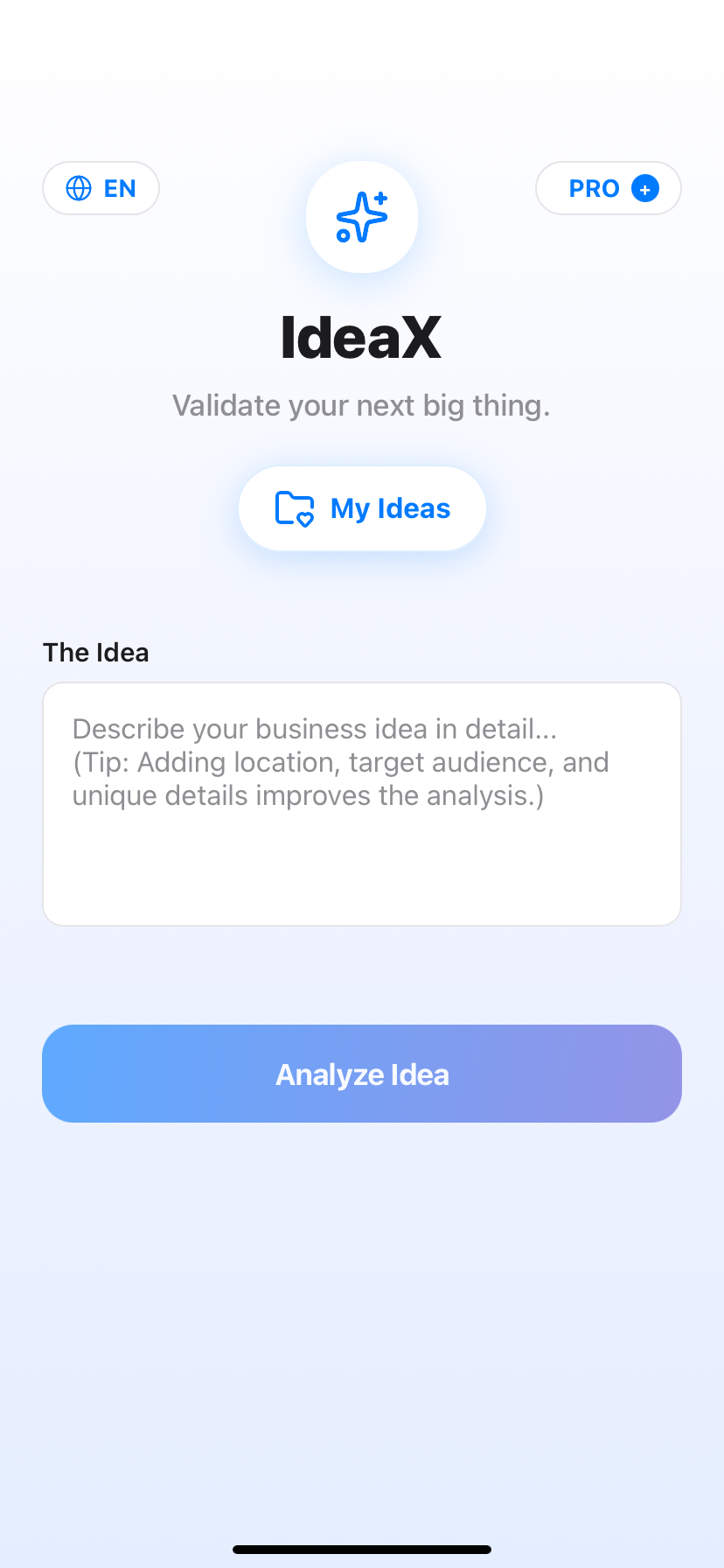
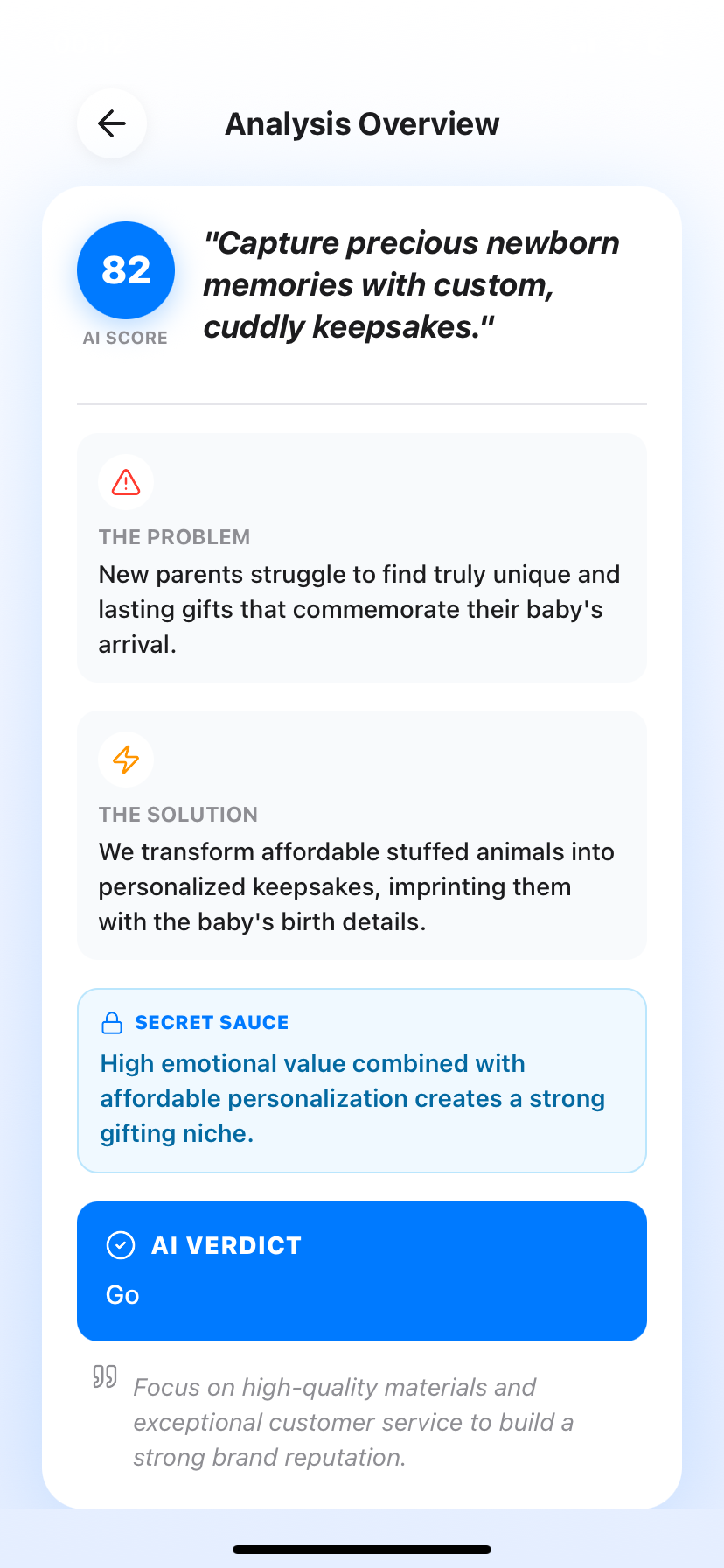
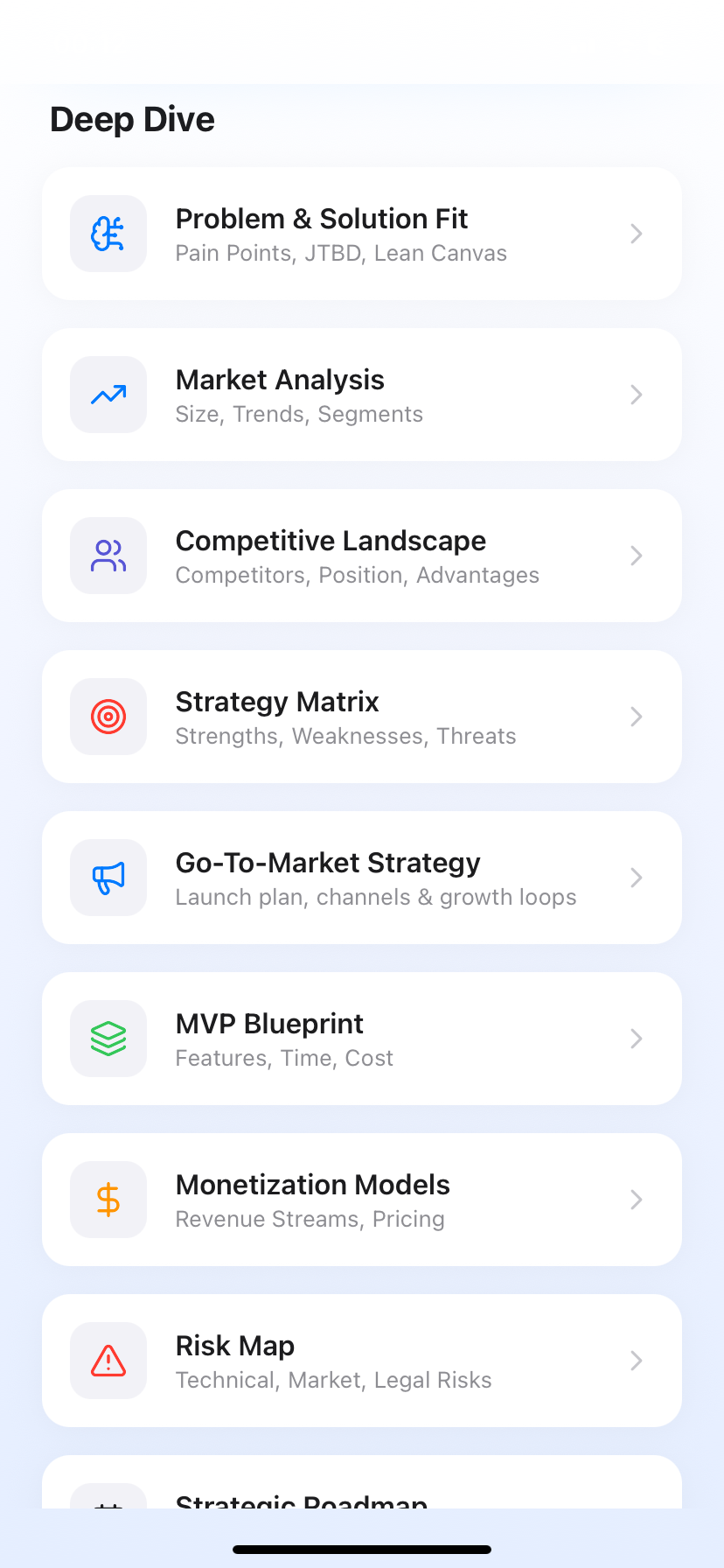
IdeaX helps founders analyze target audience, market demand, competitor gaps, monetization logic, risks, and MVP priorities before development starts.
Frequently Asked Questions
What is a startup pre-mortem?
A startup pre-mortem is a planning exercise where you assume the startup has failed, then work backward to identify the likely causes so you can test or fix them early.
How is a pre-mortem different from a post-mortem?
A post-mortem analyzes what happened after a project fails. A pre-mortem happens before launch and tries to prevent the failure by exposing risky assumptions early.
Who should participate in a startup pre-mortem?
Include founders, product owners, sales or marketing leads, technical leads, and anyone close enough to the customer to name practical failure points.
What should I do after a pre-mortem?
Turn the highest-risk assumptions into validation tests with deadlines, success signals, and kill or pivot criteria. The pre-mortem is only useful if it changes what you test next.