The Skepticism Around Algorithmic Analysis
When founders first hear about AI business analysis, skepticism is the natural and healthy response. A startup idea is often highly nuanced, born from personal frustration, and dependent on a specific founding team's hustle. How can a machine understand the "passion" of your project or the intricate dynamics of a B2B sales cycle?
The truth is, AI doesn't need to feel the passion of your project. It doesn't care about your vision board. Modern AI relies on cold, hard structural frameworks—like the Lean Canvas and SWOT analysis—to mathematically dissect the viability of your economic model.
Where AI is Incredibly Accurate
To answer the question of accuracy, we have to separate "building a business" into two distinct phases: Strategy and Execution. AI cannot execute for you. But in the realm of Strategy and Validation, AI is often frighteningly more accurate than a human consultant for three main reasons:
1. The Elimination of Founder Bias
The biggest threat to any validation checklist isn't a lack of data; it's the founder's own confirmation bias. Entrepreneurs naturally (and unconsciously) seek out information that validates their pre-existing beliefs. If an incumbent competitor exists, the founder assumes that competitor's product is terrible and easily beatable.
An AI tool lacks this emotional ego. It acts as a ruthless "Red Team." If your target market is too small to sustain your proposed SaaS Pricing Tiers, the algorithm will accurately flag it as a fatal flaw, regardless of how much you love the concept.
2. Synthesis of Macro-Data
A traditional consultant might have deep experience in 3 or 4 industries. An AI is trained on millions of data points encompassing global economic reports, consumer behavioral data, failure autopsies of thousands of startups, and modern tech shifts. If you present an idea for a "food delivery app for dogs," the AI can instantly cross-reference unit economics from Doordash, pet-care TAM (Total Addressable Market) data, and historical churn rates to accurately estimate your margin of error. No human can synthesize that volume of contextual data that quickly.
3. Identifying Proxy Competitors
AI is exceptionally accurate at identifying what you *aren't* looking at. Founders usually only research direct competitors. AI maps out "proxy competitors"—alternative solutions people are using right now. It might accurately point out that your biggest competitor for a new productivity SaaS isn't another SaaS company, but rather a simple Google Sheet.

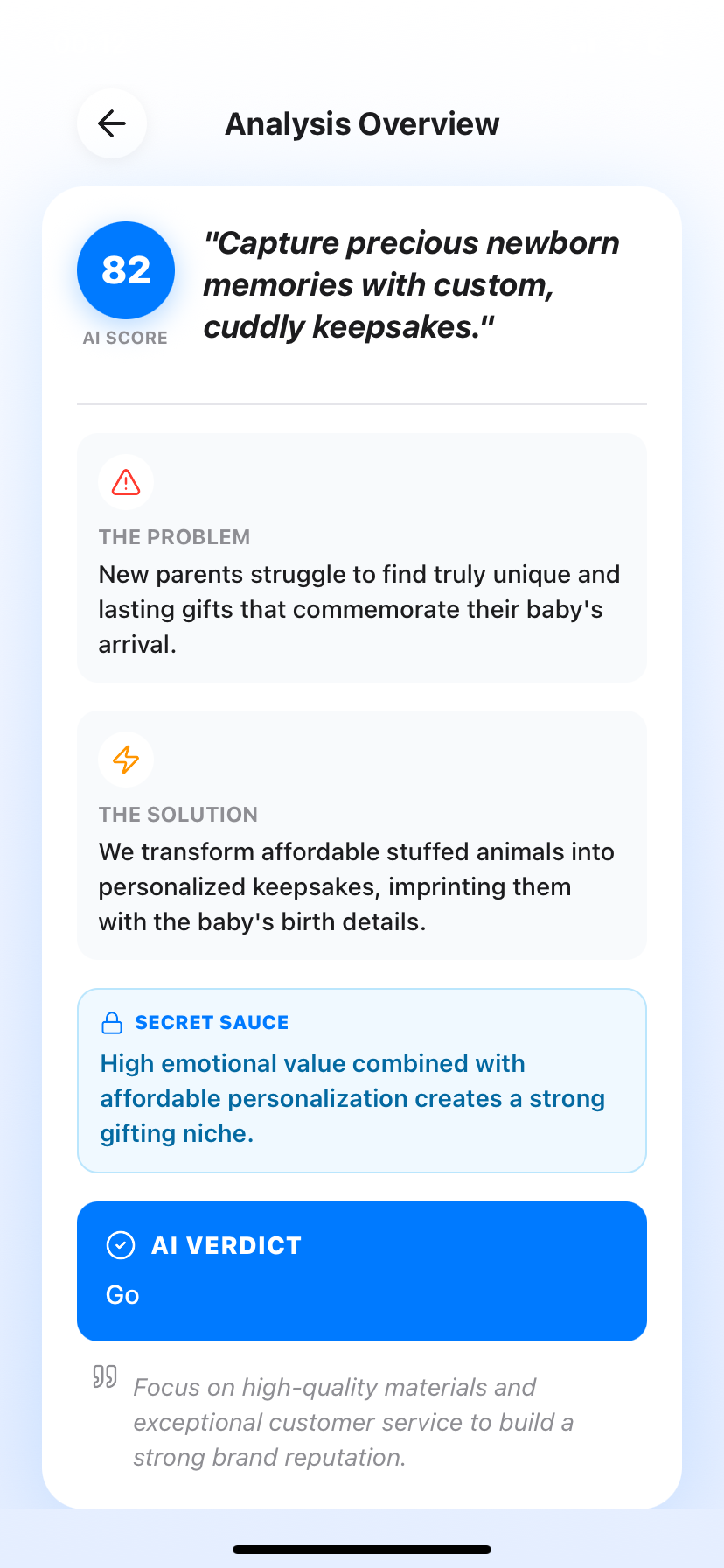
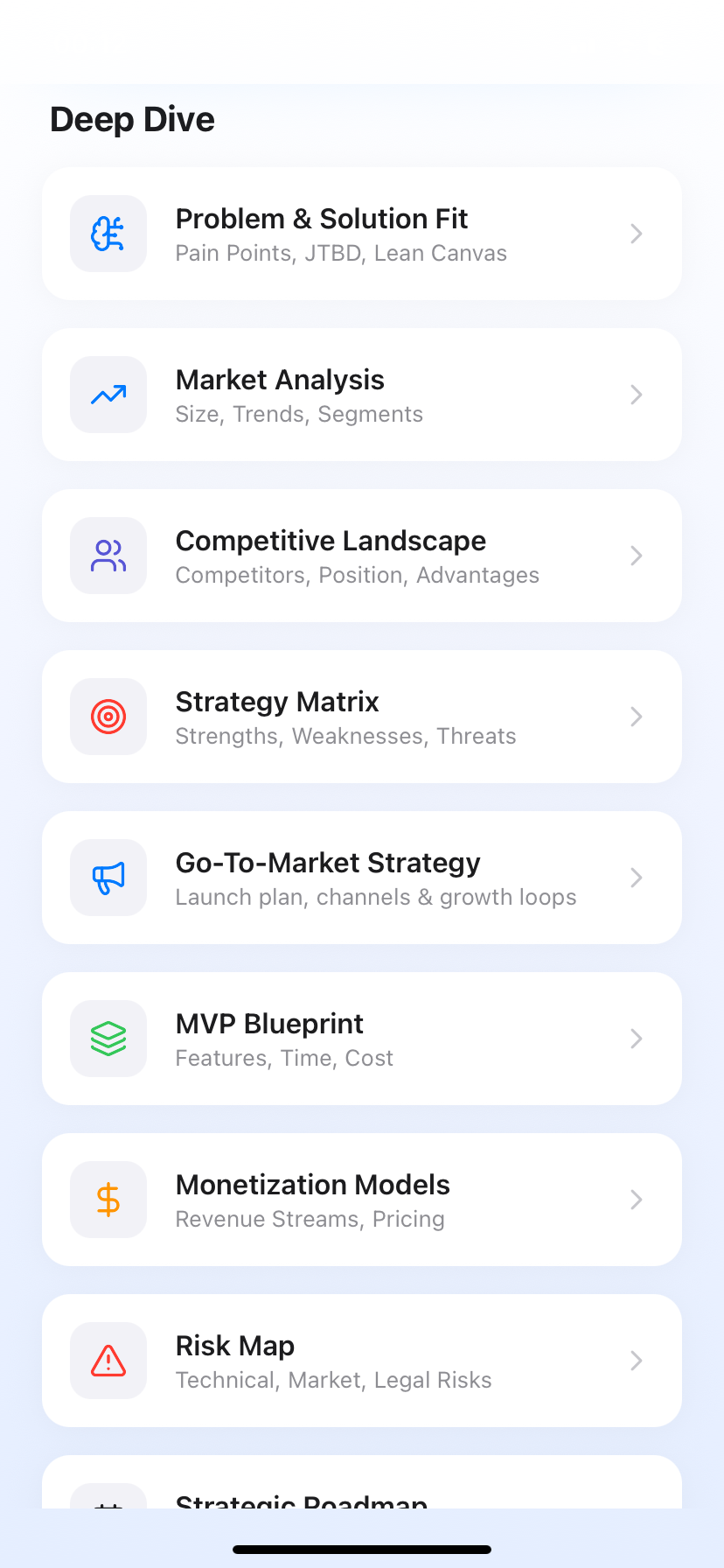
IdeaX: The Ultimate Validation Engine
Stop guessing. Let AI mathematically validate your idea's success rate and find hidden flaws instantly.
Where AI Falls Short (The Execution Gap)
While AI is phenomenally accurate at macroeconomic analysis, spotting logical inconsistencies, and structuring go-to-market plans, it is not a psychic oracle.
AI cannot accurately evaluate your personal resilience. It cannot measure your ability to charm an angel investor, close a complex B2B enterprise sale, or lead a team of burnt-out engineers through a crucial pivot. Furthermore, if your product relies on a completely novel, unproven disruption of physics or deep-tech (like cold fusion), historical LLM data will logically assume you will fail, because everyone else historically has.
Reframing the Request: Predict Failure, Not Success
The secret to getting the most accurate results from the best business idea analysis tools is understanding what you are asking them to do.
You should never ask AI: *"Will this idea make me a billionaire?"* Accuracy on that question is impossible because success requires perfect execution.
Instead, you must ask the AI: *"Why will this idea bankrupt me?"* AI is staggeringly, uncomfortably accurate at answering *that* question. It excels at finding the holes in the boat. If you use AI to accurately patch all the structural holes in your business model before you set sail, your chances of surviving the startup journey increase exponentially.