
The Broken Validation Pipeline
For decades, entrepreneurs have followed the exact same painfully slow, manual process to validate business ideas. You construct a massive 40-page business plan. You build a clunky prototype. You run expensive surveys on SurveyMonkey. You spend weeks attempting to piece together a coherent Lean Canvas in Excel, constantly guessing at your unit economics.
The problem is two-fold. First, manual validation is inherently biased; you twist the data to justify building the app you already want to build. Second, by the time you have finished your six-week preliminary research, macro-economic conditions might have completely shifted. In software, if it takes you moving at the speed of a human to validate a market, you have already lost to a competitor moving at algorithmic speed.
How AI Accelerates the Ecosystem
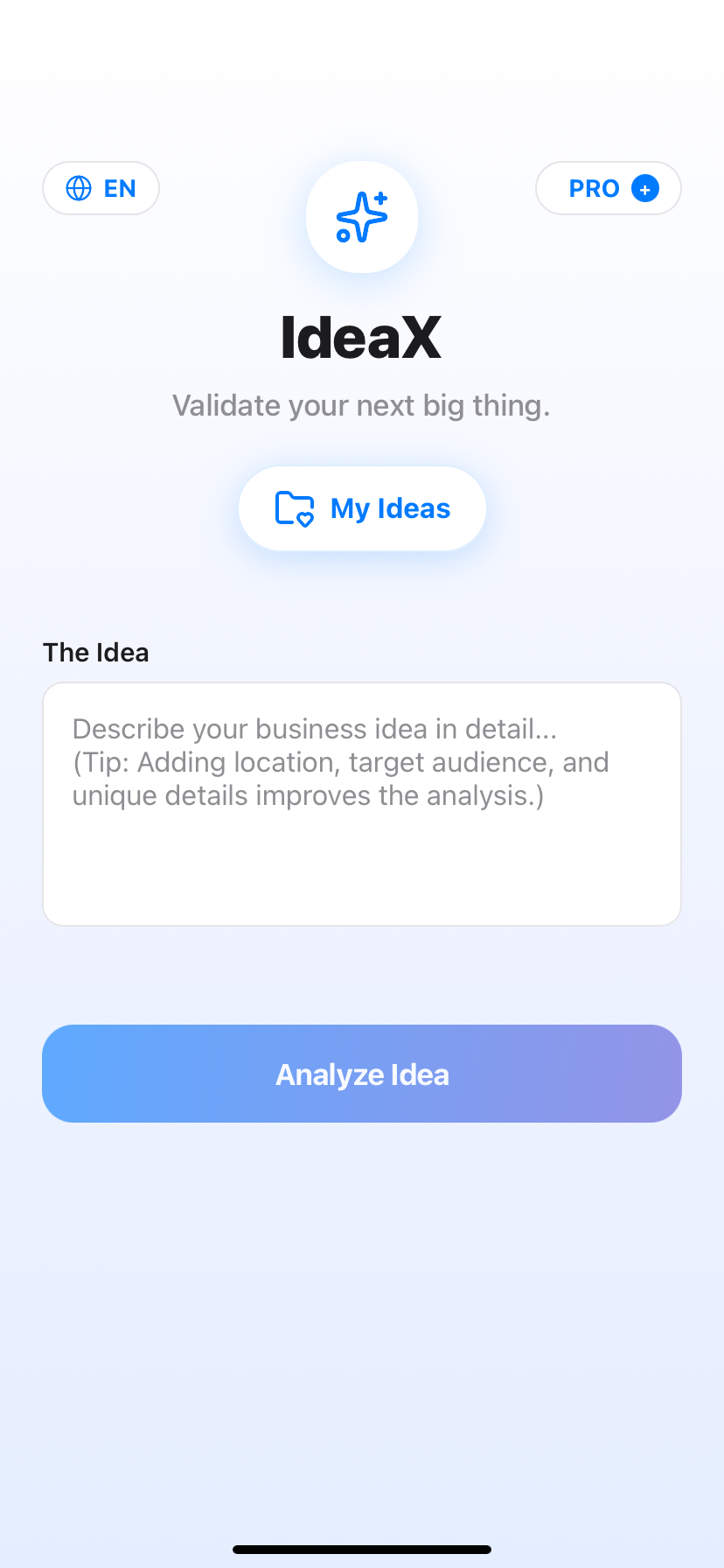
Today, you can leverage AI to evaluate an idea instantly. Rather than using AI merely to write blog posts or emails, serious founders use generative models tuned specifically for business frameworks as high-speed strategic consultants.
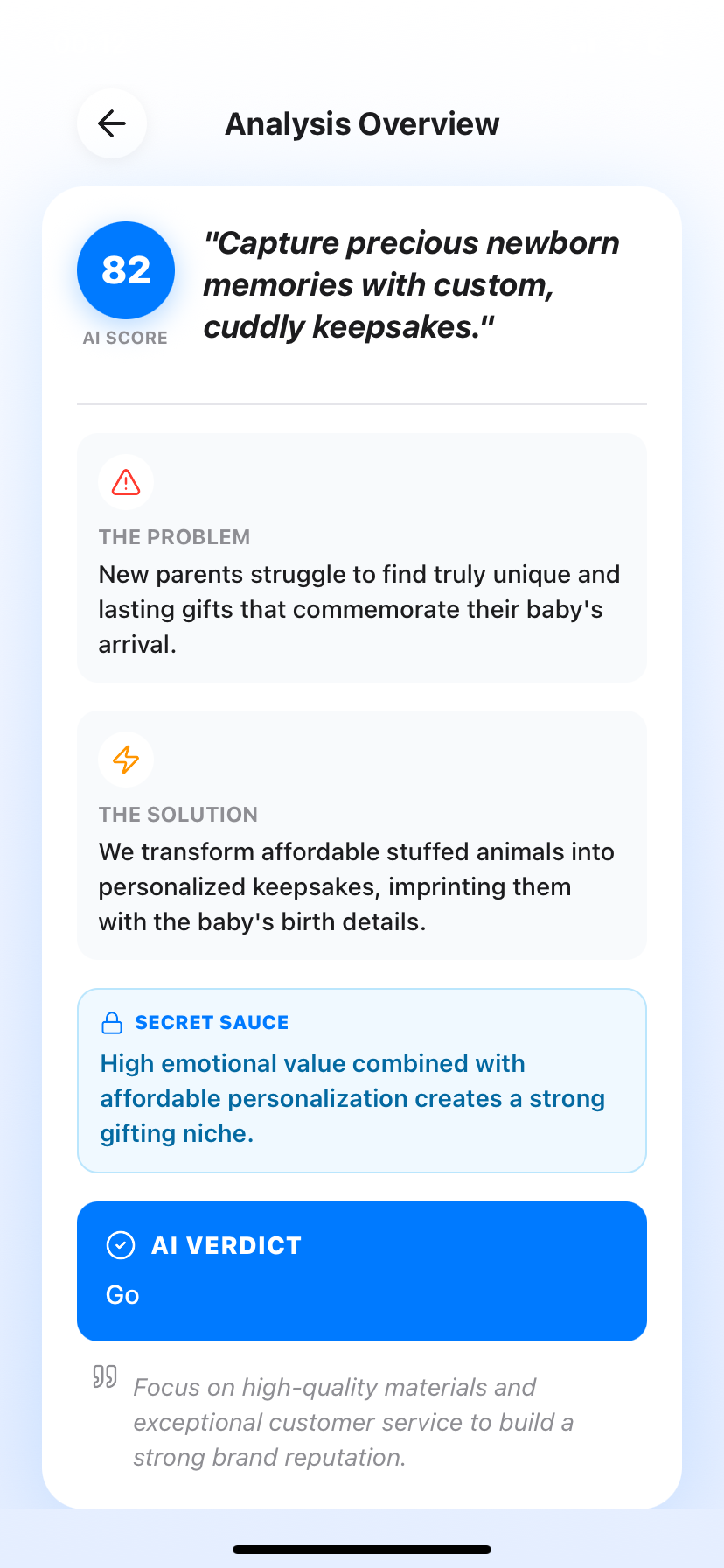
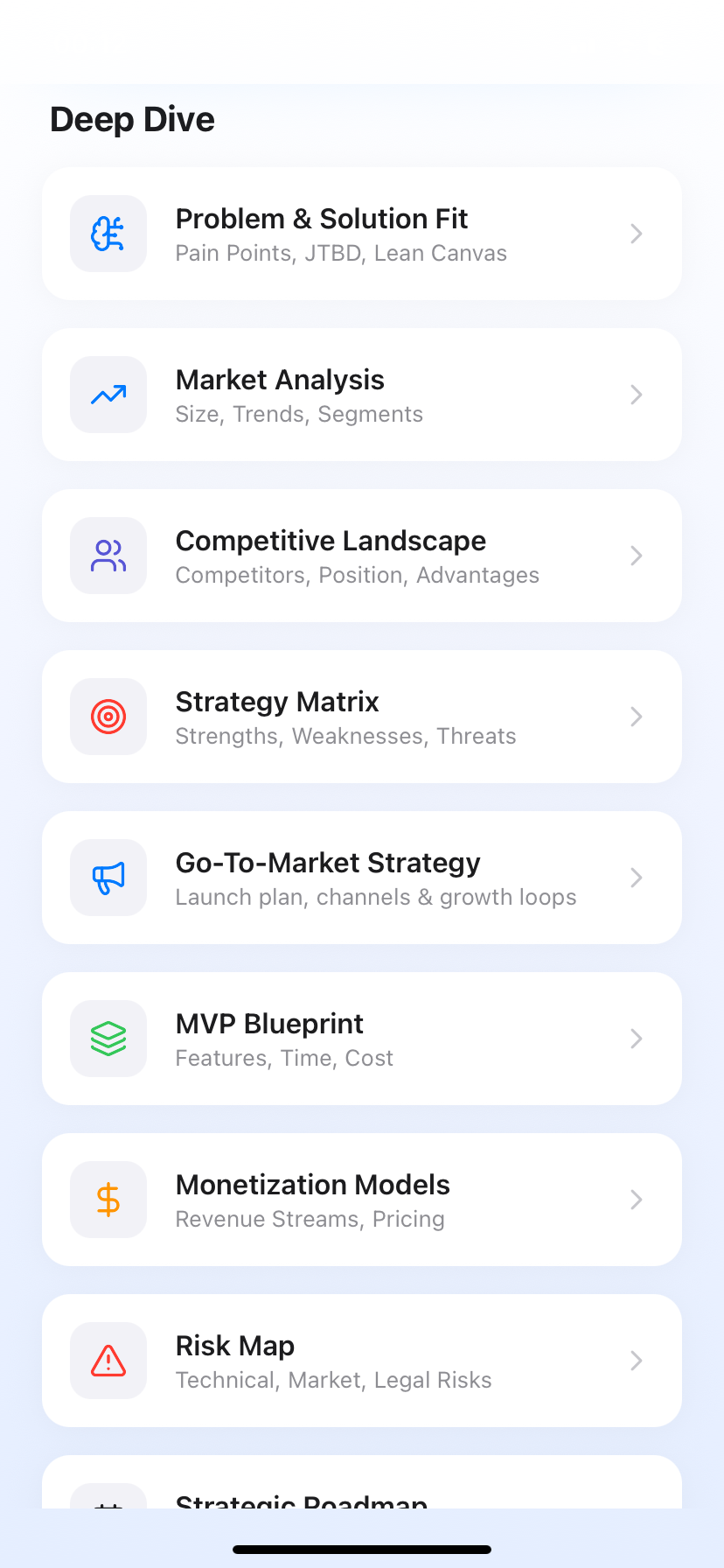
When a tool acts as a dedicated startup validation engine, it processes vast amounts of unstructured global data to synthesize an objective threat matrix in seconds. Here are three distinct mechanics by which AI drastically compresses your validation timeline:
1. The Instant Structural Audit (Lean Canvas & SWOT)
Filling out a SWOT matrix manually requires a founder to guess their weaknesses. Because human ego is involved, founders rarely identify their true fatal flaws.
When you input a single-sentence startup hypothesis into an AI analysis tool, the algorithm acts as a ruthless Red Team. It instantly generates a hyper-accurate SWOT analysis and Lean Canvas. It points out that your "SaaS for Dog Walkers" has a fatal flaw regarding high Customer Acquisition Costs (CAC) relative to the low purchasing power of the demographic. Identifying this flaw automatically saves you six weeks of manual market polling.
2. Automated Competitor Scraping
Historically, competitor research meant you had to manually read through hundreds of G2 or Capterra reviews for the leading software in your niche, painstakingly categorizing user complaints in a spreadsheet to find a market gap.
AI can ingest 5,000 negative reviews from your top three competitors in three seconds. Through sentiment analysis, it delivers an actionable mandate immediately: *"42% of 1-star reviews complain about broken Shopify integrations. To beat the incumbent, launch an MVP focusing solely on flawless Shopify syncing."* You have bypassed the research phase entirely and moved straight into execution logic.
3. Risk Scoring and Unit Economics
An idea isn't validated until the math works. The slowest part of traditional planning is forecasting. Will users pay $10? Is the target demographic large enough to support a $50k/month burn rate?
AI models have access to vast troves of industry-specific economic data. They can instantly forecast potential Unit Economics, cross-referencing your Total Addressable Market (TAM) against average digital advertising costs in that specific niche. If the AI determines your CAC will outweigh your Lifetime Value, it stops you *before* you hire an engineer.

IdeaX: Fail the Bad Ideas Fast
Don't spend 6 months on a doomed idea. Validate it mathematically right now.
The Shift to Iterative Velocity
The ultimate benefit of AI isn't just saving time—it's establishing what is known as Iterative Velocity. If your manual validation process takes you three months, you only get four attempts per year to find a winning startup idea.
When you use AI, you can test 10 wildly different variations of a business idea in a single afternoon. If your first idea has a fatal pricing flaw, you pivot the prompt, adjust the target audience to B2B instead of B2C, and recalculate. You discard the bad ideas by lunch, and you focus your capital and engineering resources only on the mathematical winner by dinner.
Conclusion: AI Forces You to Act
Founders often use "research" as a form of procrastination. It feels safe to live in a spreadsheet where your idea is a theoretical billion-dollar unicorn.
By utilizing AI to completely collapse the timeline of validation, you remove your own excuse to procrastinate. Once the AI hands you a mathematically sound, competitor-aware Lean Canvas in 10 minutes, there is only one thing left for you to do: stop researching, and start building.