
The Myth of the Perfect Plan
A dangerous myth has infected the startup world: the idea that if you spend enough time researching in a vacuum, you can launch a flawless product. New founders are often taught to build 40-page business plans, conduct massive 6-month focus group studies, and meticulously design every pixel of their Minimum Viable Product (MVP) before letting a single user see it.
This is the "Waterfall" method of entrepreneurship, and in 2026, it is guaranteed to kill your company. By the time you finish your six-month research phase for a niche B2B software, the macroeconomic climate has shifted, OpenAI has released a new model that makes your backend obsolete, and three nimble competitors have already launched and captured the early adopters.
Iterative Velocity: The Only Metric That Matters
The most successful founders do not have better initial ideas than failed founders. Their first ideas are usually terrible. What separates them is Iterative Velocity.
Iterative Velocity is the speed at which you can take an assumption, test it against reality, observe the failure, and pivot. If your validation cycle takes three months, you only have four "shots on goal" per year. If your validation cycle takes a week, you have fifty-two shots. Mathematically, the founder with fifty-two iterations will always find the product-market fit before the founder with four.
The Financial Cost of Slow Validation
Time is not just momentum; time is literal runway. If you hire two developers at $8,000/month to build a product without validating the Total Addressable Market (TAM) quickly, a three-month delay in validation isn't just lost time—it is $48,000 incinerated.
The primary purpose of rapid validation is to reach the "No" as cheaply as possible. You want to discover that users won't pay for your SaaS platform *before* you pay AWS to host it. Fast validation allows you to fail ideas cheaply, preserving your capital for the idea that actually works.
How AI Has Changed Validation Speed
Historically, founders were slow because validation was inherently administrative. Conducting a proper SWOT analysis, compiling competitor reviews, and estimating Customer Acquisition Costs required weeks of manual data entry in Excel. You had to choose between being thorough (and slow) or being fast (and blind).
With the advent of specialized AI business analysis tools, you no longer have to choose. AI completely collapses the timeline of structural validation.
1. The 10-Minute Market Audit
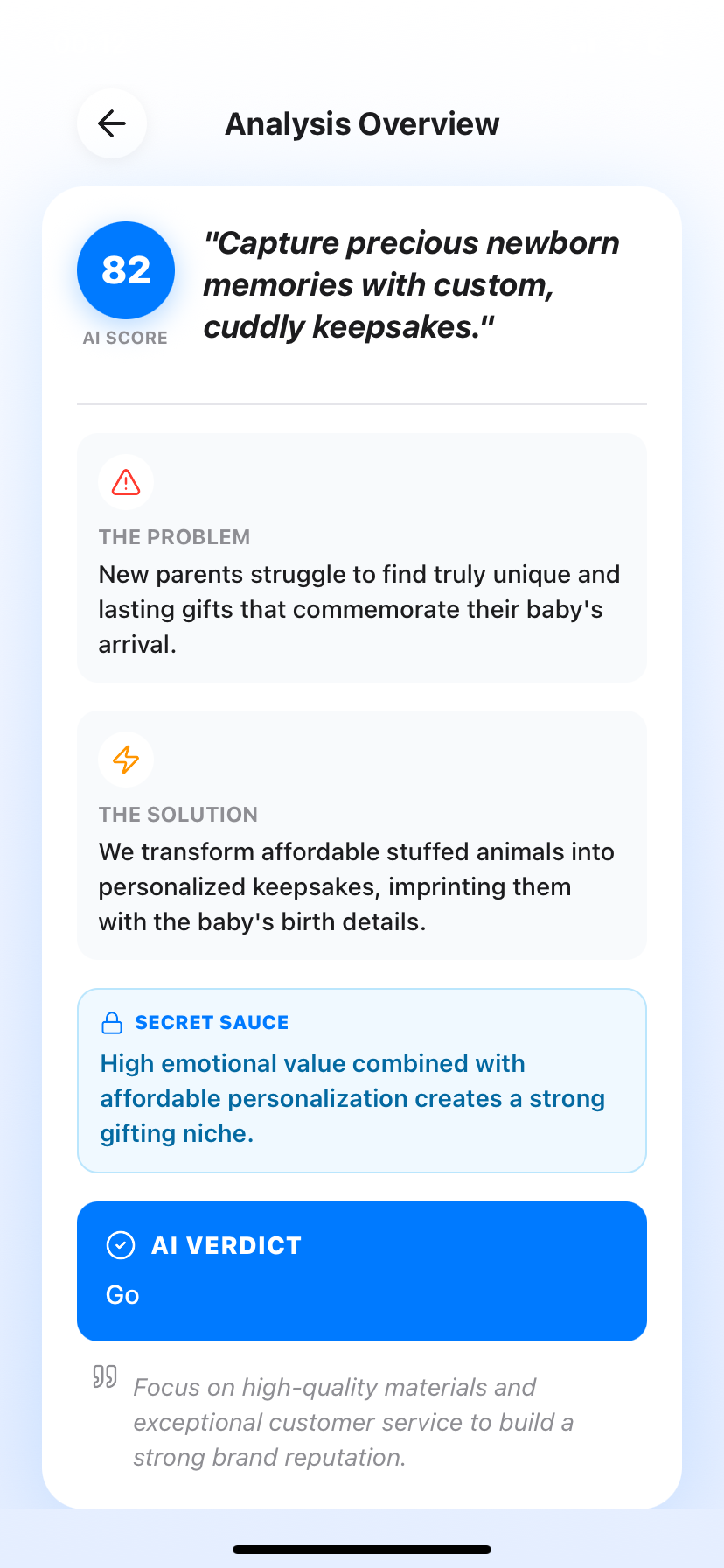
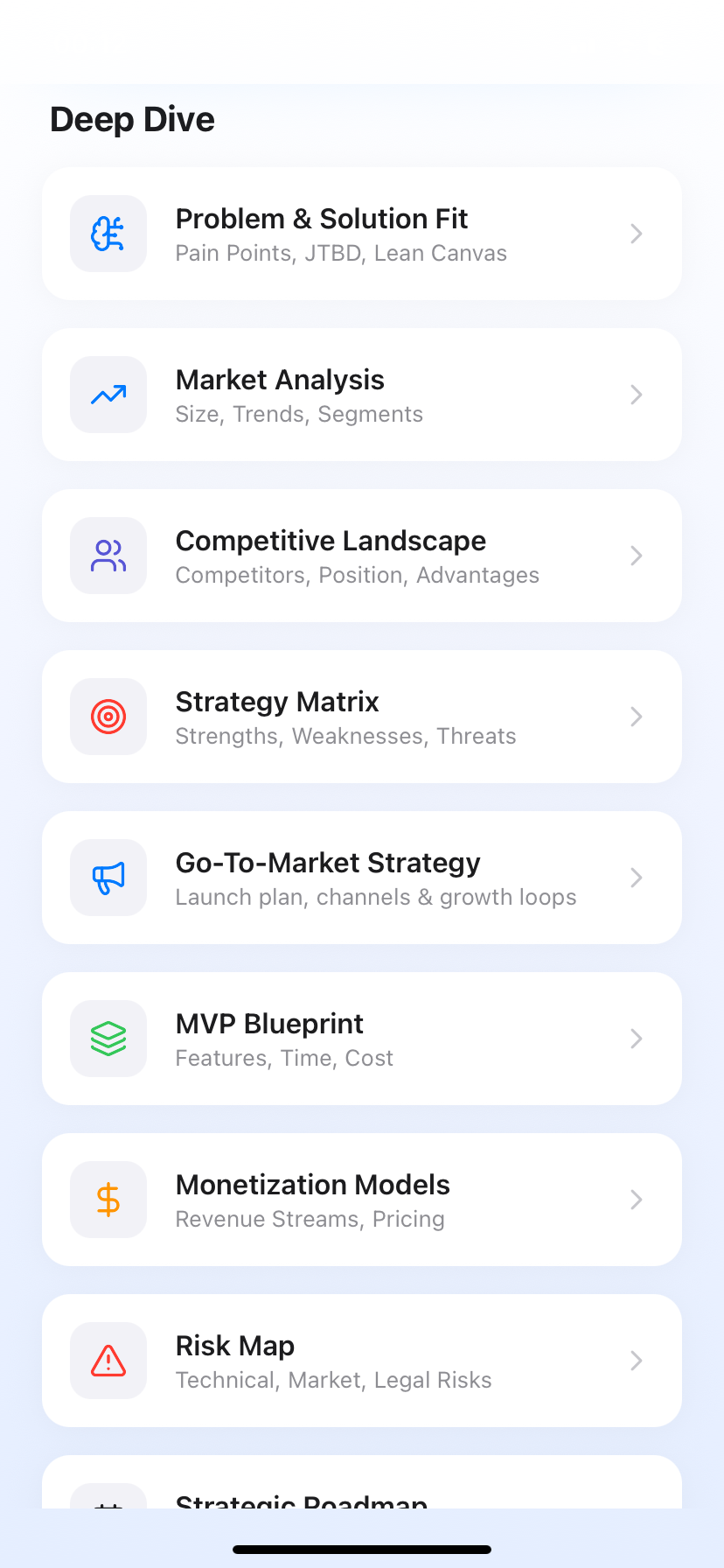
Instead of spending a week mapping out proxy competitors, a founder can input their core hypothesis into an AI validation engine. Within minutes, the AI scans thousands of data points to generate a comprehensive threat report. It will instantly highlight the hidden fatal flaws in the unit economics that a human would have missed.
2. Dynamic Strategy Pivots
When a fast founder receives market feedback that their pricing is too high, they don't rewrite a 40-page PDF document. They input the new variable into their AI tool, which instantly recalculates the Lean Canvas to suggest a new freemium model. This turns a week-long strategic offsite into a ten-minute recalibration.

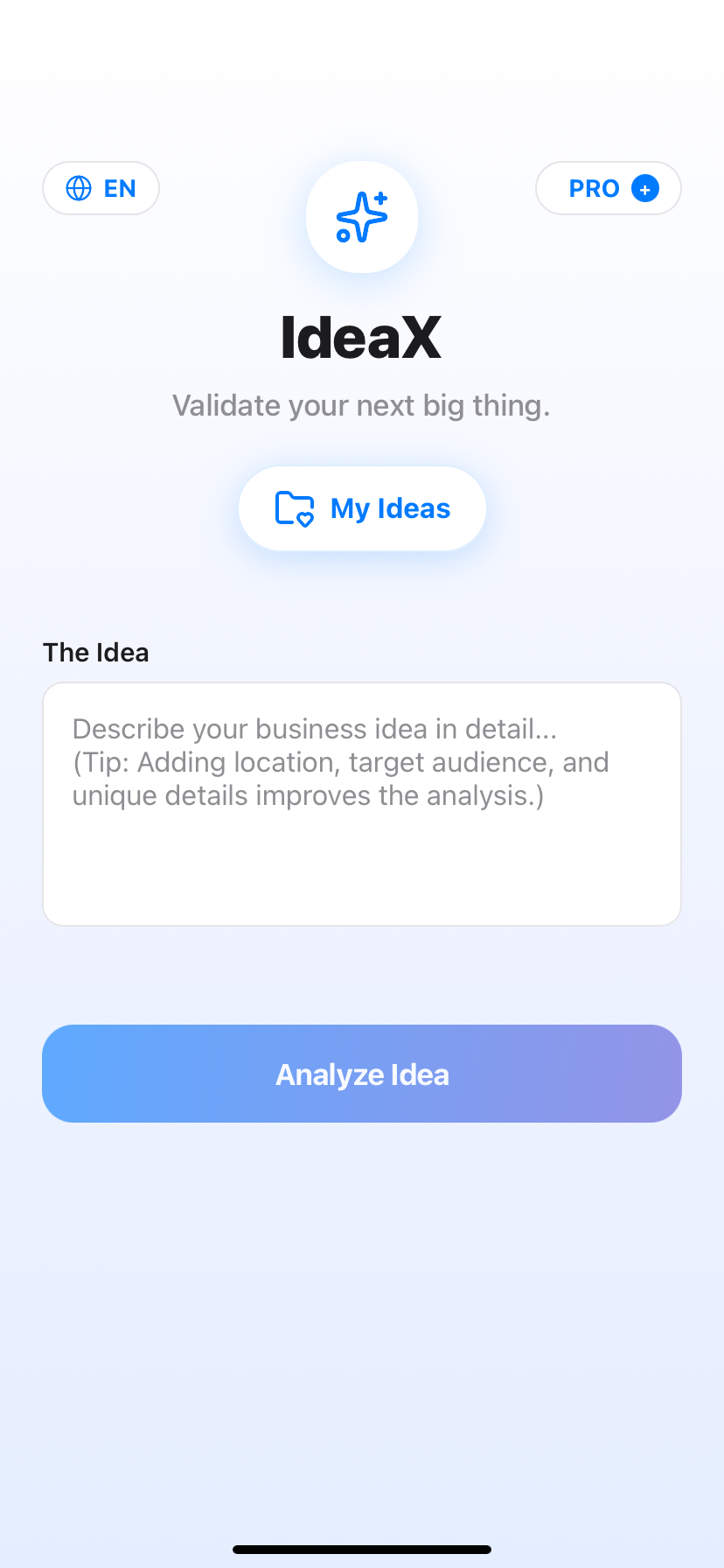
IdeaX: Fail Bad Ideas Fast
Don't waste 6 months on a doomed idea. Let AI mathematically validate your success rate instantly.
The Psychology of Fast Validation
The scariest reason founders validate slowly is not a lack of tools; it is fear of rejection. If you spend six months planning an idea without releasing it, you get to live in a comfortable fantasy where you are the CEO of a billion-dollar pre-revenue startup. Launching quickly means facing the brutal reality that the market might not care.
This is where AI acts as the ultimate objective partner. Because AI is emotionless, it removes the founder's ego from the equation. It forces you to look at the cold, hard math of your Go-to-Market strategy immediately. By confronting the weaknesses of your idea on Day 1 rather than Day 100, you save yourself months of psychological burnout.
Conclusion: Speed is a Choice
You do not have the luxury of taking your time. In a globalized software market, someone else is having the exact same idea as you right now. The winner will not be the founder who writes the prettiest business plan; the winner will be the founder who validates the core assumptions quickest, discards what doesn't work, and ships the features that users actually demand.