
The Allure of Quick Coding
When a technical founder gets a new "billion-dollar idea" in the shower, the overwhelming urge is to immediately run to their laptop, spin up a new GitHub repo, and start configuring the database. Building is fun. It provides the illusion of progress. You can see the buttons; you can interact with the UI.
But writing code before validating the Total Addressable Market (TAM) is the equivalent of building a bridge before checking if there is a city on the other side. You might build an architectural marvel, but if nobody uses it, it is a total failure. The startup graveyard is filled with beautifully engineered products that solved problems nobody cared enough about to pay for.
The Core Principle: Validation > Execution
Code is a commodity; distribution and problem-resolution are gold.
Before you spend three months writing a Minimum Viable Product (MVP), you must prove that the product deserves to exist. Historically, "proving it" required expensive consultants or running lengthy split-test ad campaigns to gauge interest. Today, a founder can use strategic AI tools to simulate the market reaction and validate the unit economics before spending a dime on AWS servers.
1. AI-Driven Competitor Moat Analysis
You might assume you are the first person to think of a "Tinder for Dog Walkers." You aren't. Before you build, you must understand your proxy competitors.
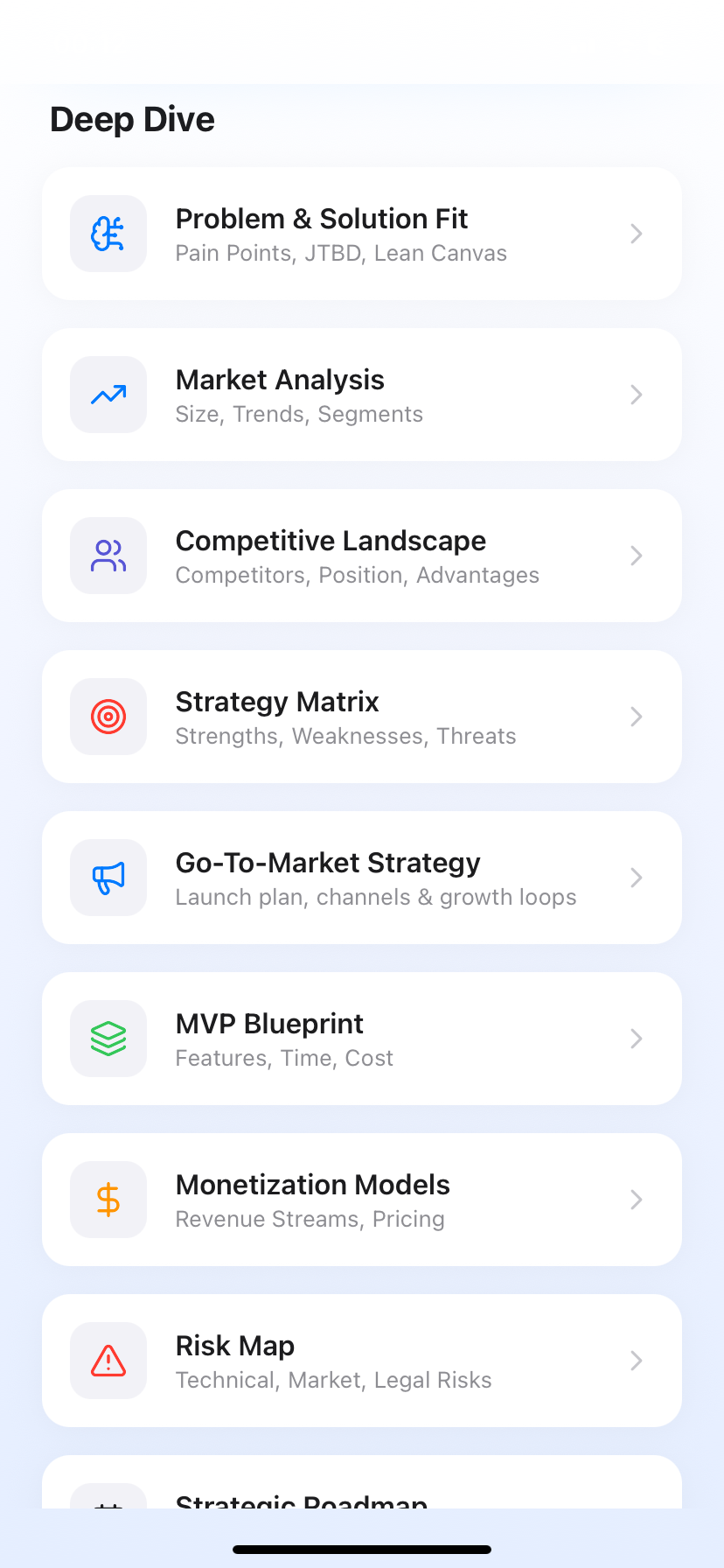
By using AI, you can instantly run a SWOT Analysis on the incumbents in the space. The AI will not only list your competitors, but perfectly synthesize their negative reviews from App Stores. If users consistently complain that existing apps are too expensive, your "smart decision" before building is to architect a completely different, lower-cost pricing model that the incumbents cannot match.
2. Calculating Customer Acquisition Costs (CAC)
You plan to charge $10/month for your SaaS tool. That sounds reasonable, until AI calculates that acquiring a B2B user in your specific industry niche costs $150 via Facebook Ads. Without knowing this *before* you build, you would launch, start running ads, and slowly bleed your runway dry until bankruptcy.
AI structural validation engines flag this fatal flaw instantly. By doing the analysis first, the AI forces you the founder to make a smarter decision: *"I must either raise my price to $50/month to support paid ads, or I must abandon ads entirely and build a viral, product-led referral system into the core architecture of the app."* That is a million-dollar pivot made before a single line of code was written.

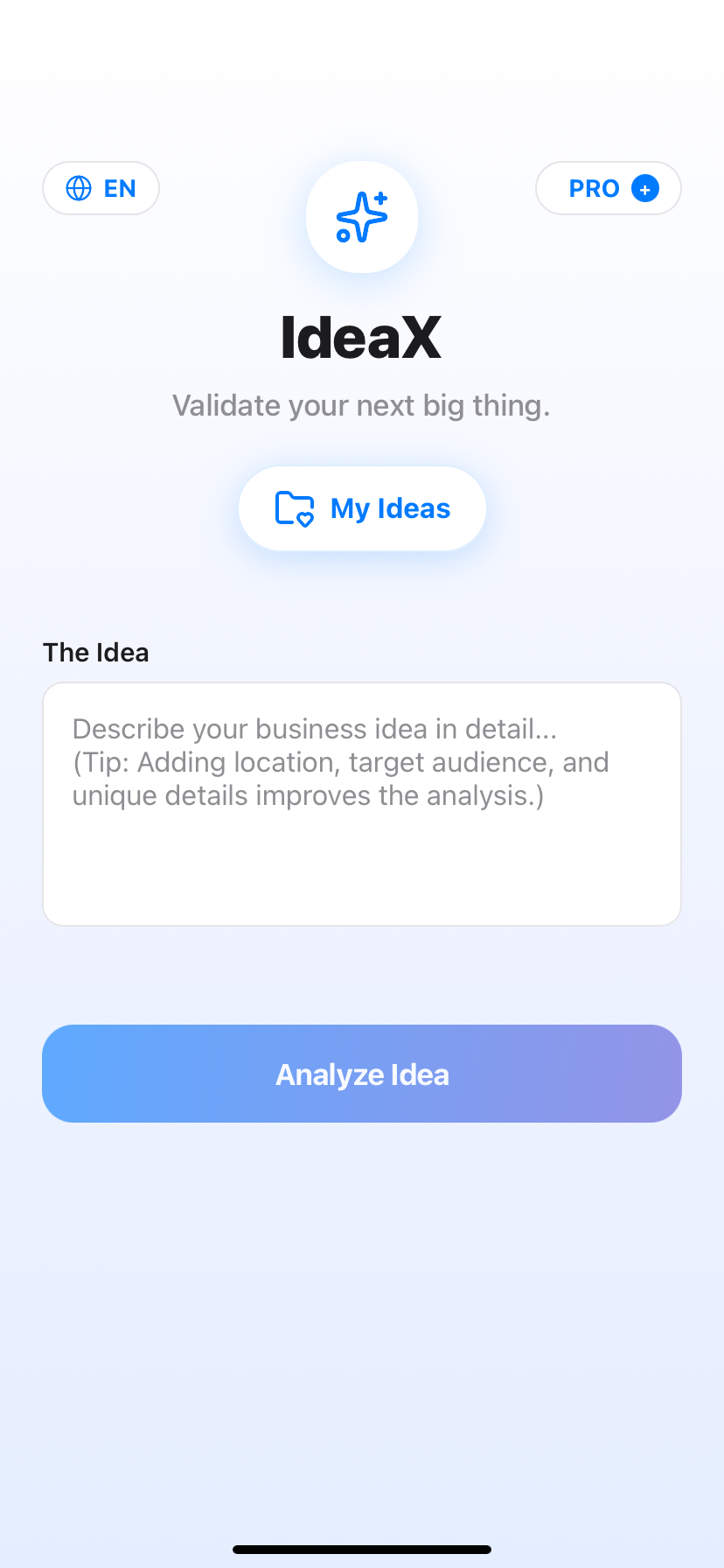
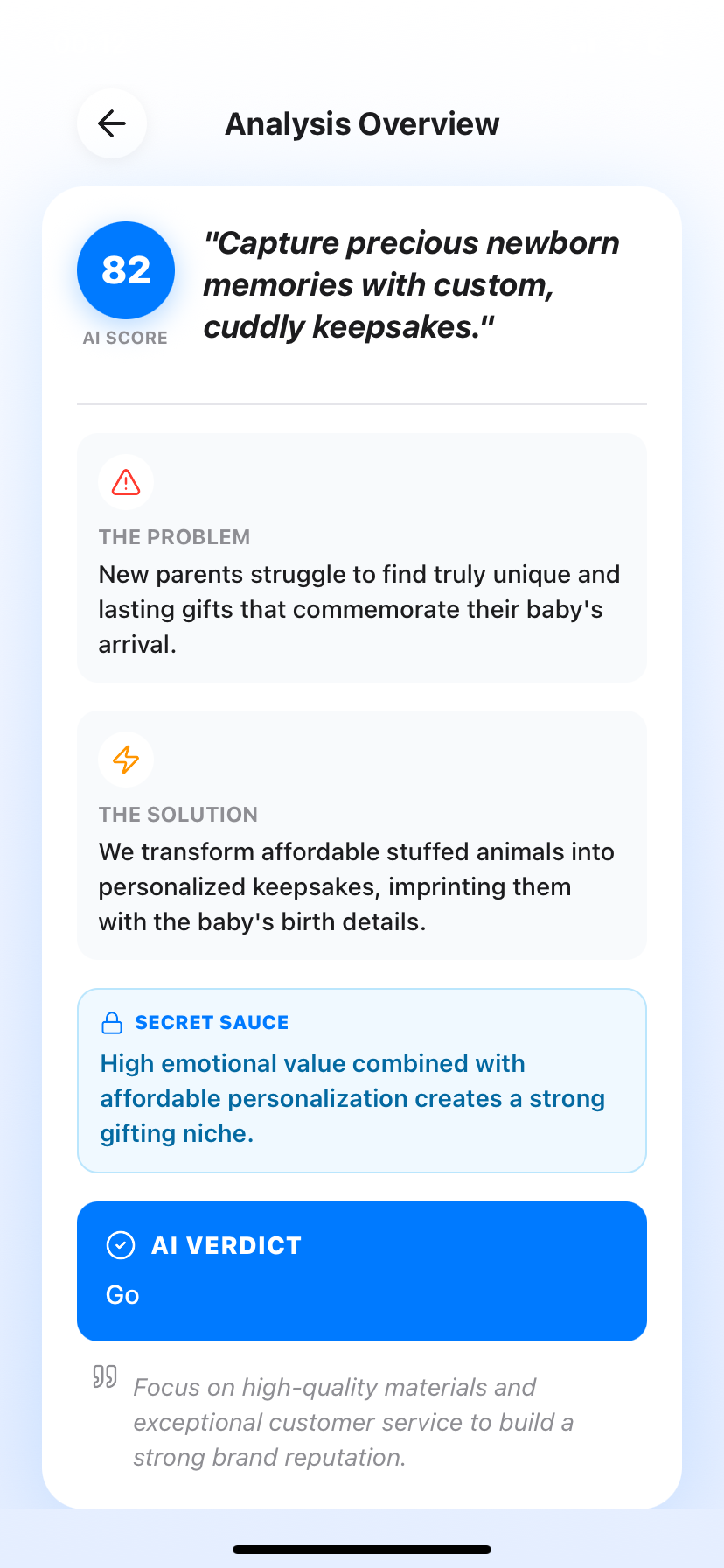
IdeaX: Fix the Math First
Don't build blind. Let AI mathematically align your pricing with your distribution strategy.
Removing Founder Ego
Founders suffer from extreme confirmation bias. We fall in love with our ideas. We twist user feedback to confirm what we already want to build.
AI is completely immune to founder ego. It does not care how passionate you are about your idea. It looks at the macroeconomic Lean Canvas and provides the brutal mathematical truth. If the AI tells you that your target demographic is too small to support a venture-scale business, the intelligent founder listens, saves six months of work, and pivots to a smarter strategy.
Conclusion: Planning Is Cheaper Than Coding
With the speed of modern AI tools like IdeaX, "planning" is no longer a six-week slog; it is a 10-minute automated exercise. You have no excuse to skip it. By forcing yourself to analyze the business structure, the competitor gaps, and the financial models *before* you build, you transition from a naive enthusiastic coder into a lethal, data-driven CEO.